
The Limiting Factor
In Every Relationship
We’ve been developing and editing a presentation about our work with willow.
The contents will be tweaked and transformed for several different audiences who we’ll be sharing it with over the next couple of months, and the first group includes folks who are more interested in the growing side. We decided to start that talk with a statement we know to be true:
The only limiting factor in your relationship with willow is you.
Once willow gets in the ground it’s off to the races. It doesn’t need the tending that a lot of other crops do, but it does need, and thrives on, seasonal management. The potential for how much you can grow, and what you can do with it, is enormous, but you have to keep your end of the bargain or it can easily get out of control.
It’s a responsibility we rubbed up against in the early years when the basketry path was a struggle to endure, but how could we deny a plant that simply wants to grow, relentlessly? It showed us the way.
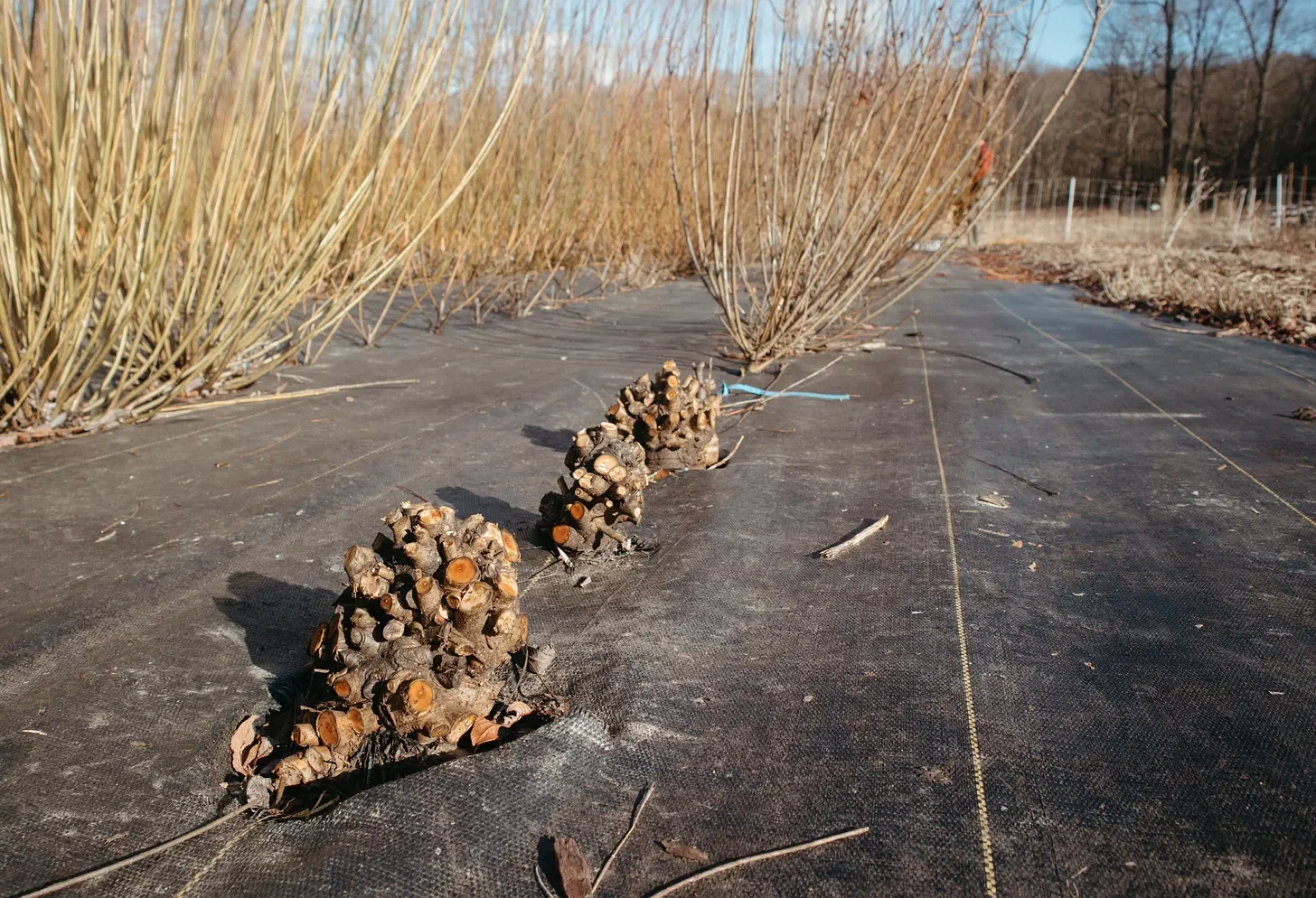
It takes willow 5 years to reach its maximum potential (when grown and managed the way we do it), and by that point the stools have gone from producing dozens of rods to hundreds. Their shapes have straightened out and they’re better formed to function as ideal basketry material.
Our personal trajectory with the farm has happened in tandem with the willow, and we’re feeling our own version of “maximum potential,” which is both overwhelming and exhilarating.
The most mature willow plants serve to populate all our new plots. A copy (cutting) from a 5 year old plant raised on one side of the acreage will create a genetically identical offspring on the other, but despite their DNA match, the new willow will grow up to have an entirely different experience from its parent plant based on its unique circumstances.
Just like us, and anything that grows, willow adapts to where it’s planted.
I like to think about all the former versions of me, and how the farther back into the past they go, the more like a stranger they seem. There’s also past iterations of my relationship with Dan, and our relationship with this land, and with willow, and with all the people it touches, that also feel foreign. Every one is a skin that continually gets shed, but there is also a spiralic nature to each of them.
Just as I described working with willow as being like, “singing a song in the round,” so too is our adventure through life. What goes around comes around, hopefully wiser.
Our presentation, if we continue to edit and hone it, will morph into something far different than what it is now over time. The limiting factor there also falls on our shoulders, but perhaps we can take a cue from willow, who’s currently reminding us that February is for quiet foundations, not reaching for the sky.
Originally published on February 4, 2024
Seamlessly Adapting
To the Conditions of the Day
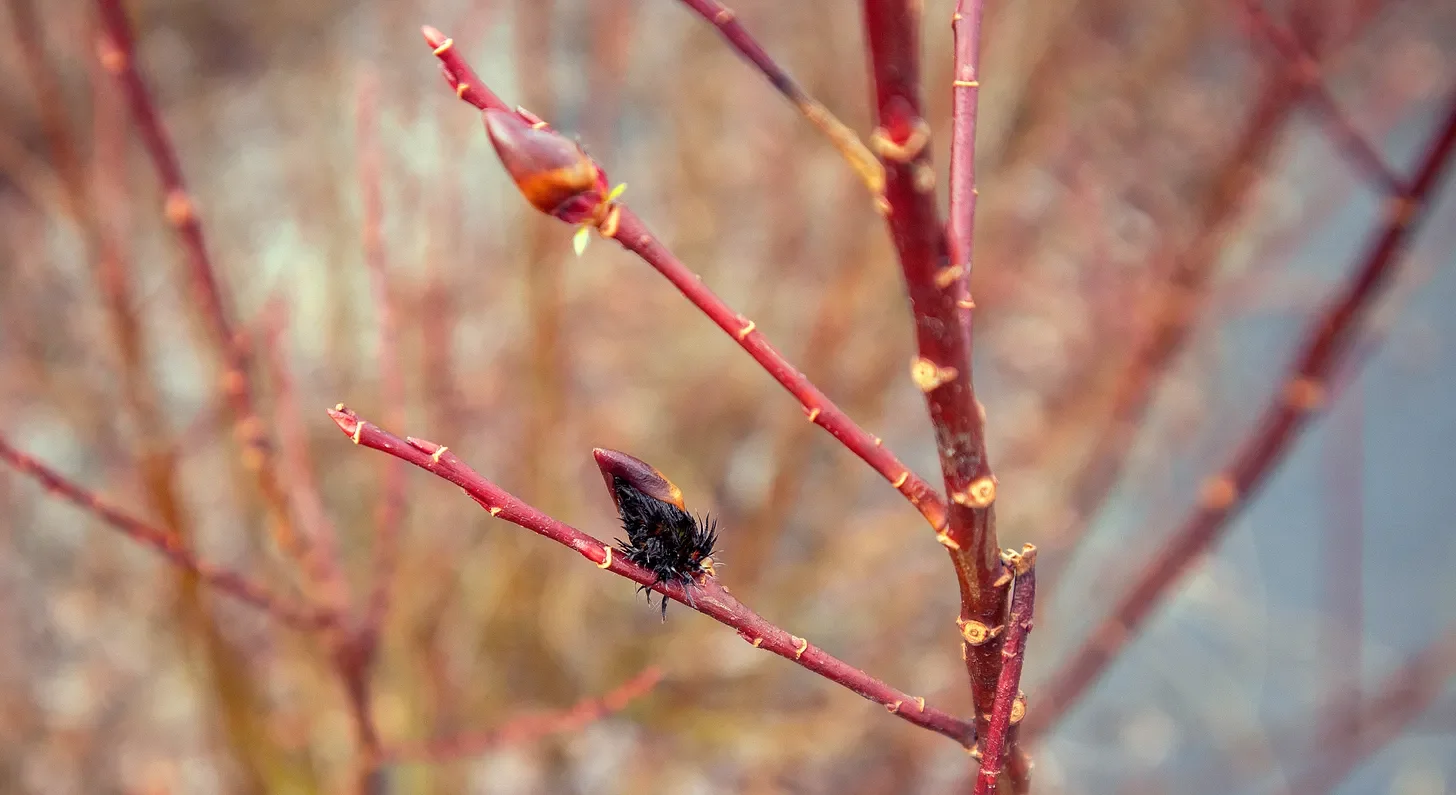
I’ve been overdressed this week, ignorant to the reality of 50+ degree weather.
Under the heat of an unnecessarily hot hat I’ve wandered through blinding sunshine in pursuit of photos. Above me the bird songs have been distractingly electric, especially the crows, and it seems like everywhere I turn there’s a honeybee shooing me out of its way. It’s busy out there, and I’m feeling out of sync.
While I’d love for winter to unfold as a perpetually snowy scene, seasons rarely stay in their respective lanes. Leaning in to the human equivalent of hibernation feels far less accessible and cozy when there’s already flowers peeking their heads out in February, but here we are.
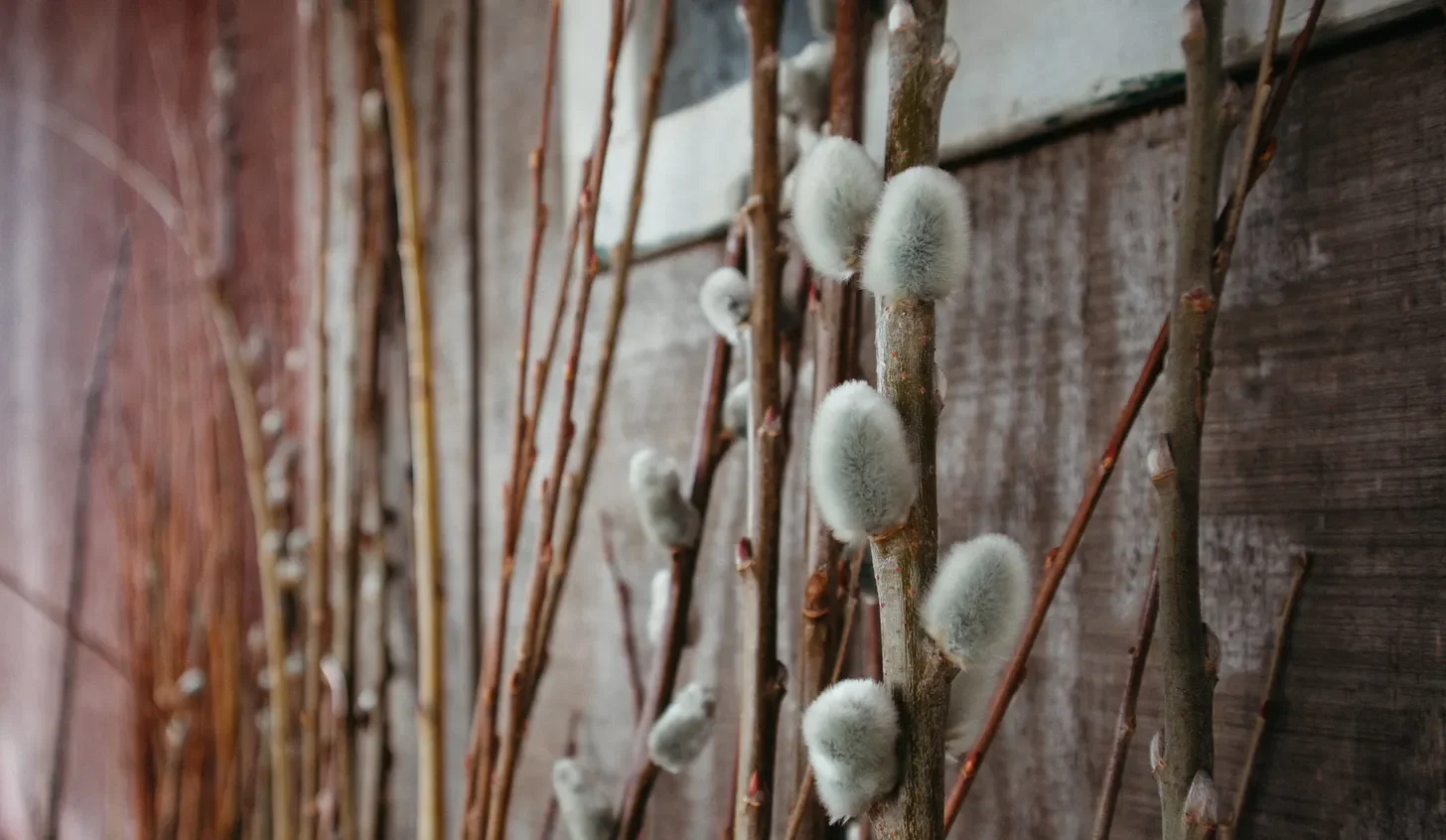
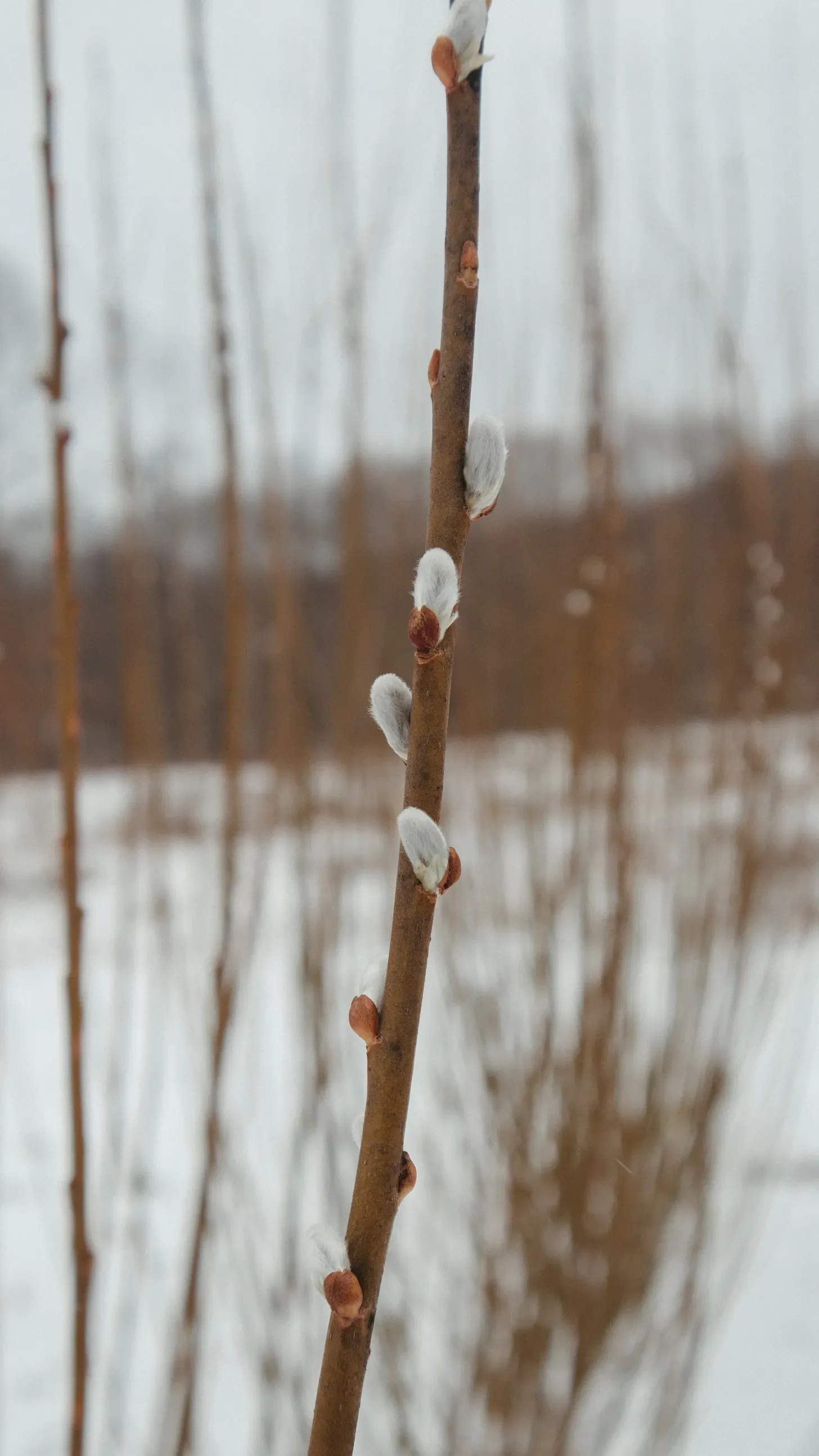
In addition to daffodils breaking ground, catkins have begun to pop up on some of the willow. In full fuzzy glory they signal that spring, and the inevitable breakage of dormancy, is rapidly approaching - ready or not. None of this is abnormal, and yet I’m clashing with it.
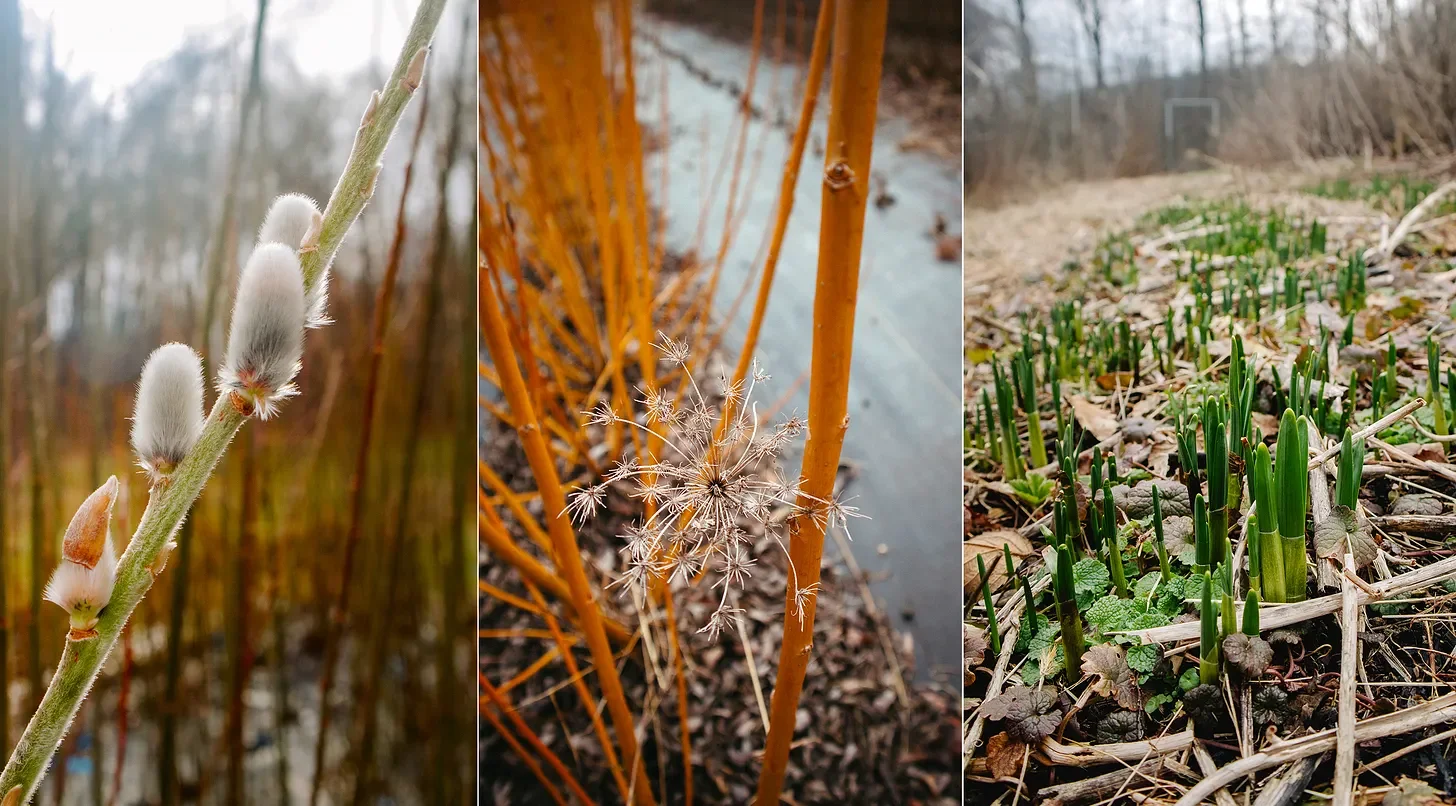
I envy the flora and fauna who so seamlessly adapt to the conditions of the day. Environmental cues lead their lives, signaling either to get to work or hold steady. It seems there’s no gray area out there, but for us that’s become the quintessential nature of winter.
When the weather is uncooperative, we often feel as if we should be more productive, somehow, despite it. Conversely, we frequently find ourselves bound up with indoor obligations on the most beautiful days. Frustration runs rampant when motivation cannot meet favorable circumstances, or when time feels wasted, but therein lies our own inability to adapt with grace.
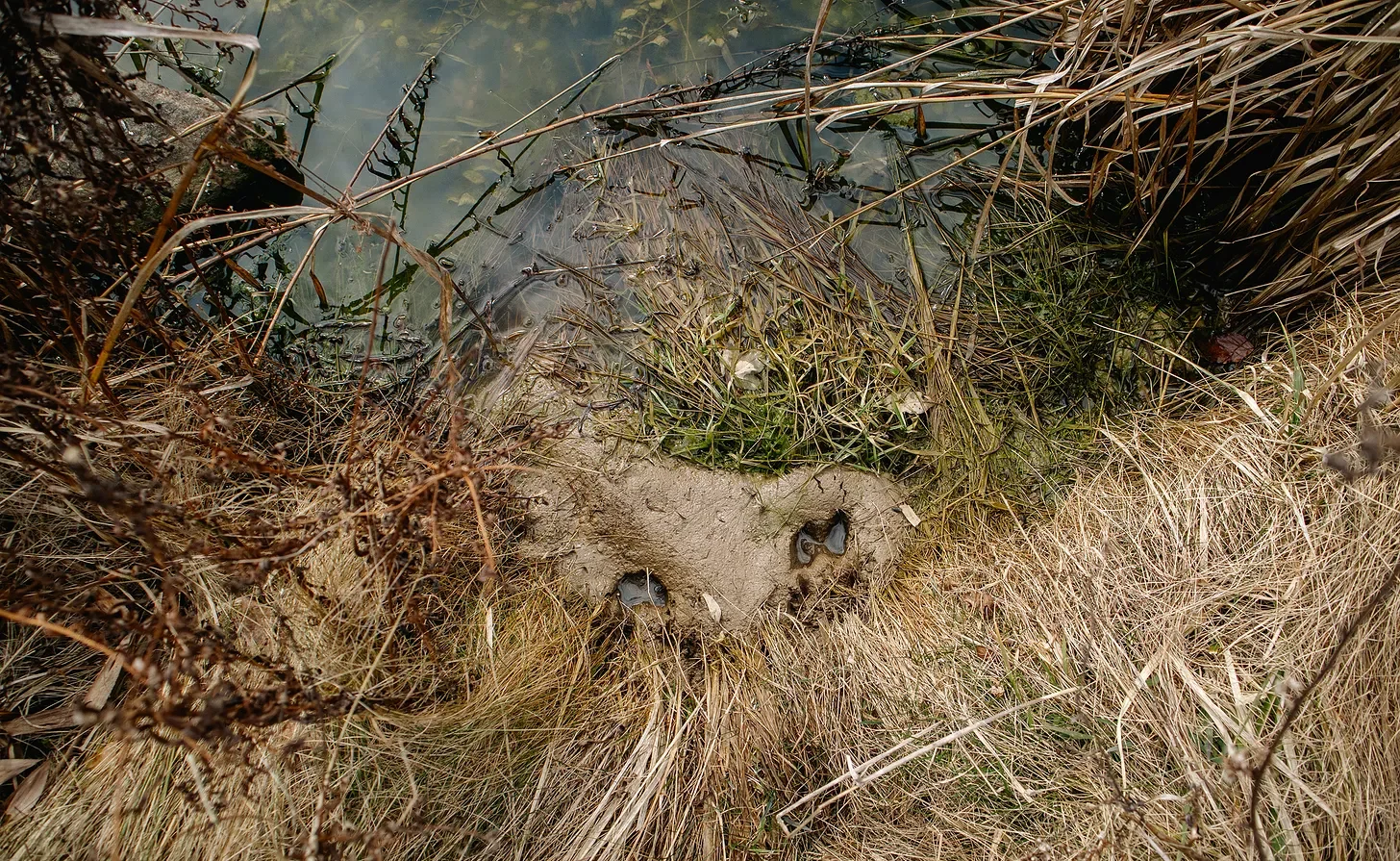
I believe there is a resonance to be found between our life and the rhythm of the natural world, despite feeling, habitually, as if we’re in discordance. When I can reject my inclination to fast forward to some imaginary harmonization between my whims and the weather, I can simply show up to whatever is present and act accordingly. When Dan and I can acknowledge that the timelines and pressure we’ve put upon ourselves are malleable (and often made up), we can pull the release valve and readjust.
In other moments, however, time just feels out of tune. We show up to an event expecting it to unfold in a particular way, but it turns out to be more challenging, or inspiring, than we could have ever predicted. We dress for the day we imagined, not the one that’s here.
We realize that everyone, and everything, is moving through their environment with their own unique energy, and we’re all just trying to get our jobs done.

I recently told Dan that I think this year will go by at warp speed, and he agreed. It already feels fast, but these weekly shares I’ve committed myself to writing have become a reliable container to untangle the chaos within.
There’s some sort of resonance that rises here, settling the wilderness of a mind that struggles to seamlessly adapt.
Originally published on February 11, 2024
Obstacles: Yours, Mine & Ours
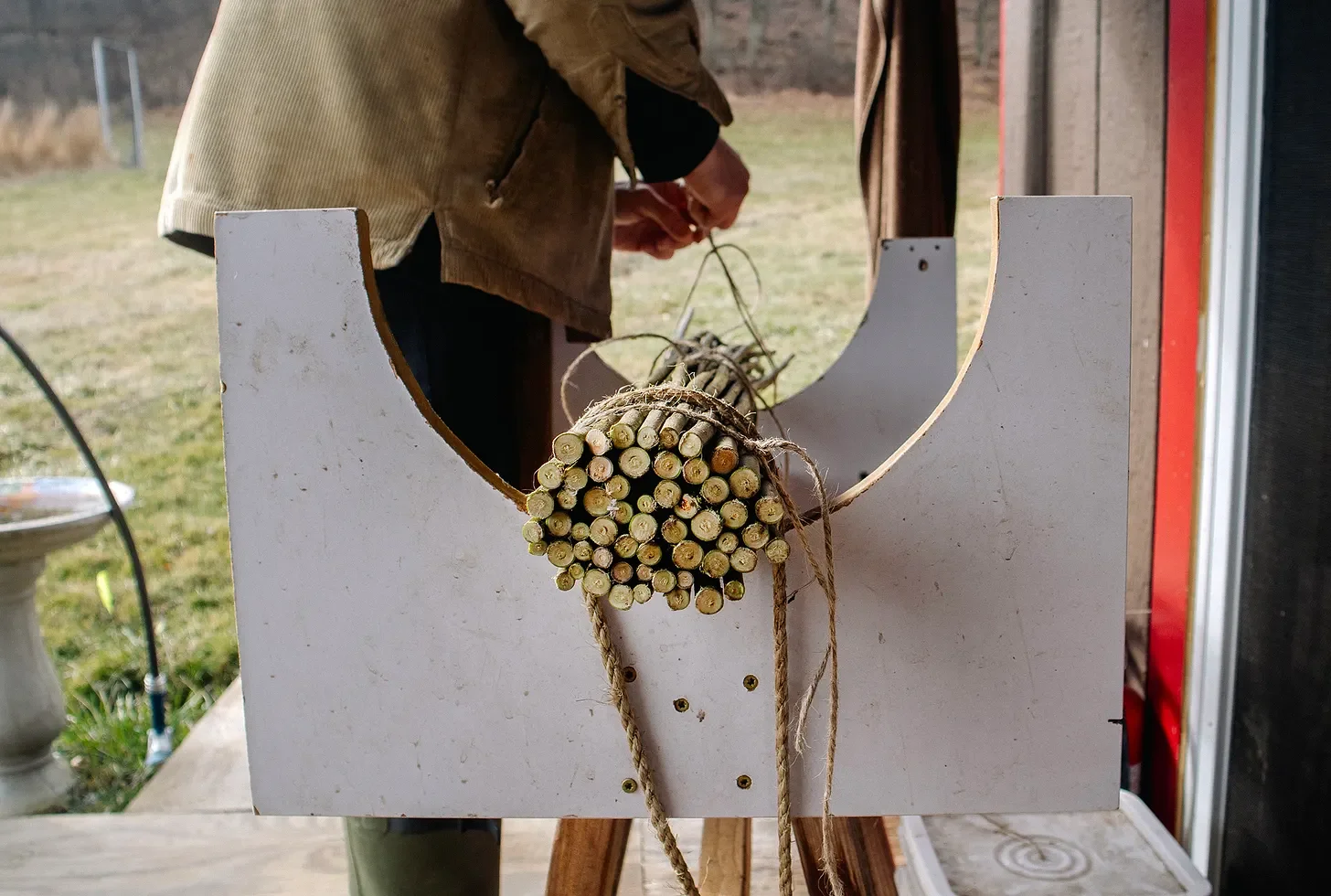
The thing about identifying your own challenging patterns and cycles is that witnessing does not equal fixing.
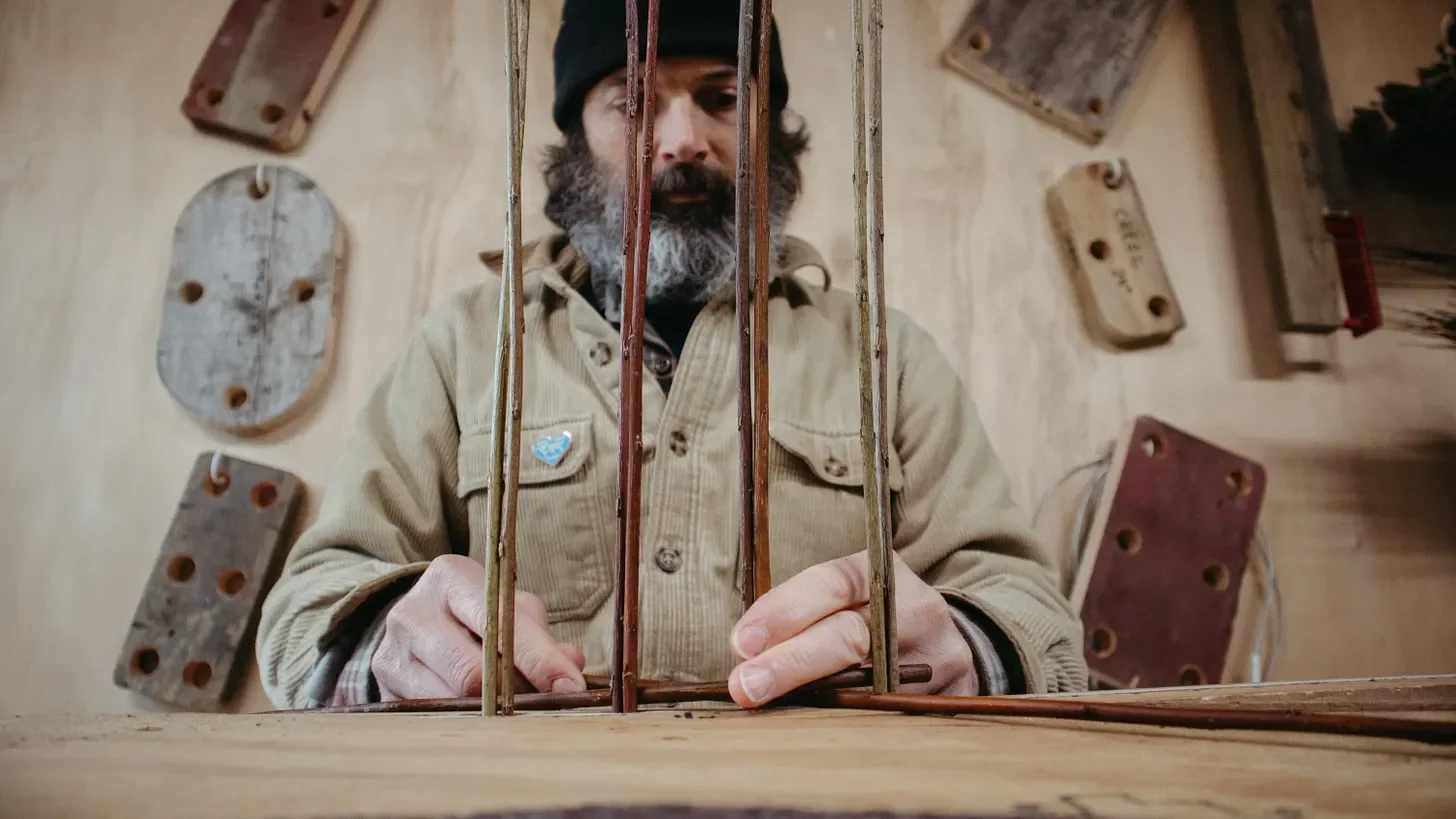
Lately we’ve spent hours together creating, practicing, editing, and polishing a series of presentations. I piece together the visual story and ultimately Dan delivers the talk, but along the way we coach and support each other through our respective shortcomings.
When he was doing all the work in those photos and videos, and when I was taking them, we had no idea it’d all add up to a story worth sharing. We had no idea that storytelling would become such an integral, and challenging, part of our business.
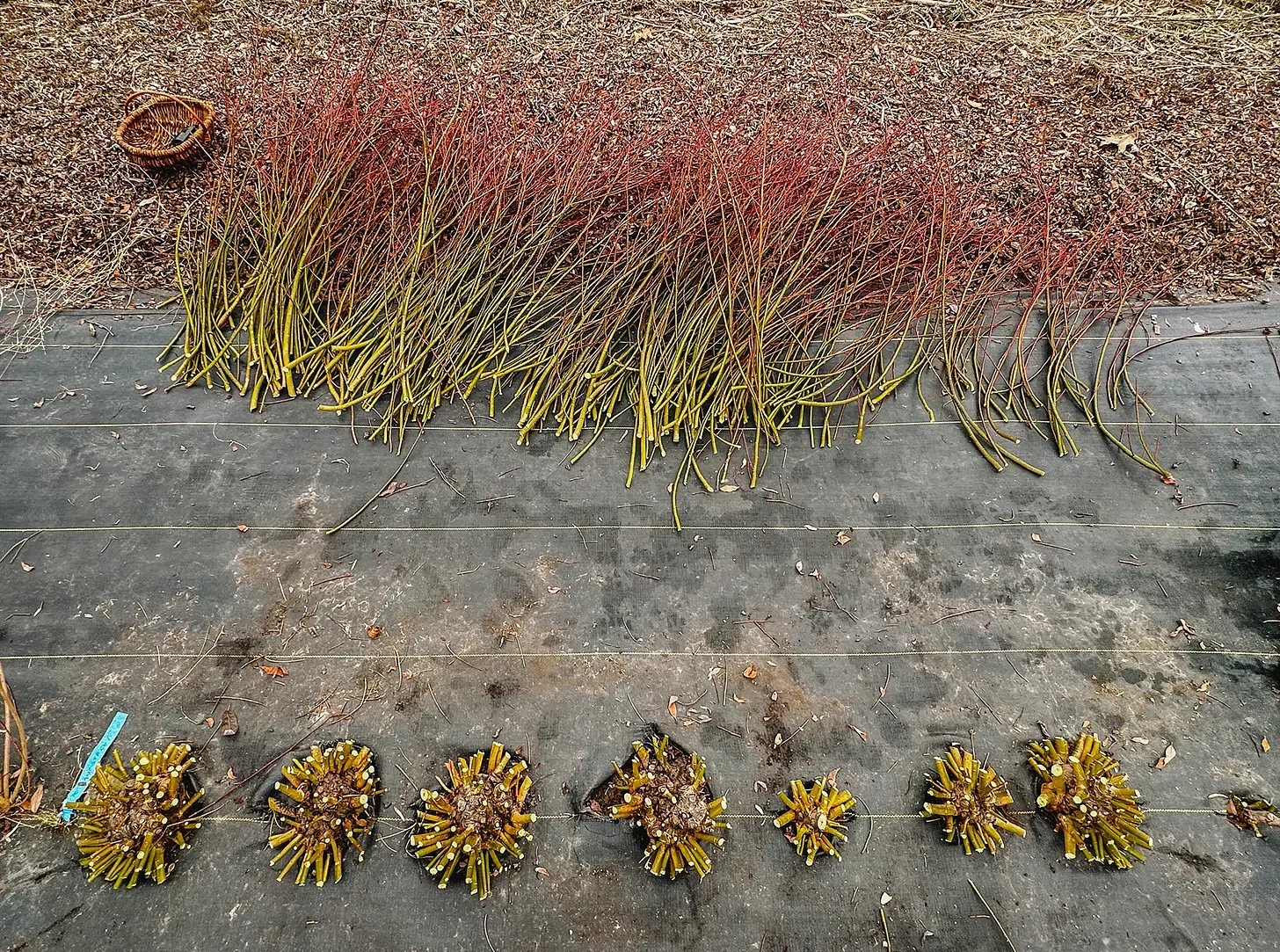
When we started Foggy Blossom 6 years ago, our direction was unclear. It first pointed towards cut flowers and market vegetables, but obstacles within those endeavors guided us towards more sustainable pursuits.
Pivoting away from the immense labor required for annuals (which far exceeded our two sets of hands) seems ironic now, as we’ve taken on a path that feels just as challenging. Frustration tops my list of personal obstacles, while anxiety rules Dan’s.
Creative breakthroughs always seem to be waiting on the other side of blocks that obscure them from view. In the midst of getting there, however, it’s often a mess. Certain elements help with fortitude, like deadlines or strict stipulations, but those conditions also create friction against personal obstacles.
The hope is that something will ignite, instead of simply smoldering.
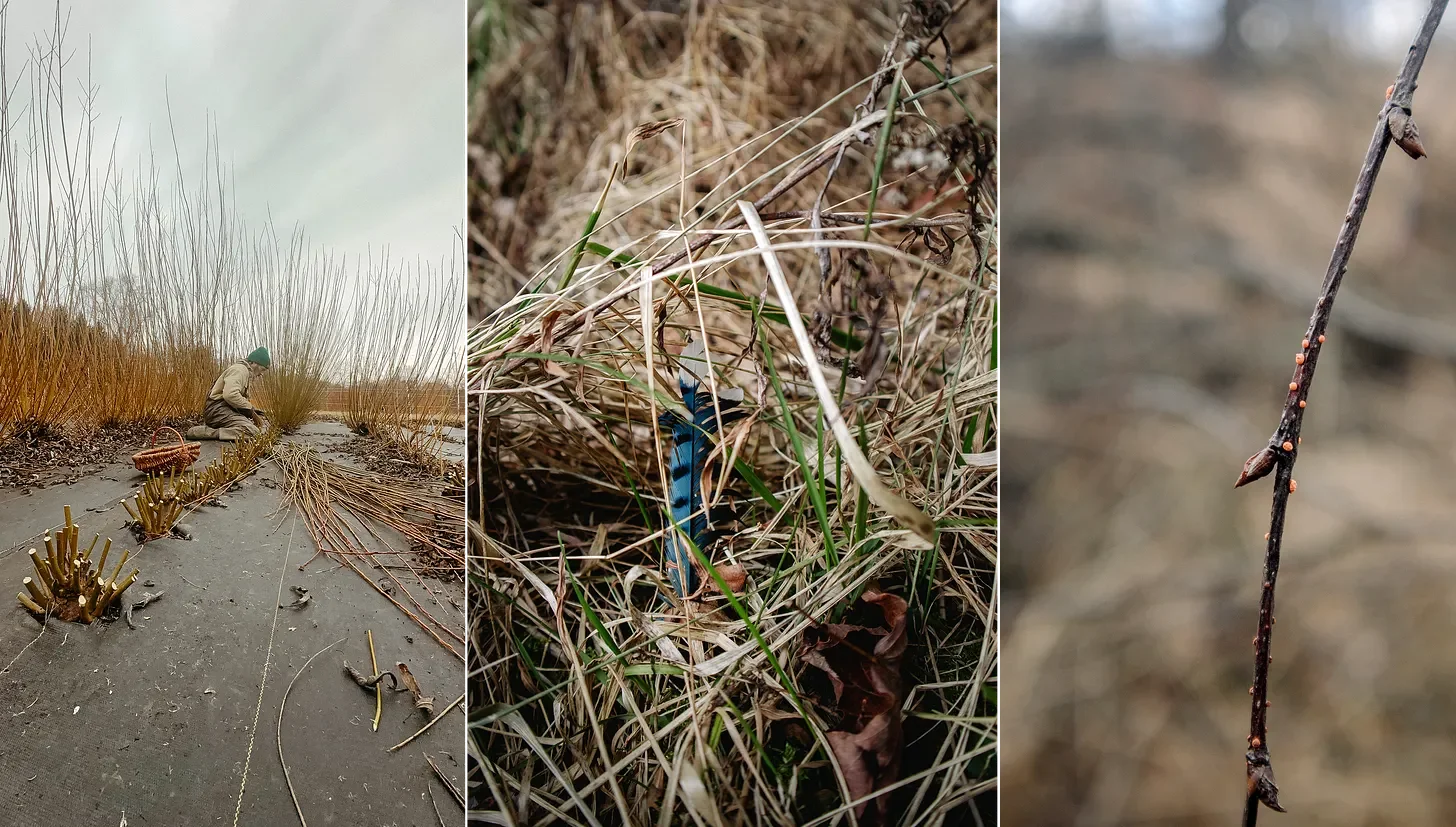
In our most recent preparation of a short, but important, presentation we indeed reached a fever pitch of being unable to make it work, thrusting us into an eleventh hour panic. From that realm, however, the perfect resolution appeared. If we’d settled on a more mediocre approach, which was certainly an attractive option, it’d be missing some magic.
If we hadn’t been able to transcend our individual and collective obstacles, the story would have felt fraudulent.
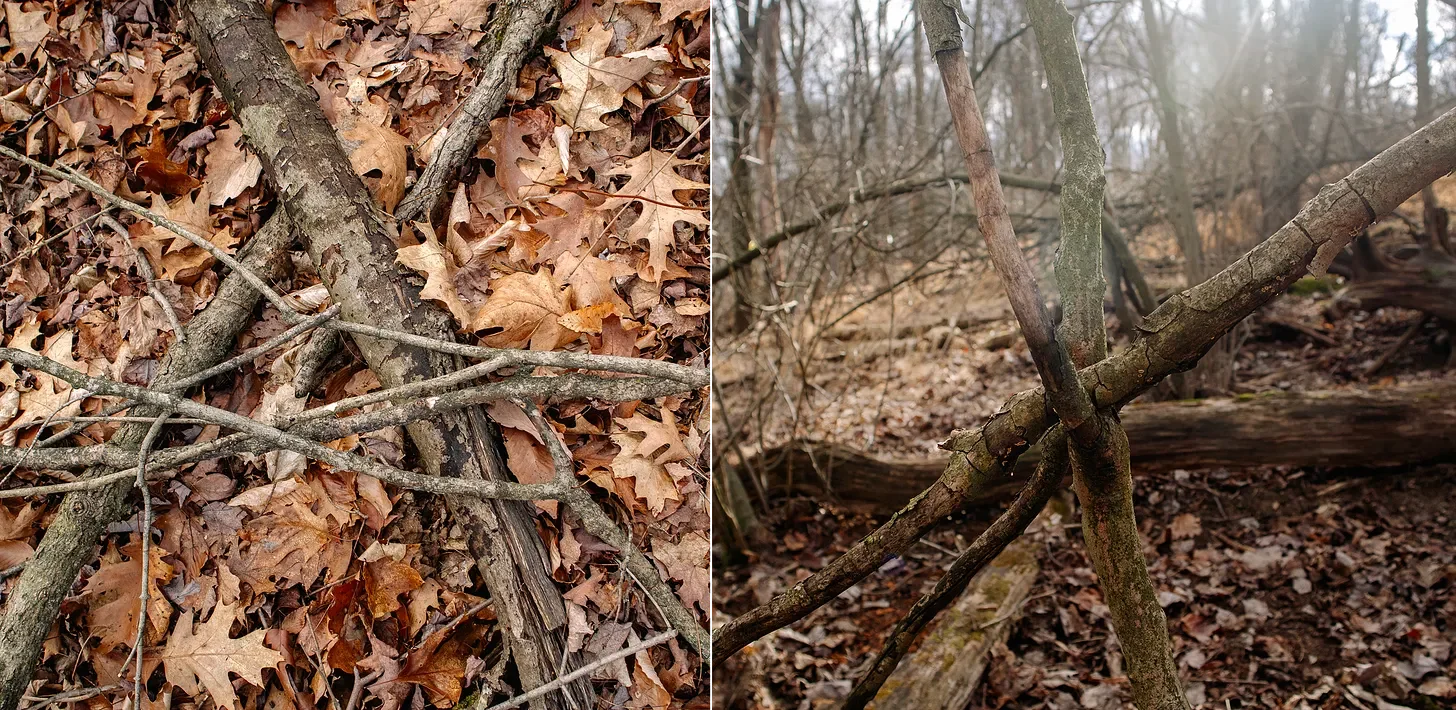
So what is the story that Dan and I tell? In a nutshell it’s a tale of moving beyond your comfort zone, being vulnerable, and saying yes to opportunities that will further those pursuits in the name of personal growth and creative achievement. Willow is the main vehicle through which the story takes form, but the arc shapeshifts through all our endeavors.
While I continue to wade through the waters of frustration, and Dan deals with the dread of anxiety, we’re not looking to slough off those facets of ourselves, or each other. In the moment they’re an uncomfortable nuisance, but we’ve looked back with hindsight enough times to see them as doorways to the next dimension of growth.
Since day one, that’s all we’ve been after.
Originally published on February 18, 2024
Context is Crucial
Experimentation is Everything
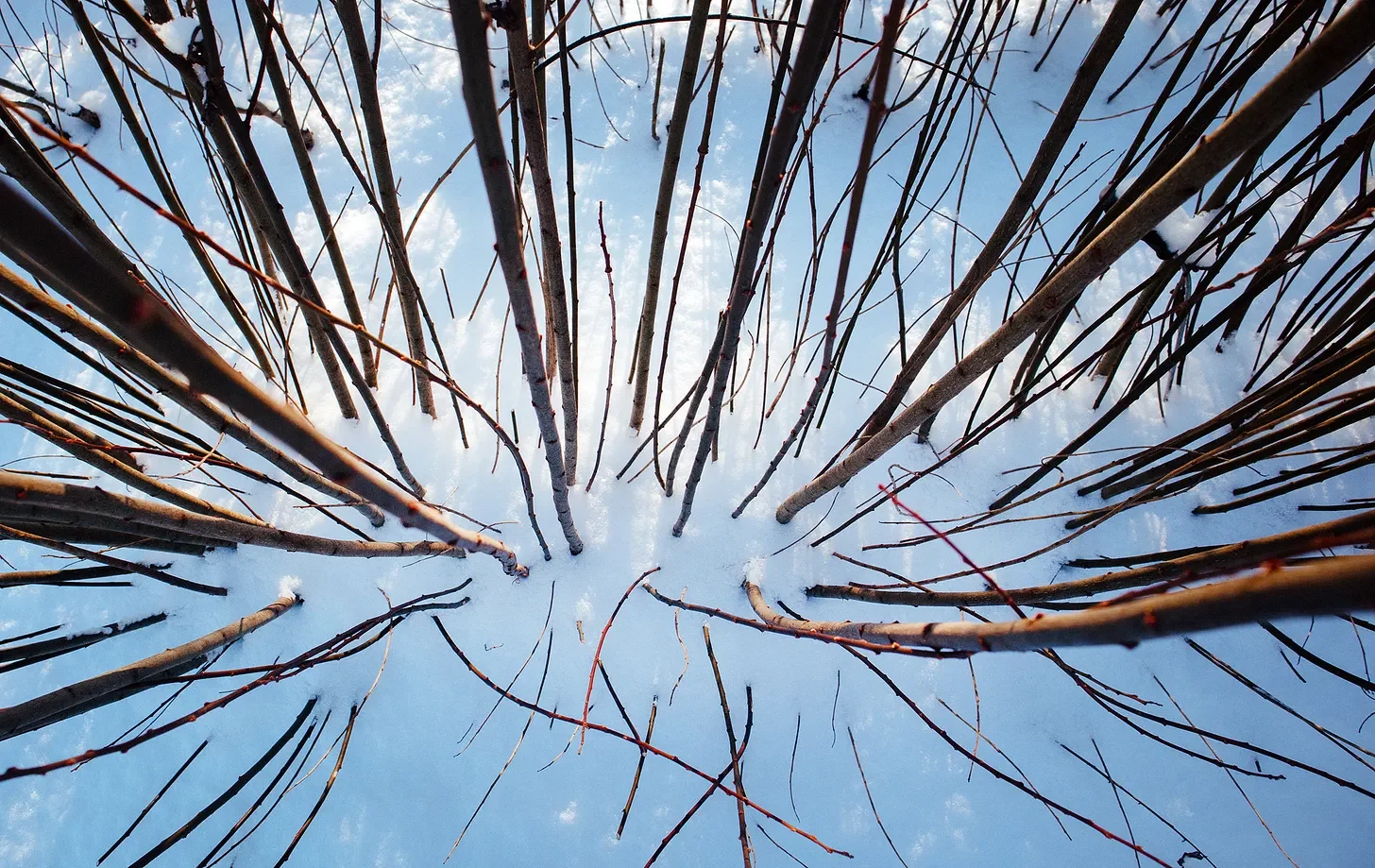
As our work with willow grows, so does the interest in it.
Each week we receive messages from folks seeking more information about everything from crop to craft, and the answers are never one size fits all. Nuance is an important factor in many situations, but especially so when it comes to working with the whims of nature.
Being self-appointed willow ambassadors who are eager to help, we take each inquiry seriously and answer to the best of our abilities. Our wisdom still feels incredibly green, however, and we can only speak from our personal experience which includes about 6 years of experimentation across our 12 acres here in southwest PA. Any other set of coordinates, and their respective climate, will yield different results (not to mention the sensibilities of the steward).
But if there’s one plant that can bend to the uniqueness of person or place, it’s willow.
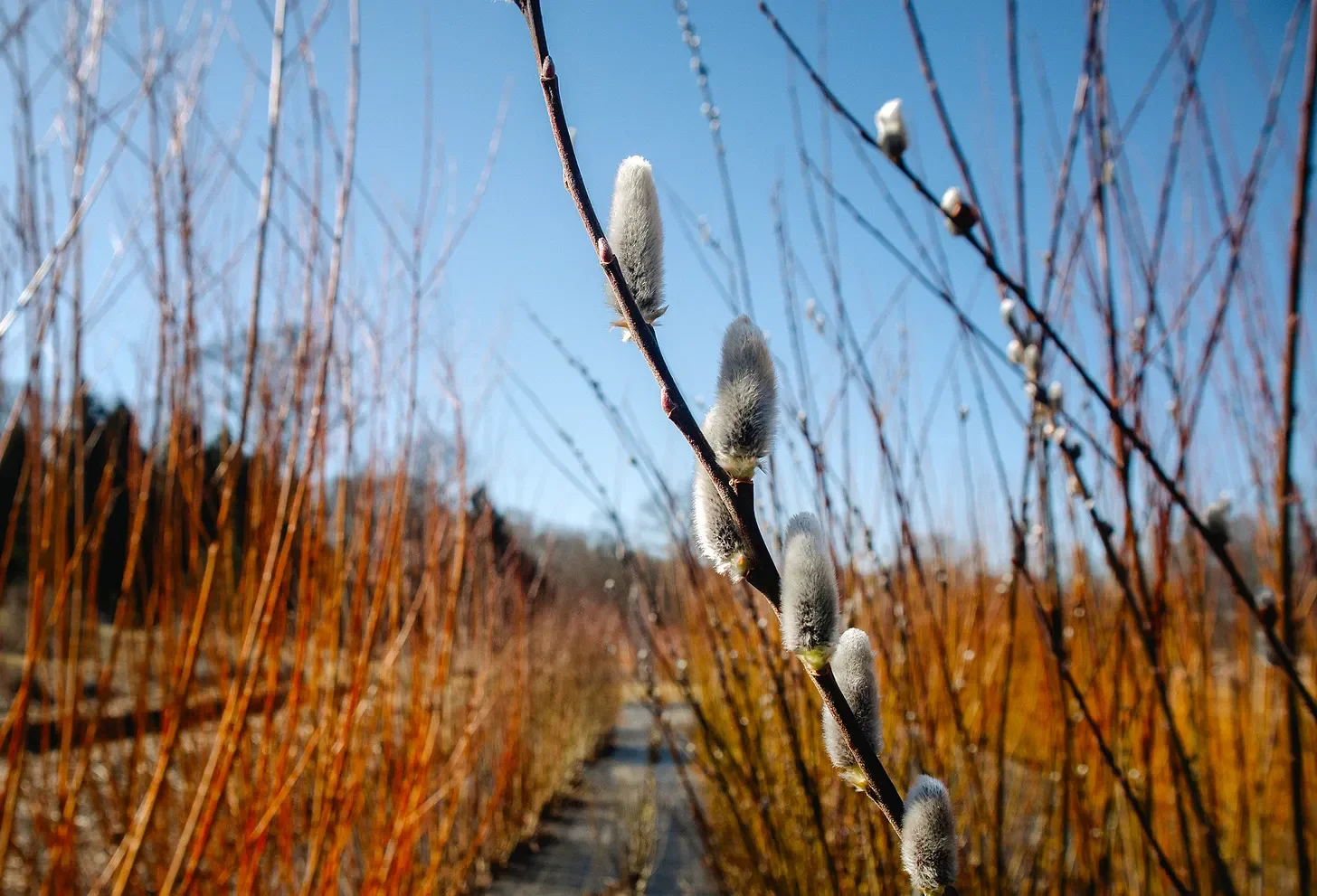
If our approach to farming had a style, it could be considered choose your own adventure.
Beyond our 6,000 willow plants we have hundreds of other fruits, nuts, flowers, and more in various states of maturity throughout the acreage. Each different growing space holds dozens of paths to pursue, which feels both creatively inspiring and comforting as a contingency plan.
If the whole willow thing doesn’t work out there’s the food forest, perennial nursery, cut flowers, etc - each with enough opportunities to explore for the rest of our lives.
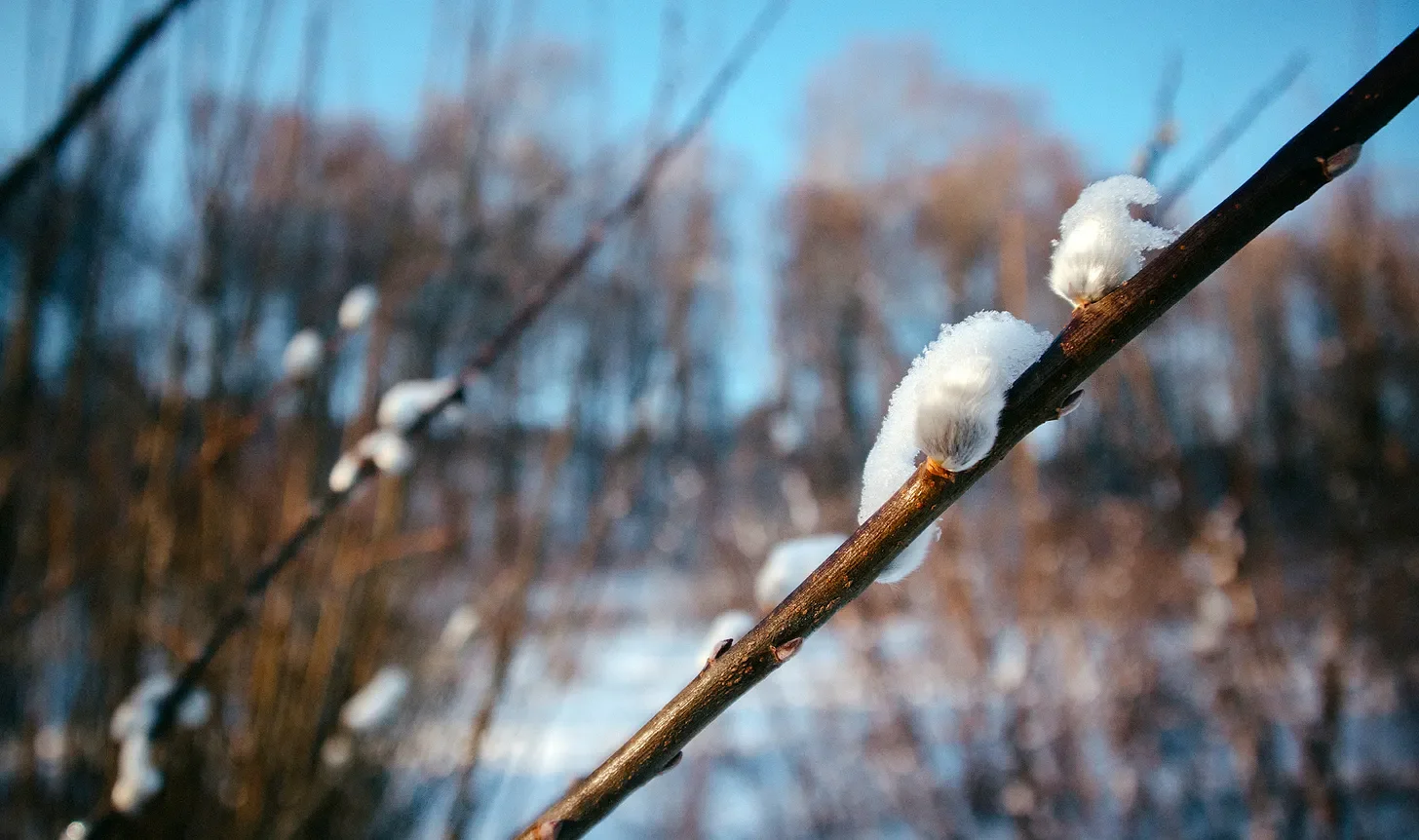
At the moment, though, it’s obvious that the willow thing is working out, even though we never foresaw or planned it. After pivoting from the meticulous and timely care required for annuals to the long-term investment of perennials, our main goal was to scale back structured intervention throughout the land and largely let it be.
We left massive portions of the field unmown, we stopped irrigating, and we trusted that when it came to pest pressure, opposing forces would arrive (they always do, eventually). We decided that what survived belonged here, and what didn’t would fall away. We stopped trying to force our will onto our surroundings and instead let a bit of rewilding rise up and teach us a thing or two.
To our surprise most things have thrived, but none as much as willow, which seems to be the adventure this land has clearly chosen out of all the options we’ve planted.
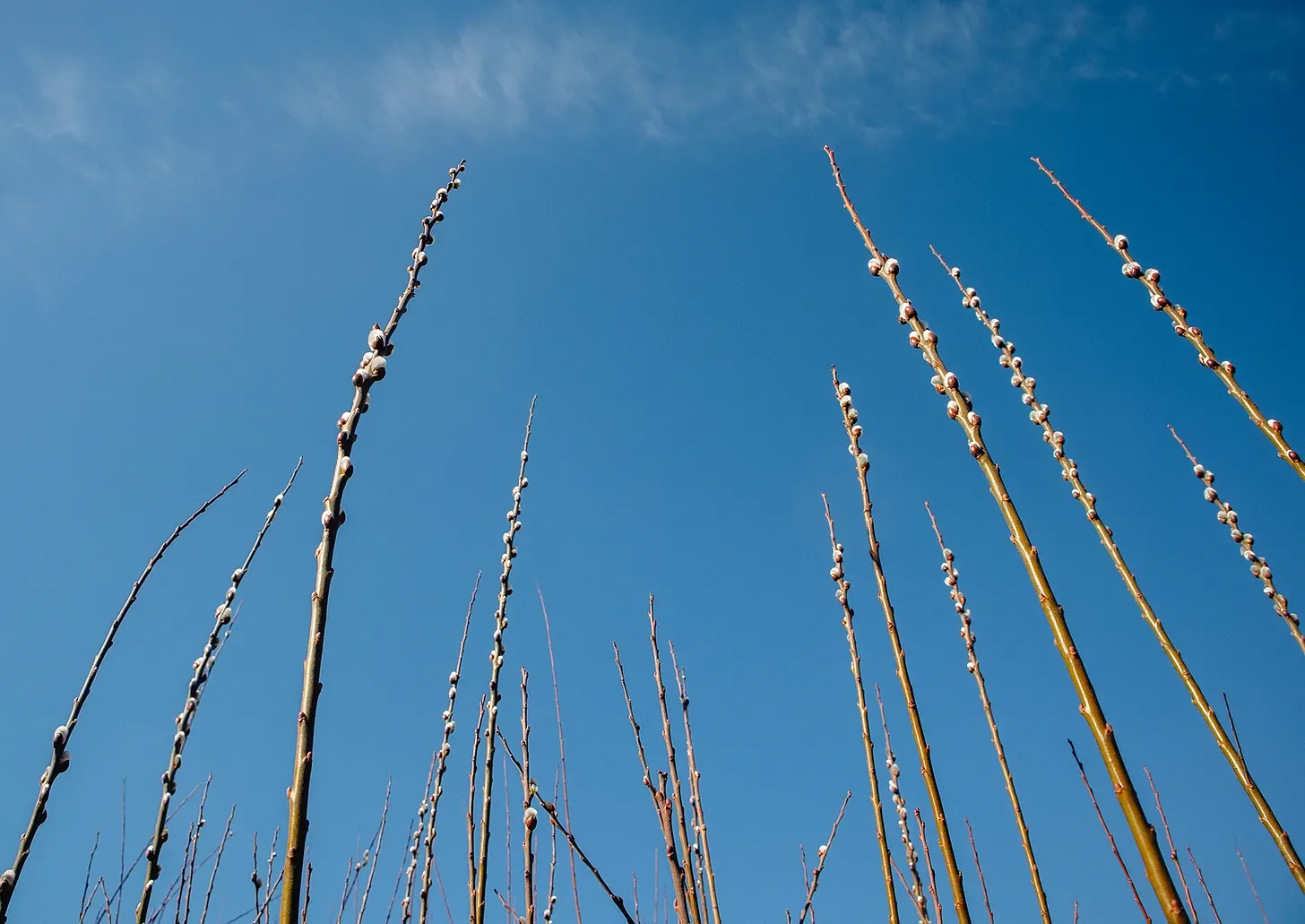
When someone asks a question about growing willow, sourcing it for basketry, or weaving with it, they may not realize the can of worms they’re opening.
The answers we offer folks usually begin with, “it really depends on what you want… what your intention is… what your situation is…” and so on. There are many methods and ideas when it comes to managing willow, both in the field and the studio, thanks to its wild resiliency. And although that resiliency means willow will grow in a wide variety of situations, it is that very quality that makes context so crucial.
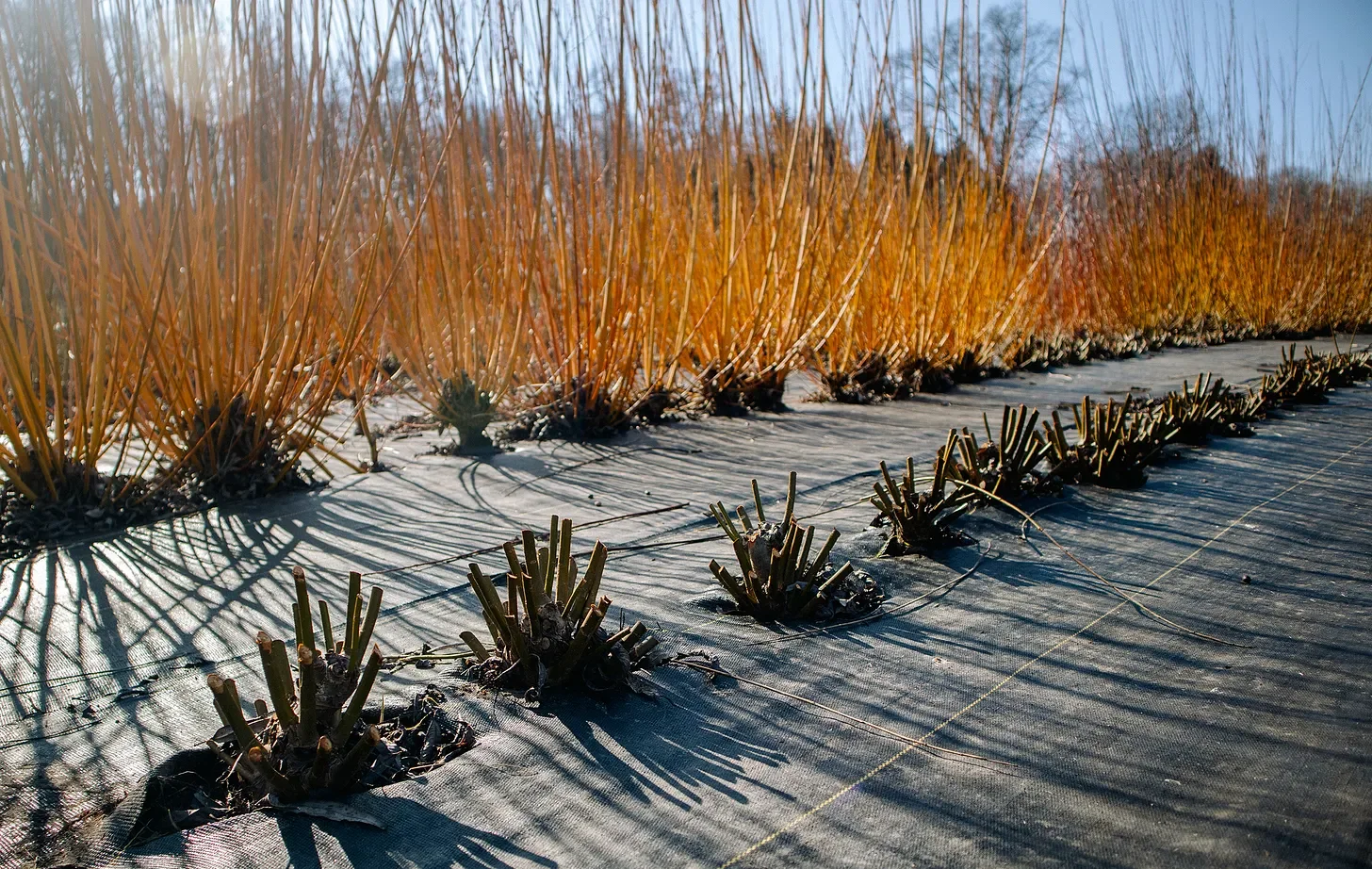
Dan loves to get into the minutiae when answering questions, fleshing out every consideration and expanding upon his personal experiments, both past and present. Our experiments can only yield so many results in a season, so communication throughout the world of willow enthusiasts seems like a paramount pursuit.
Plus, it’s another way we can embody inspiration from the plant itself, who shares with such selfless abundance that its hard to keep up.