
Singing a Song in the Round
The Overlapping Melodies in Every Moment
Working with willow is like singing a song in the round.
Five years in we find ourselves perpetually in the midst of one phase as another begins, overlapping the previous, ad infinitum.
There are no tidy start and end dates to a farm business that exists within this cacophony, only a rising and falling tide of activity.
Whether we are weaving or weeding, or anything in between, willow is independently growing, thriving, or graciously releasing its life in endless pursuit of regeneration.
This is the song that never ends, but the hope is always to find harmony amidst our individual intentions.
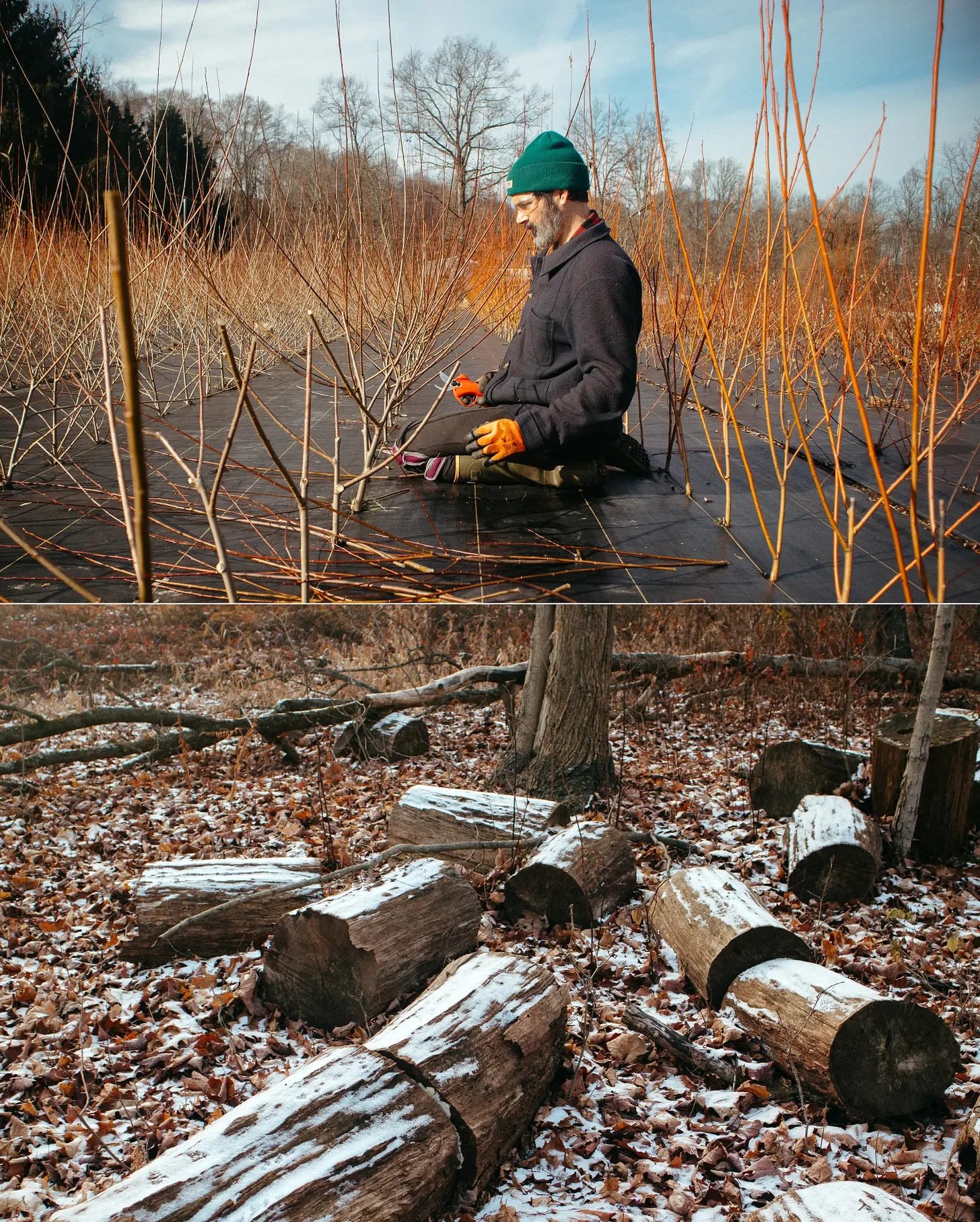
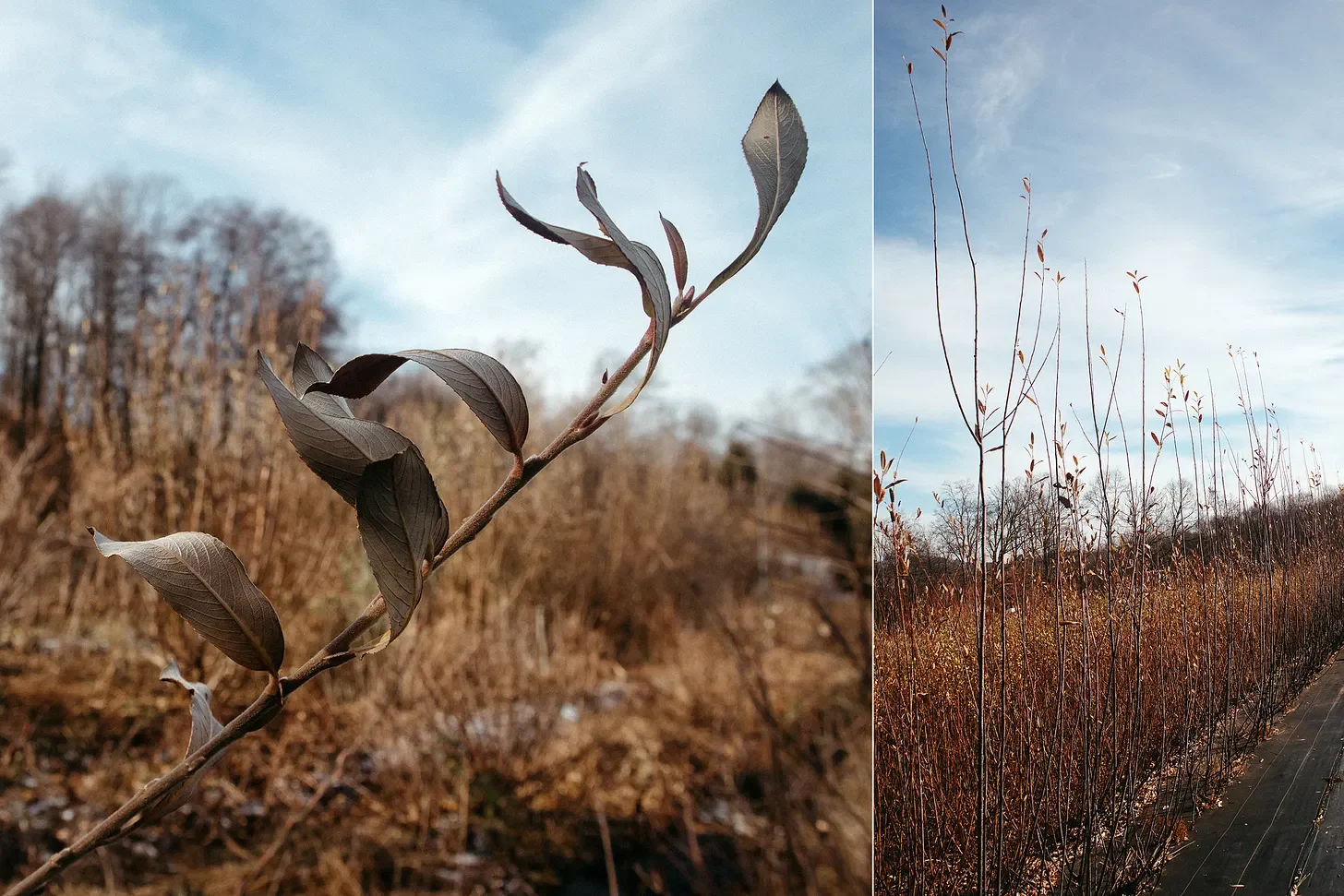
This past week we were busy opening our basket shop, preparing for an upcoming event, and beginning the multi-month-long endeavor of harvesting our thousands of willow plants by hand.
When we pivoted from annuals to perennials several years ago, we traded summer-based labor for mostly cold weather work. In 18 days winter will officially arrive - the only season to span the threshold from one year to the next. The rhythm of nature has a habit of colliding with the calendar.
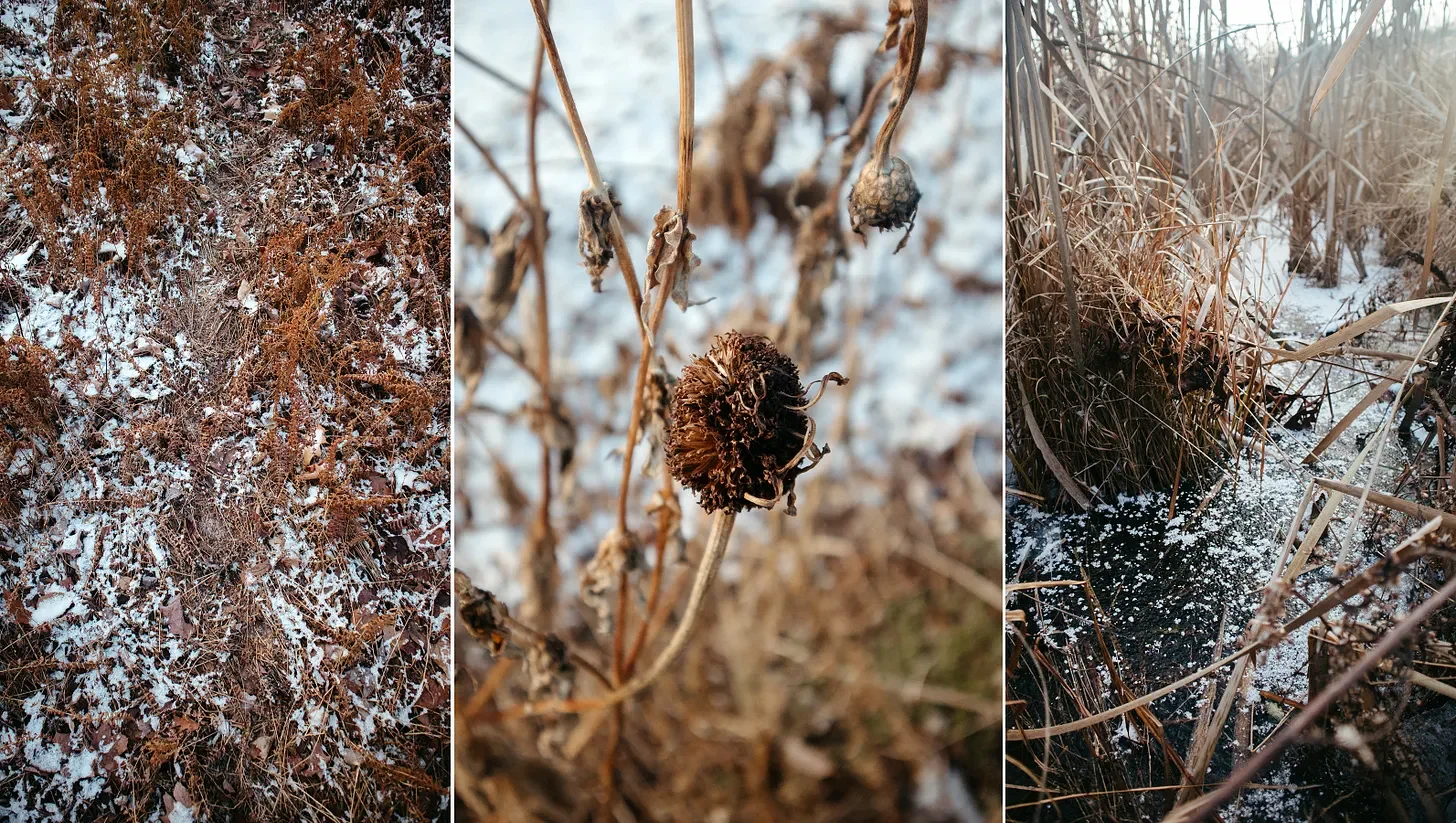
Outside it has been mostly mild, but we did receive a welcome sprinkling of alabaster to break up the browns. Like powdered sugar, snow changes the tone of all it settles upon. Its simplicity has the power to renew dimensionality and inspire new perspectives.
Those crystals tell me that the ponds have become spectacularly solid. They show me how much the stumps of long-gone trees can hold in their glacially-slow-to-decay grooves. All around me the world holds change as I try to remember to notice, grateful for the illuminated cues.
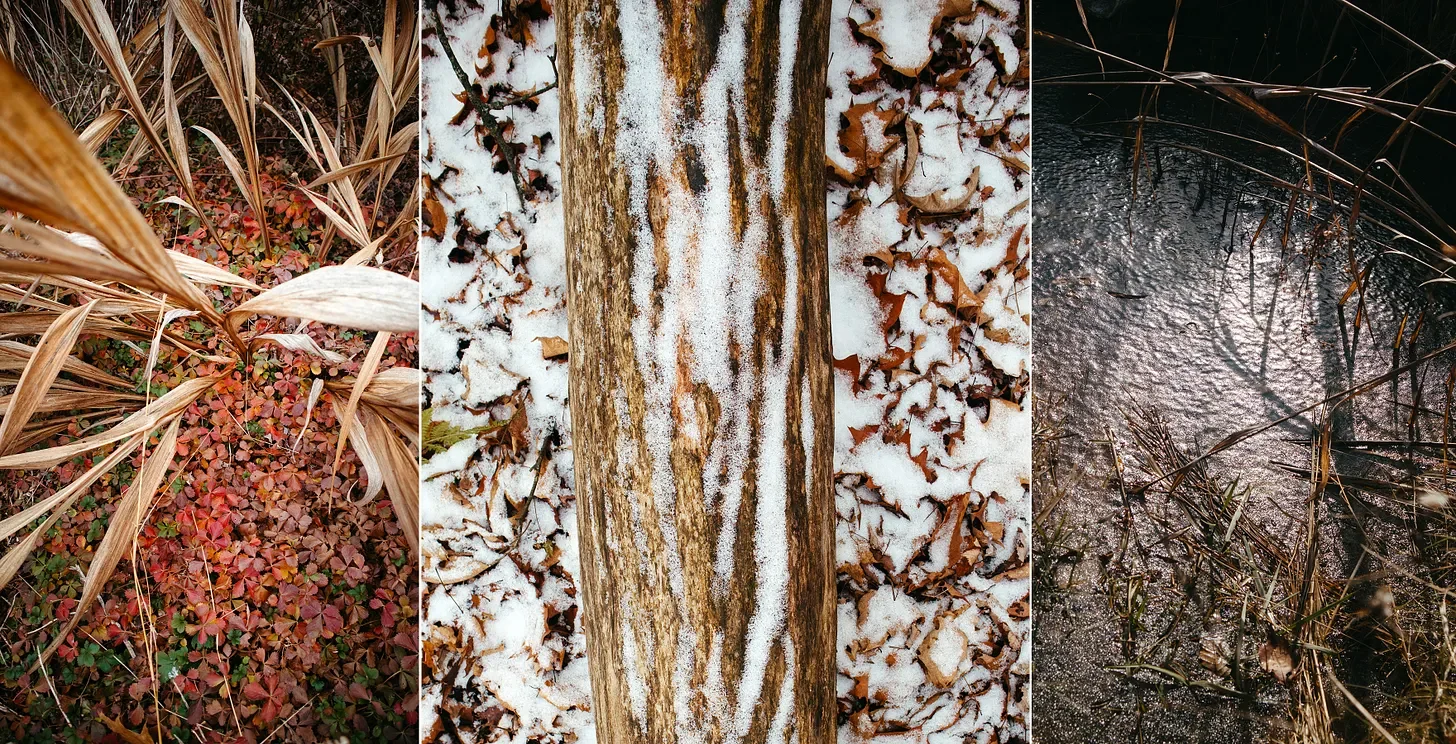
I’m reminded how much I resist leaning into the truth that living is like singing a song in the round. There are very rarely buttoned up endings or evidently clear beginnings. We each embody so many melodies at every moment that it is impossible to parse them out into defined shapes.
The improvisational nature of reality edits our days by endlessly demanding we adapt and react, and yet I greatly enjoy detailing plans and timelines in an effort to establish a framework for the future. Perhaps I find a sort of solace in continuing to build houses on sand, curious to see how they will ultimately be remodeled by life’s forces. Only when looking back does our collaboration become clear.

Whenever something on television states an explicit date starting in 1985 and going back, we like to point out whether or not one or both of us were here. If we weren’t here yet, perhaps our parents had become a pair and the wheels were in motion. Or maybe our grandparents were making moves that we now know led to all the following lives within our family.
Here in 2023 it all seems inevitable – our existence, our work with willow, and whatever has yet to land that is undoubtedly in the ether. I will continue to try and dream of the details, but will hold on to the hope that the universe is a better songwriter than me.

Originally published on December 3, 2023
Basketry and Beyond
Wherein I Muse Wildly Over Willow
Willow, famously, weeps.
The dreamiest summer afternoons are spent beneath a weeping willow canopy where long, leafy limbs dazzle and dance in the breeze, but in fleshing out this romantic archetype the nuances of willow as a species are eclipsed.
For every colossal tree that stretches and weeps into majesty, there are many other varieties with the potential for different, yet equally numinous, fates.
Willow destined for basketry first begins its life as a short stick called a cutting.
Tiny branches quickly burst forth from here in spring, vying for closest proximity to the sun at an uncanny rate of growth. By late summer a single cutting could launch beyond the height of its grower who, just months earlier, had to crouch on bended knee to push it into the cold earth.
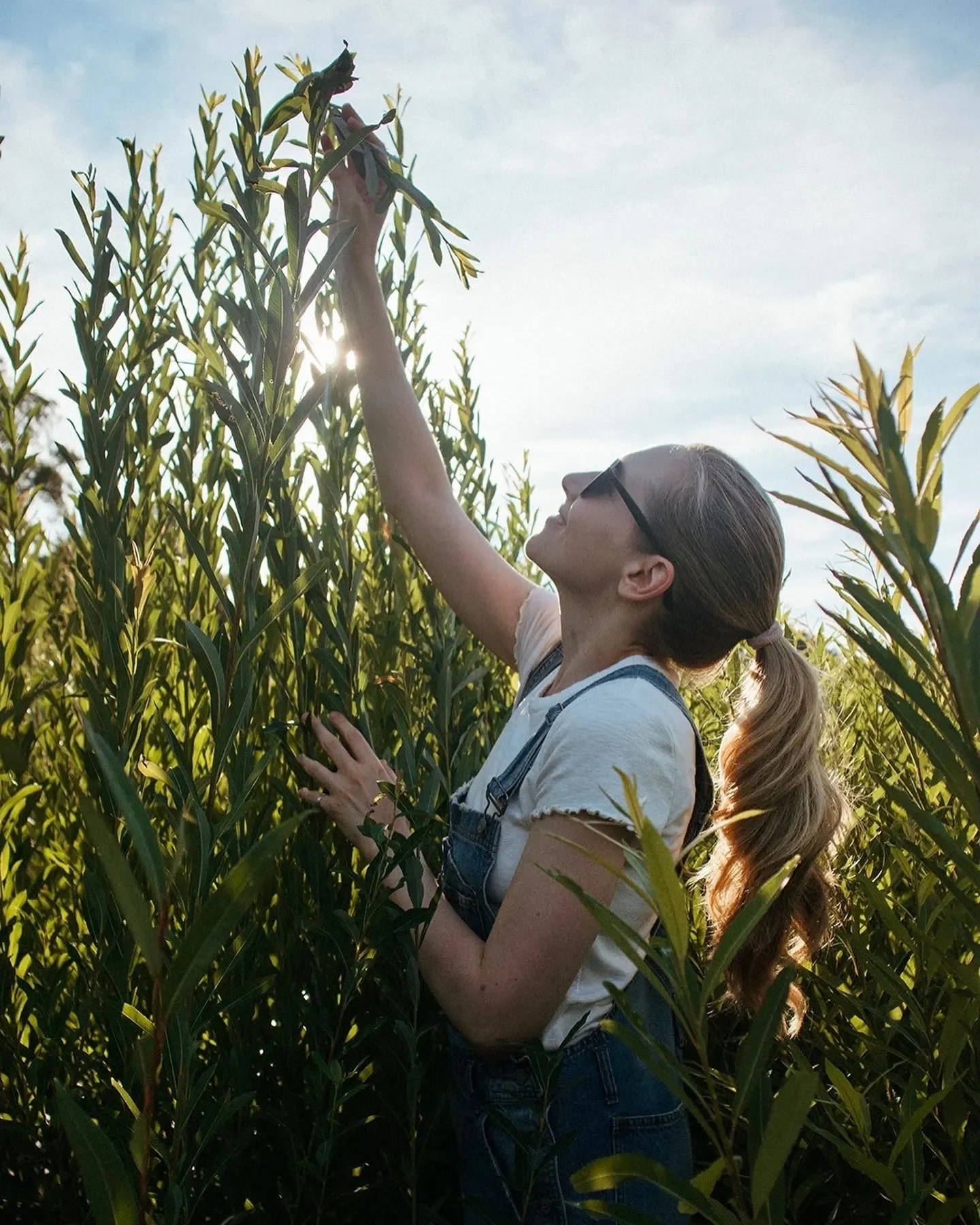
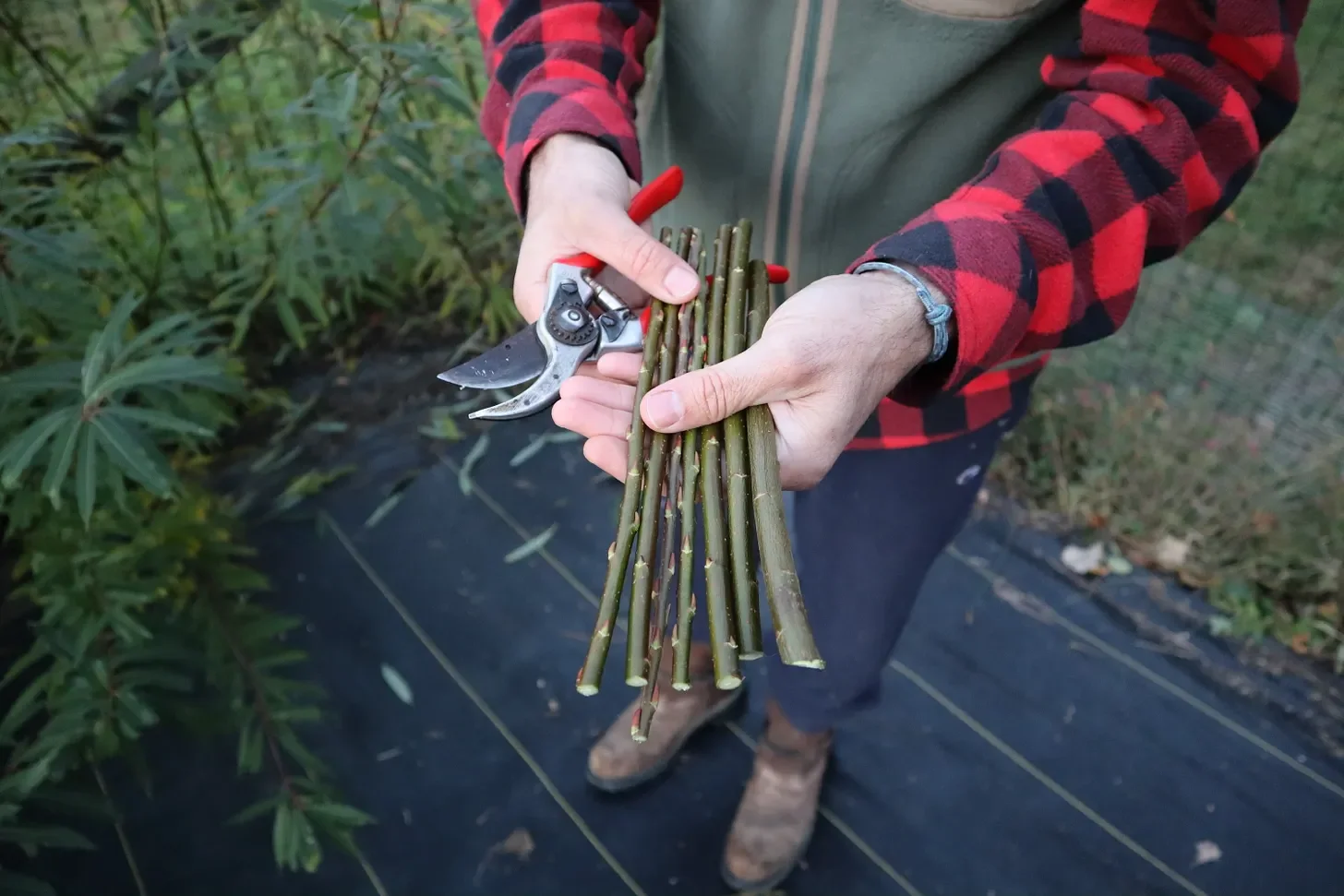
If that same grower cut their giant willow child down to a mere stump in the midst of its first winter, it would bloom with multiplicity in its second spring. The inaugural set of amputated branches would magically be replaced by many more arms, now reaching straighter, higher and stronger, encouraged by competition.
Such is the nature of willow.
The urge to create is one of humanity’s most innate desires.
To be able to erect something novel in physical space that first only existed in imagination is a superpower. This is the realm that hopefully limits artificial ingenuity, for those creations are dependent on data taken from that which has already been created. Mechanized imitation and reiteration cannot replace the sensorial, corporal portals of a person. These access points allow for deft attention to detail and inventiveness, which craft and creativity demand.
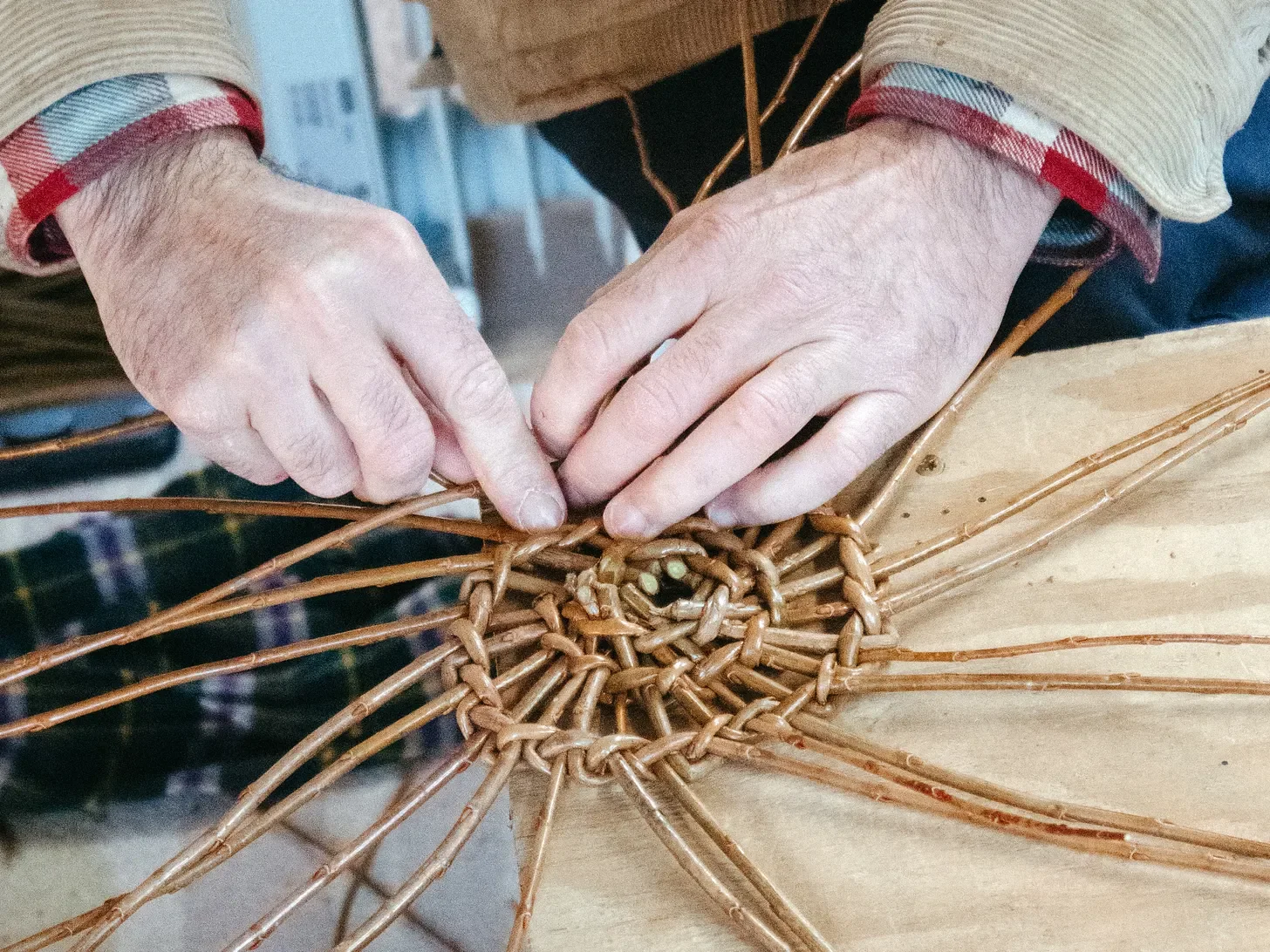
Basketry, for instance, is the result of a relationship between weaver and willow, person and plant. Their collaboration begins in the field, where the line between cultivator and craftsperson blurs, and future baskets lie hidden between the branches. Both parties blindly experience one another through feel alone, never quite knowing the full truth of their partner.
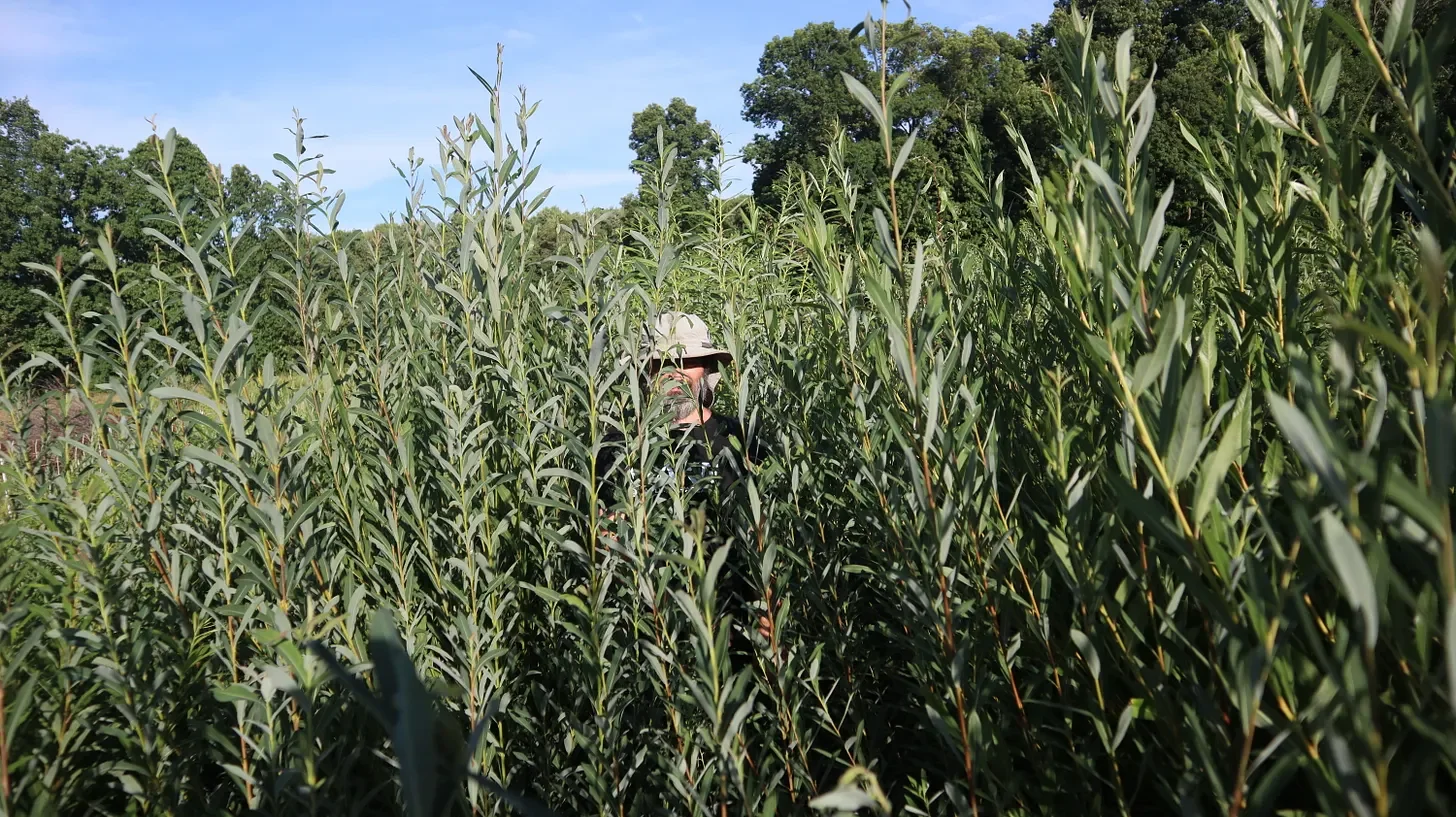
Assigning an animistic lens to the situation may seem too tender, but as with any living entity there is an undeniable transmittance of energy. From the outside it is an imperceptible conversation, but the two are indeed talking.
To fully lean in to the fable, the trajectory of this pair includes shades of tragedy. The craftsperson, the cultivator, must kill portions of the willow, the plant, in order to eventually create from what perishes, leaving behind space for willow’s paradoxical regeneration. The story may only end when the craftsperson does.
Ideal basketry material is the result of several cycles of endurance training that follows a general arc:
Spring planting of cuttings
Summer/fall growth
Winter amputation known as coppicing -
a practice that clips all the rods off of each plant down to the stump, called a stool
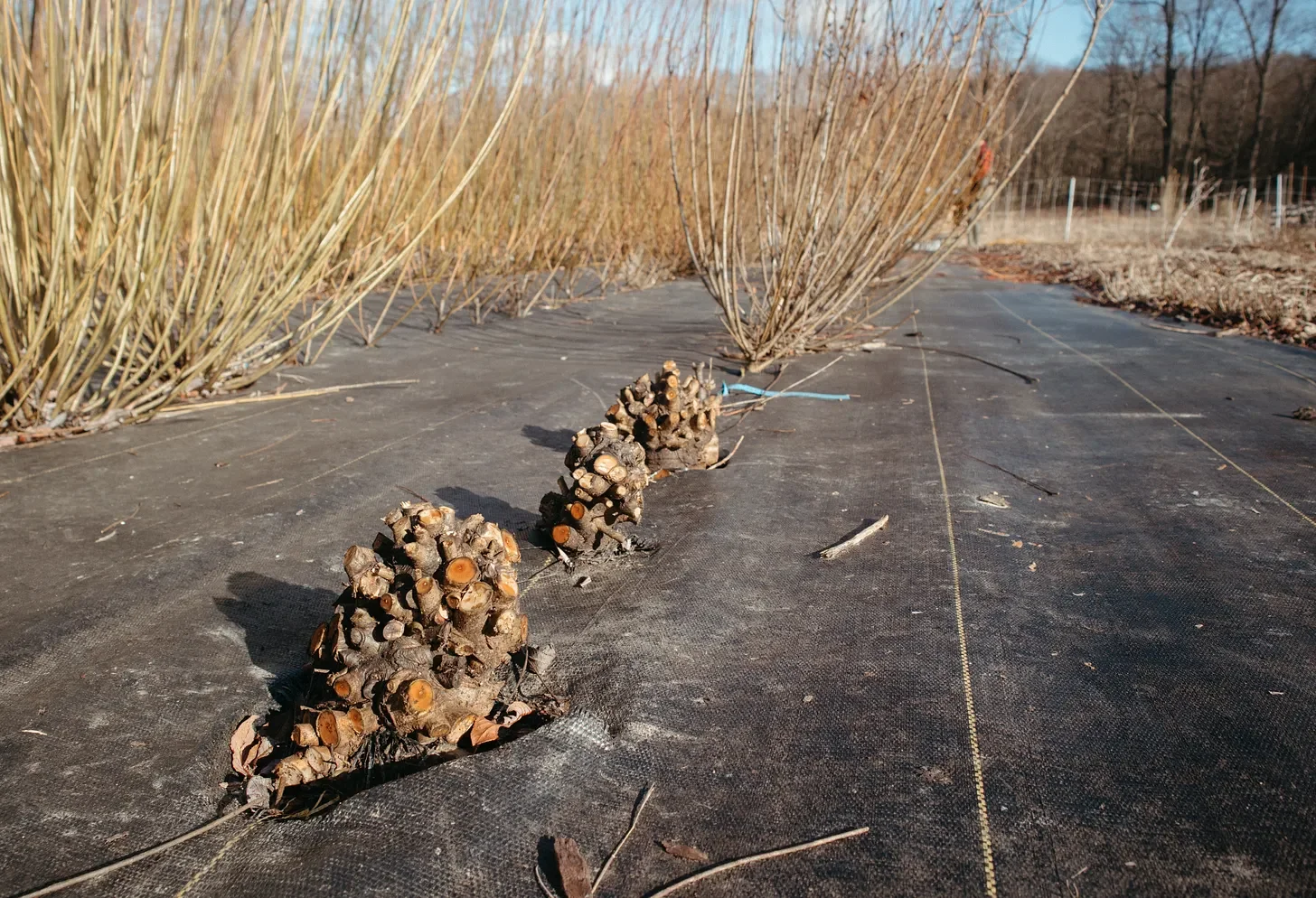
With each successive spring, much like eyes on a potato, fresh rods sprout forth from their stools, capitalizing on the opportunity to rejuvenate and multiply. Early years of training offer time and space for the cultivator to patiently observe the personalities of each variety, along with sparse harvests of material to practice weaving with.
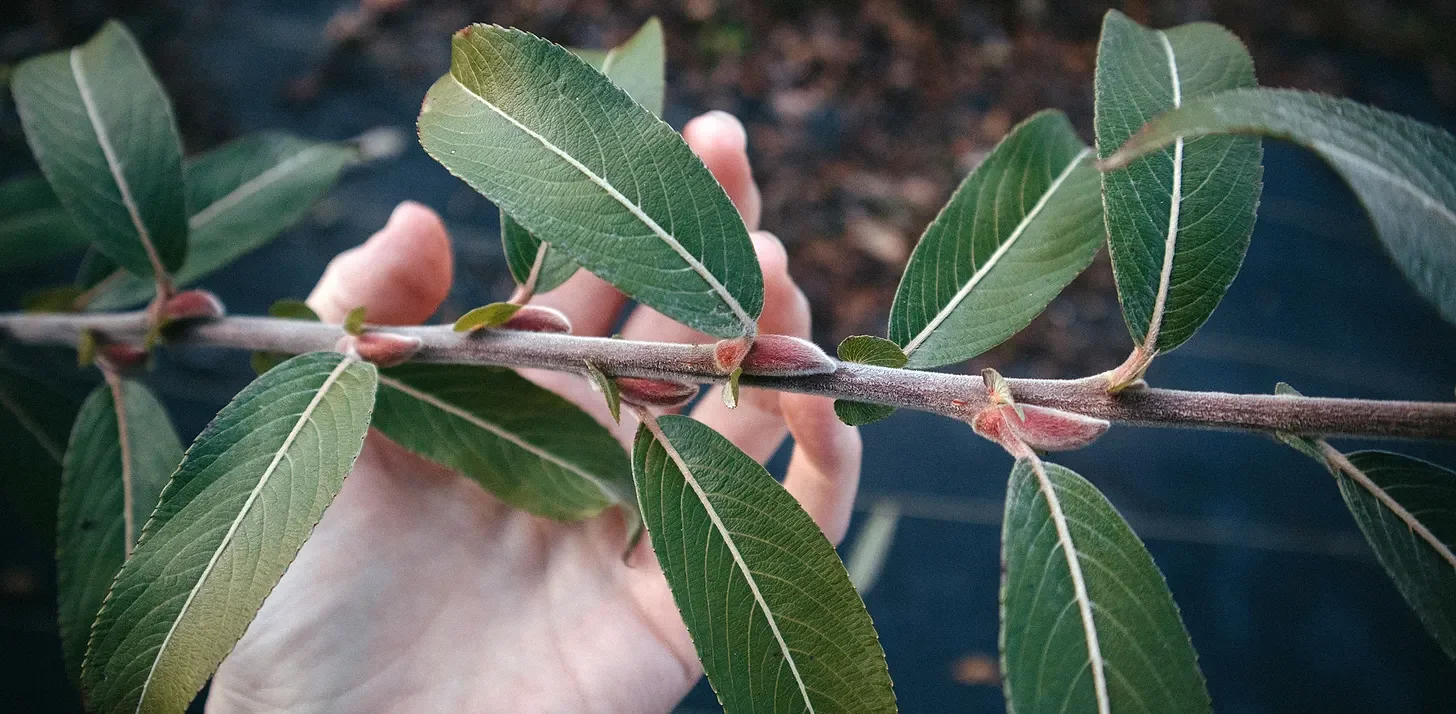
Data emerges as the plants battle bugs, cope with weather realities, and reveal their individuality and eccentricities. Leaves stretch into all sorts of shapes as a vast spectrum of hues scatters across the field. The world within willow widens, the conversation reaches new depths.
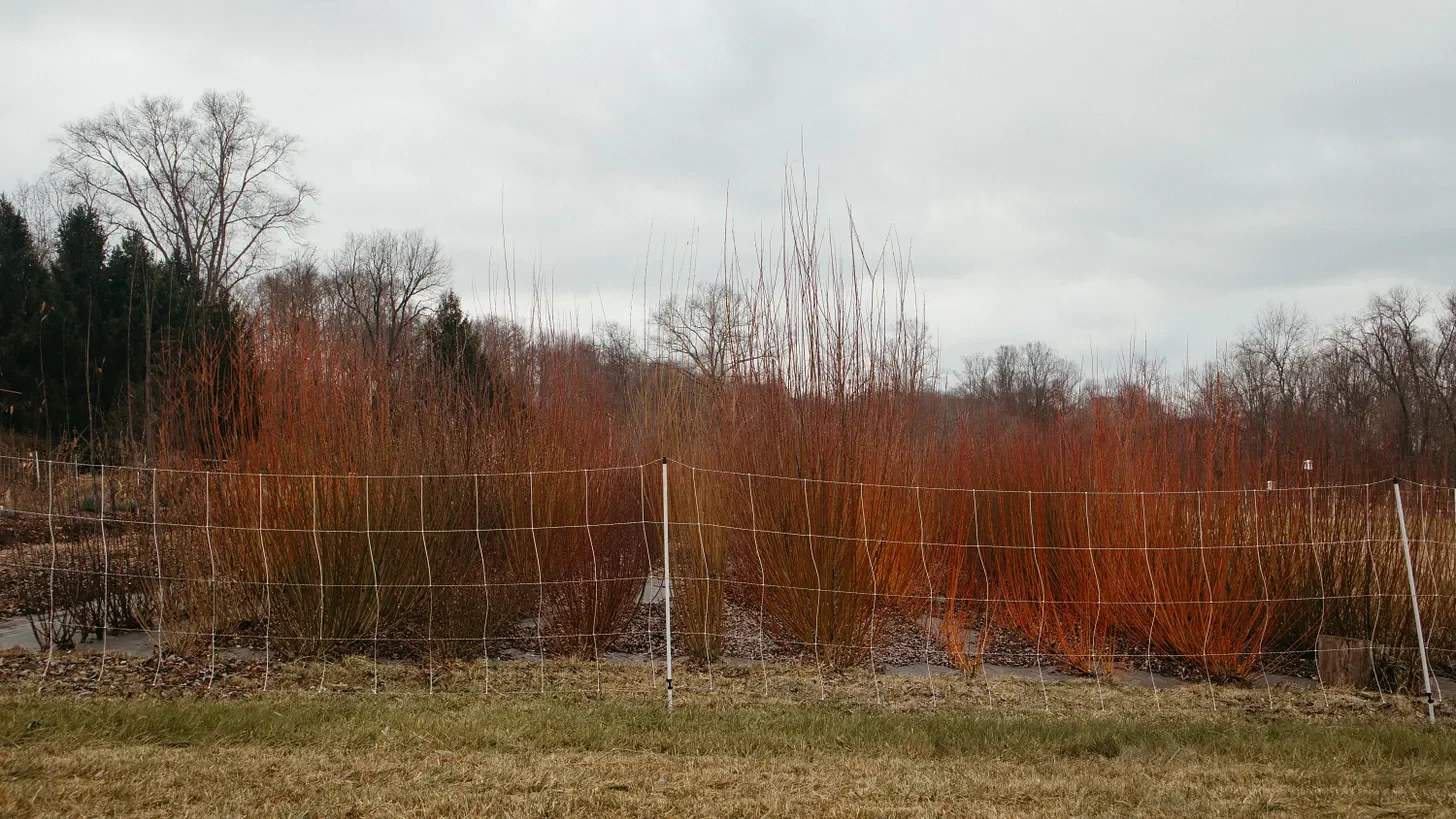
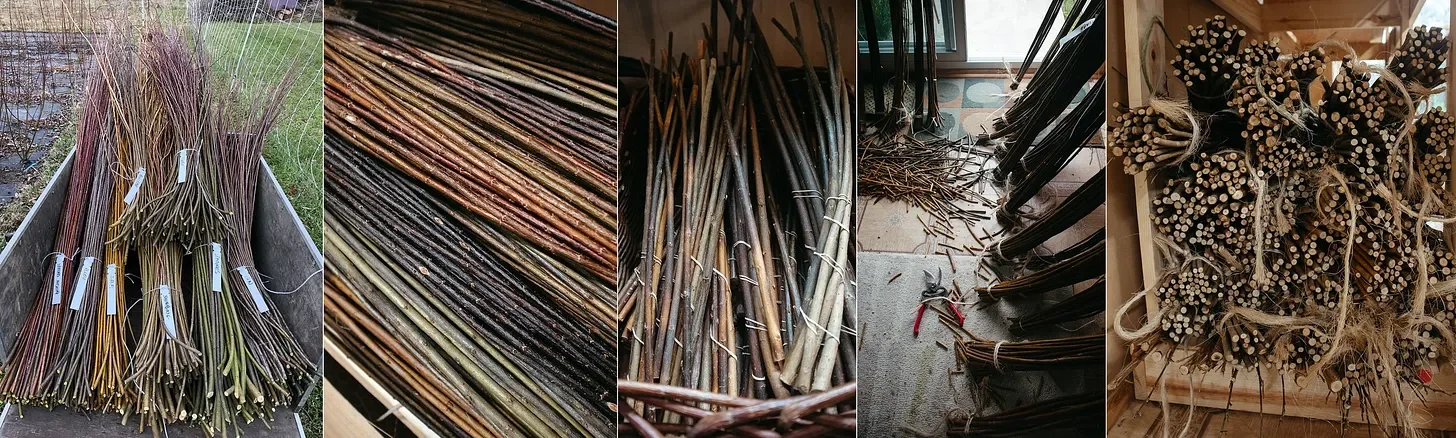
After four or five years, dense groups of rods stand up straight atop their stools like tall, tapered soldiers. As winter approaches they fall leafless and bare, letting the cultivator know that it’s time to cut their thick feet. There, even in dormancy, green vitality glows within willow’s core. But that energy, severed from its support system of stool, roots and soil slowly wanes, along with physical volume.
It takes an astonishing amount of time for willow to fully surrender the moisture of their life-force to the ether, but in due course each rod withers and become brittle, especially amongst their wispy tips. Tightly tied bundles loosen their waistbands, revealing a readiness for the next step. Even in death they appear eager for action.
Weeping Willow’s knobby root knuckles are the stuff of fairy tales, classically serving as landscapes for childhood imaginations.
They are also, heartbreakingly, a menace to modern infrastructure. Always on a quest for water they ruthlessly chase it, often strangling pipes and rumpling sidewalks in order to quench their thirst. Their idyllic imagery above ground cannot compete with the havoc they wreak below, and this notorious behavior has contributed to their population decline. Collateral damage of convention.
Basketry Willow grows much smaller (as a shrub), especially when seasonally maintained, but their proclivity towards water remains. In order to prepare fully dried rods for weaving they must spend time submerged within water. It is an ironic return to the realm they’ve been hardwired to hunt. This part of the process is where the craftsperson’s intimate knowledge of willow’s textural nature is put to the test, for soaking is far from an exact science. It is an art.

The rule of thumb for hydrating dried willow is one day per foot of length. A six or seven-foot rod would require roughly one week spent underwater, where it re-absorbs not to its full former plumpness, but into a sort of reanimated, perfectly pliable corpse. Temperature, humidity, each rod’s personal biography, and more, all contribute to the way water permeates dried willow. Too much saturation and the bark sloughs off during weaving, too little and the rods could easily break.
When the weaver has determined a harmonic level of hydration has been achieved, bath time is over and mellowing begins. This last step before weaving allows the willow to rest and re-acclimate in a moistened environment back on land. With a renewed sense of equanimity, the metamorphosis of mere sticks can begin.
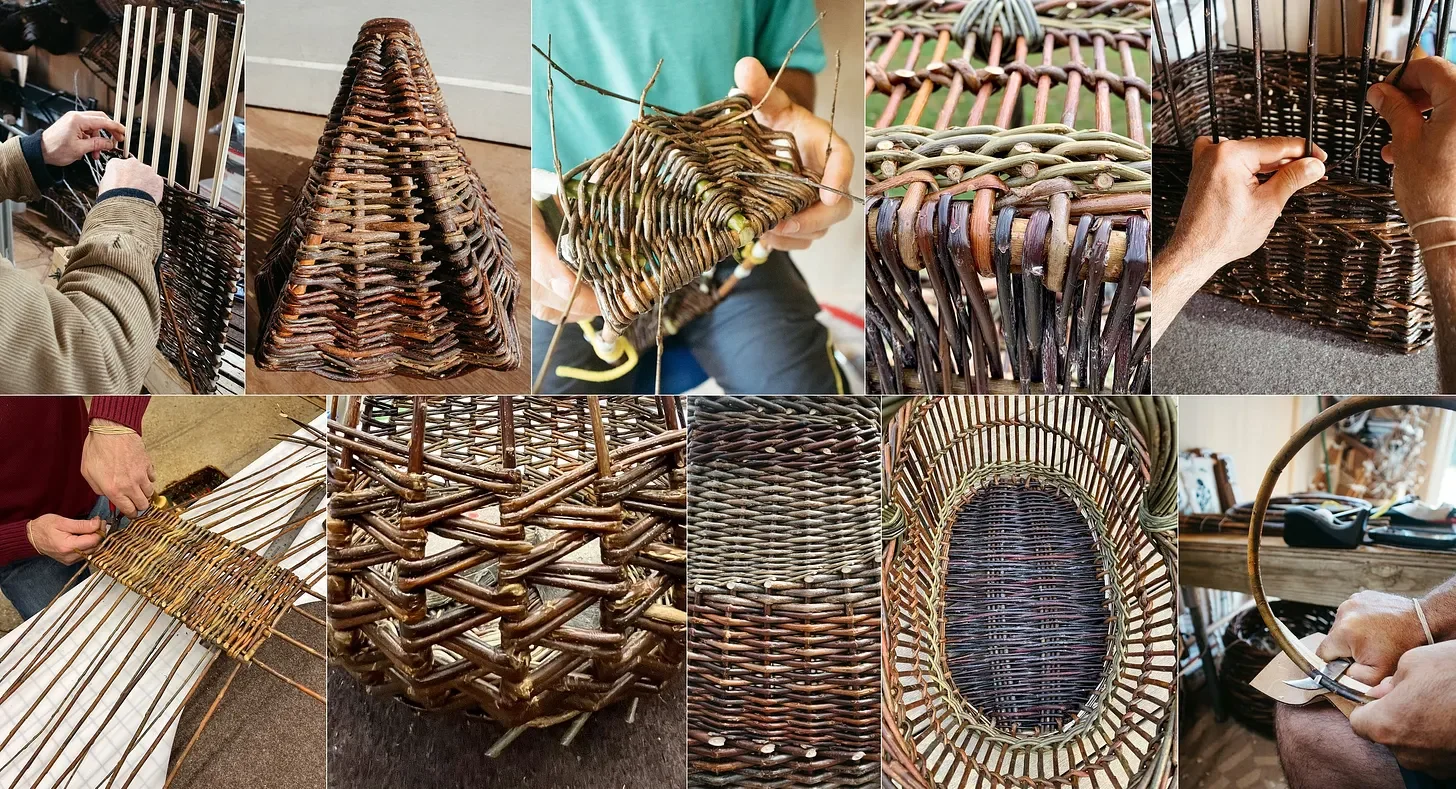
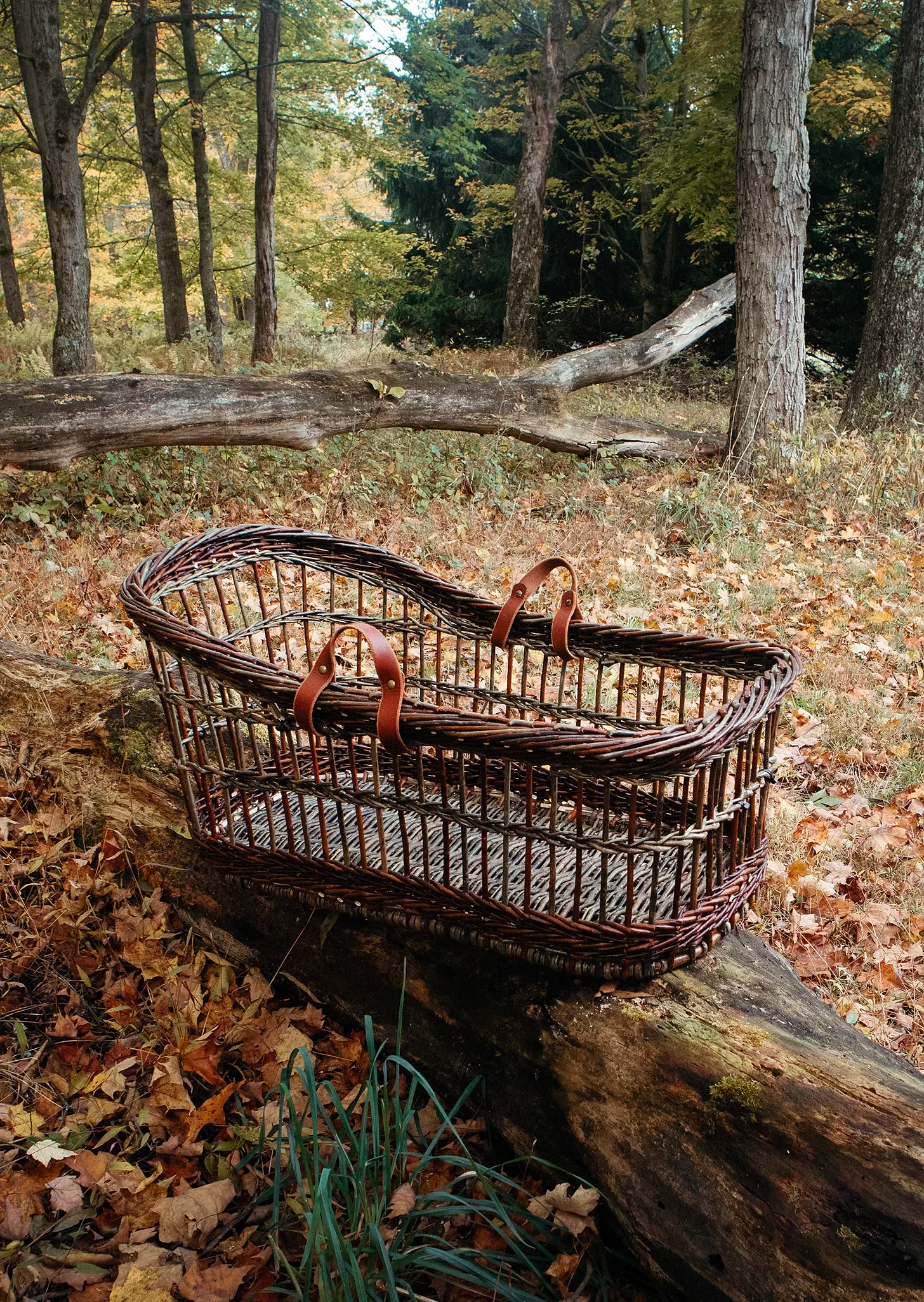
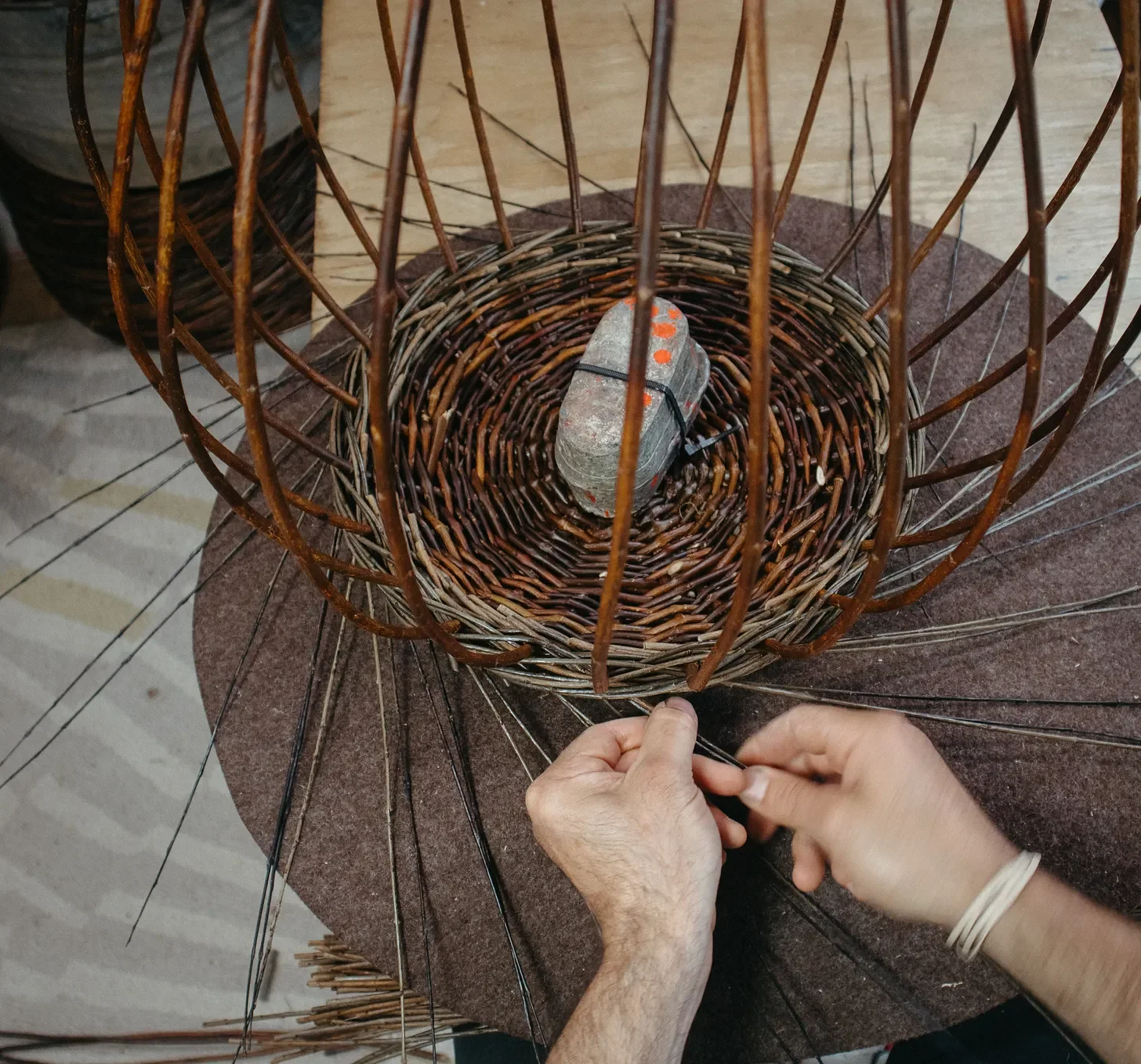
To weave a willow basket is to transform humble, unassuming material into functional forms.
Sticks become shapes in an alchemical process that plays out along the threshold of life and death, culminating in a showcase of the plant’s resiliency and near immortality. The weaver who crafts with willow accesses a piece of this mystique, manifesting and solidifying their own creative potential within each bend. When the work is done the basket stands alone, but the residue of the relationship remains.
This craft is one of the few that has remained immune to technological replacement. Even the most unassuming basket in the corner of a thrift shop was shaped by human hands. It is an artful skill that connects us to our most original, innate nature, and basketry remains alive today because of all the many yesterdays that weavers spent honing and passing on their wisdom. Every basket is a testament to our universal wish not only to create, but to endure.
Willow, graciously, remains the perfect dance partner for this dream.
Beyond.
There is a quote from sixteenth-century lute maker Gaspar Tieffenbrucker, who gives a voice to his material (wood), that says:
“While I lived I was silent; dead, I sing sweetly.”
From the afterlife, and the in-between, willow can bend beyond basketry into shapes including fences, walls and furniture. It is the origin of aspirin and can truly, finally, touch the sky when woven into a hot air balloon basket. It can also serve as a final resting place when crafted into a casket. In every iteration, resiliency rings.
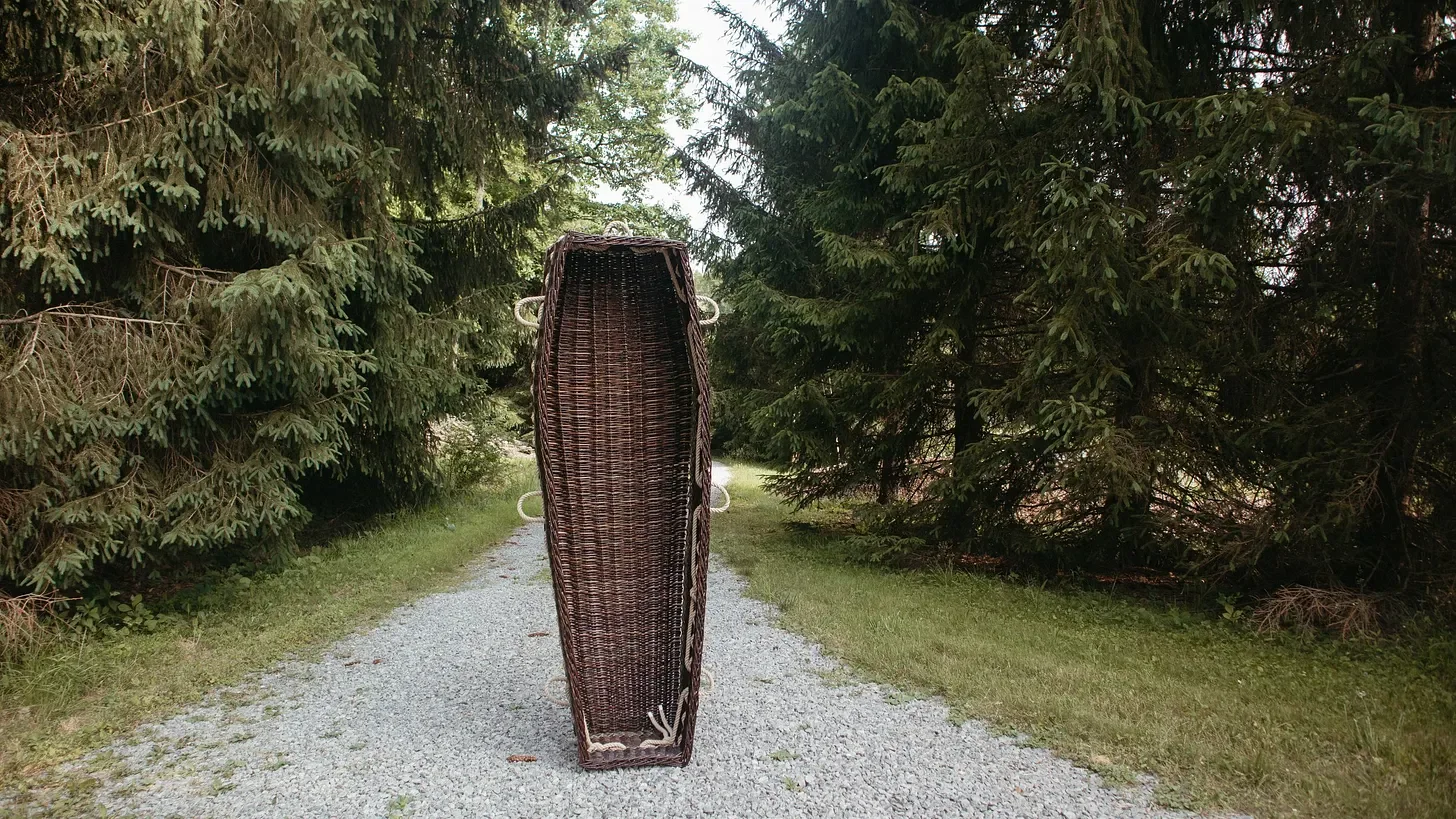
Willow selflessly supports our desire to exercise endurance, our propensity to be enchanted by earthly beauty, and our ability to create from the bounty. It can bend, alive or departed, but our afterlife is rigid. In death we surrender our skin and senses, ultimately unable to continue simulating the cycles of shapeshifting.
When our gnarled knuckles become dust, and we find ourselves amongst the realm of those menacing, magical roots, I wonder: Perhaps what the willow weeps for, is us?
Originally published on December 10, 2023
Meticulous and Messy
Approaching Creativity from Either End
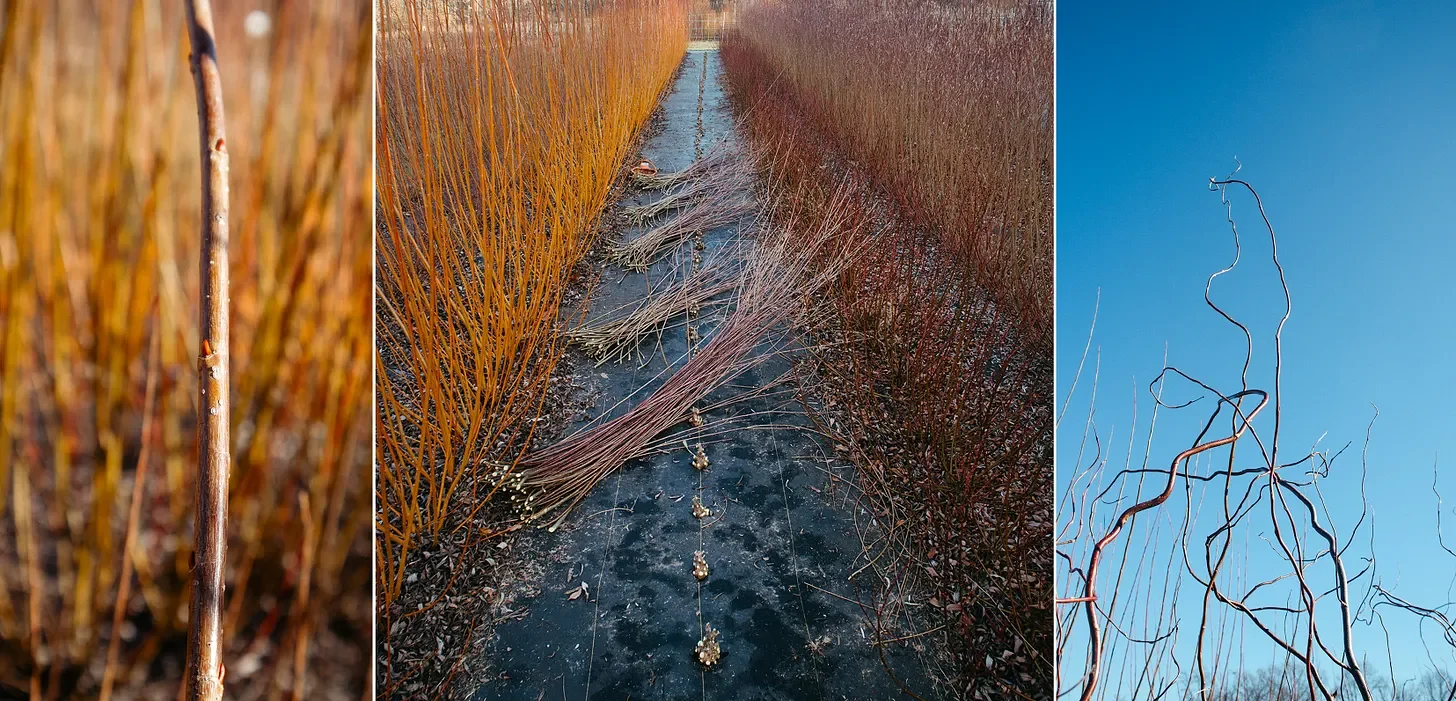
Cutting 6,000 willow plants by hand is a monumental task.
Any help with the efficiency of such an endeavor would seem welcome, whether by machinery or extra hands, but mechanized innovations erase much of the tactile truths within direct touch, and a third party may only be momentarily invested. Even still, we employ battery operated shears to protect the body from repetitive damage, and aid would certainly always be welcome.
The focus in the field, however, is on our relationship with willow – not the pursuit of harvesting as hastily as possible.
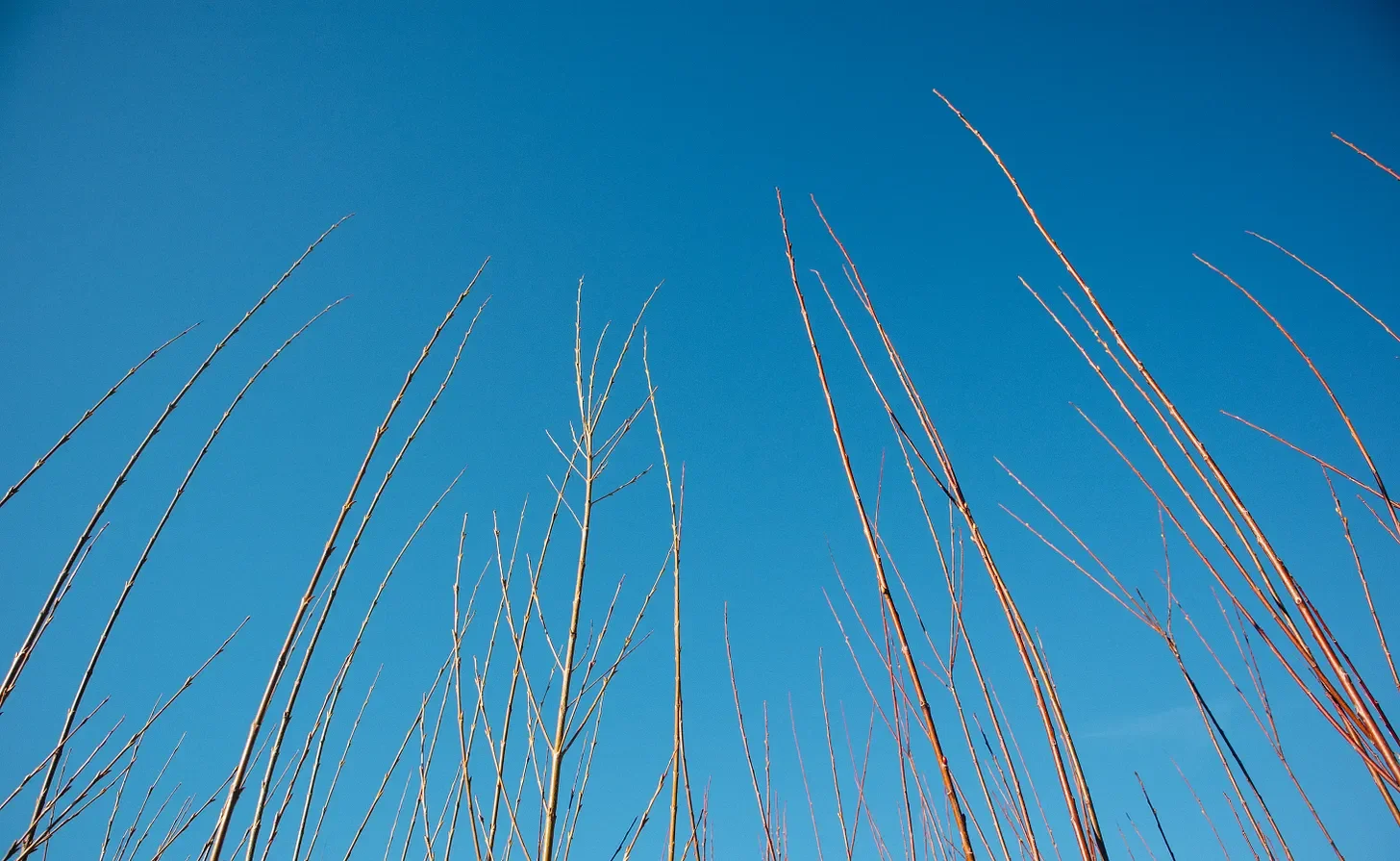
Perhaps this approach is too persnickety, but the proof of Dan’s dedication to partnership with his chosen plant is cemented within every woven creation. He can recall the story of each rod he’s reared, and I imagine the willow itself is familiar with his touch and thus bends more blissfully.
I am perpetually in awe of his attention to the nuances of both his craft and the cultivation within it, but where he is meticulous, I am a mess.
In an effort to reign in the chaos of my own creativity I recently began the multi-year endeavor of pursuing a certificate in botanical illustration. Every project is a practice in patience, inflaming my habit of squirming under such requirements or abandoning them entirely. But I aim to endure beyond all this, buoyed by the clear path laid out for me to follow.
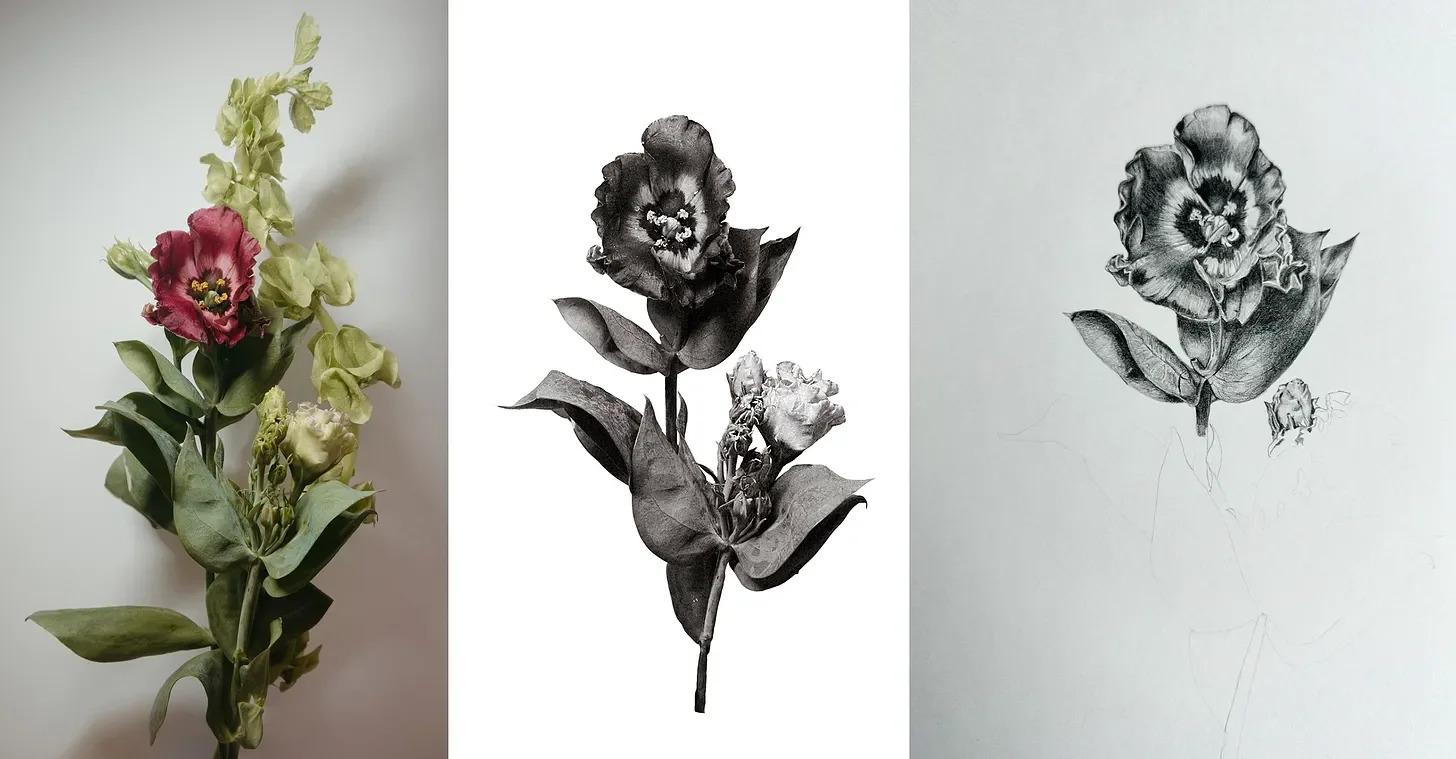
A current project: my photo, edited composition, and drawing… still in progress!
The classes blend art and science, the latter of which has long been the arch-nemesis to the student within me. I’ll never get over the lost season spent repeating Chemistry in summer school as a teenager.
But if I’ve learned anything from watching Dan over the past 5 years, it’s that discipline and focused attention are the most fruitful and worthy practices in the face of a mighty challenge.
Despite my aspirations and eternal enthusiasm for visual arts, the instrument I’ve always turned to has been words. Writing has been my evergreen, and dare I say easy, creative path for self-expression. In elementary school I’d often spend recess in the computer lab writing stories. In high school I wrote for my hometown newspaper’s teen editorial page, tackling stories that ranged from my thoughts on AOL Instant Messenger to a journalistic aggregation of my peer’s immediate responses to 9/11.
As college approached there were further dalliances with journalism and on-air broadcasting, but I wound up disappearing into the darkroom to pursue a degree in fine art photography. Obviously I still adore capturing an image, but I’ve realized that the camera has also been a shield behind which the vulnerability of my voice can hide.
For decades I swapped terrifying and more truthful dreams for safer manifestations. But writing, like many things, has come full circle.
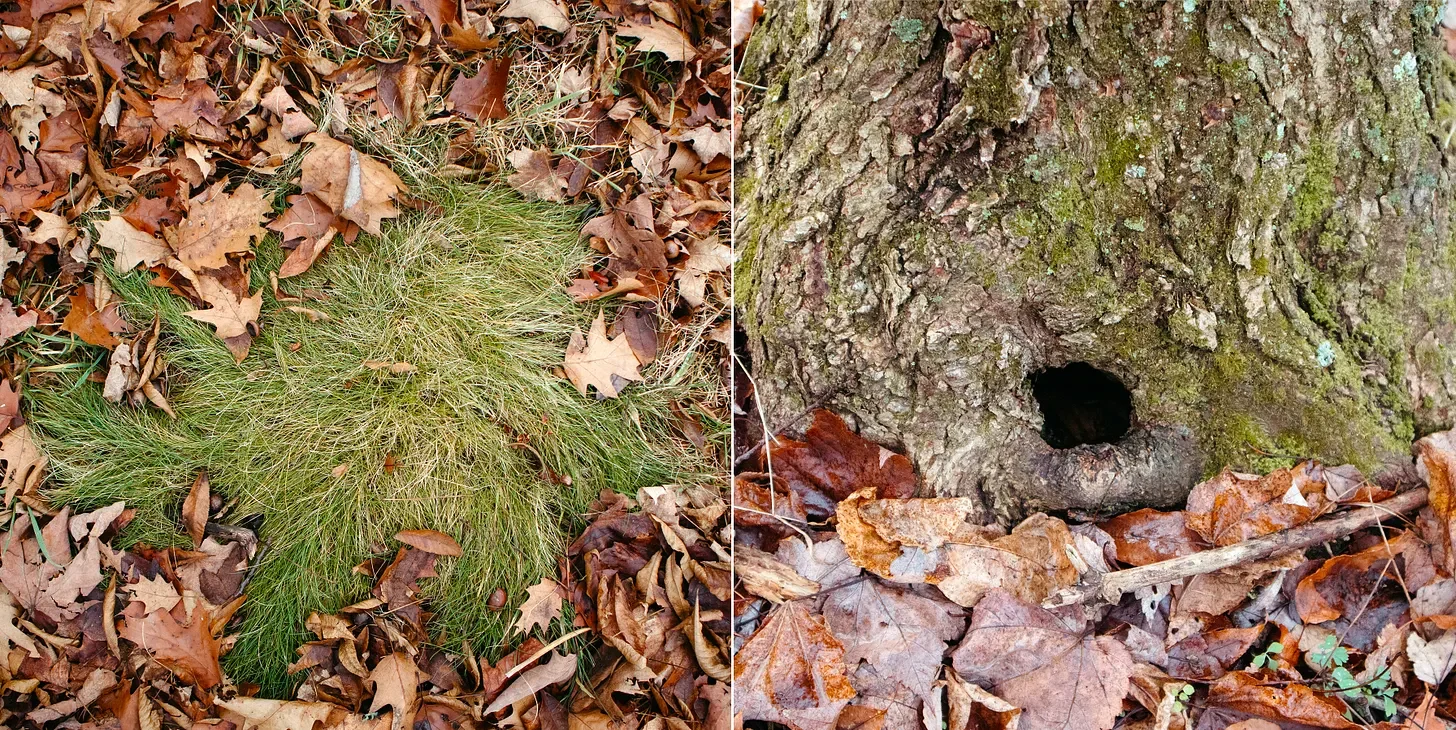
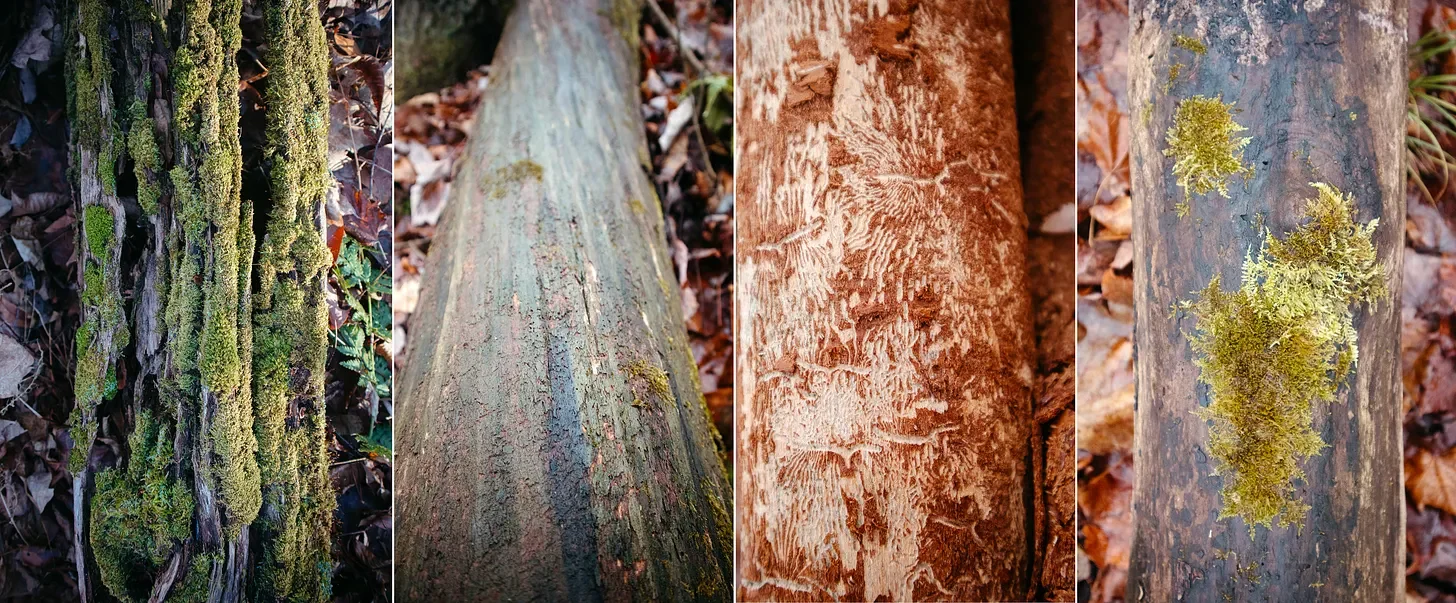
Beyond the scrupulously maintained rows of willow are the wild areas of our property. I linger my lens there the most, drawn to capturing the beauty of unrestrained spaces where nature does as it pleases in muddled splendor. Those areas of the acreage have hardly changed since we arrived in 2017 and sit in stark, chaotic contrast to the measured and fenced-in plots we’ve constructed.
The magnetism of me to the mess and Dan to the manicured is a perfect encapsulation of our personalities and creative instincts, but perhaps there is value in our opposing perspectives.
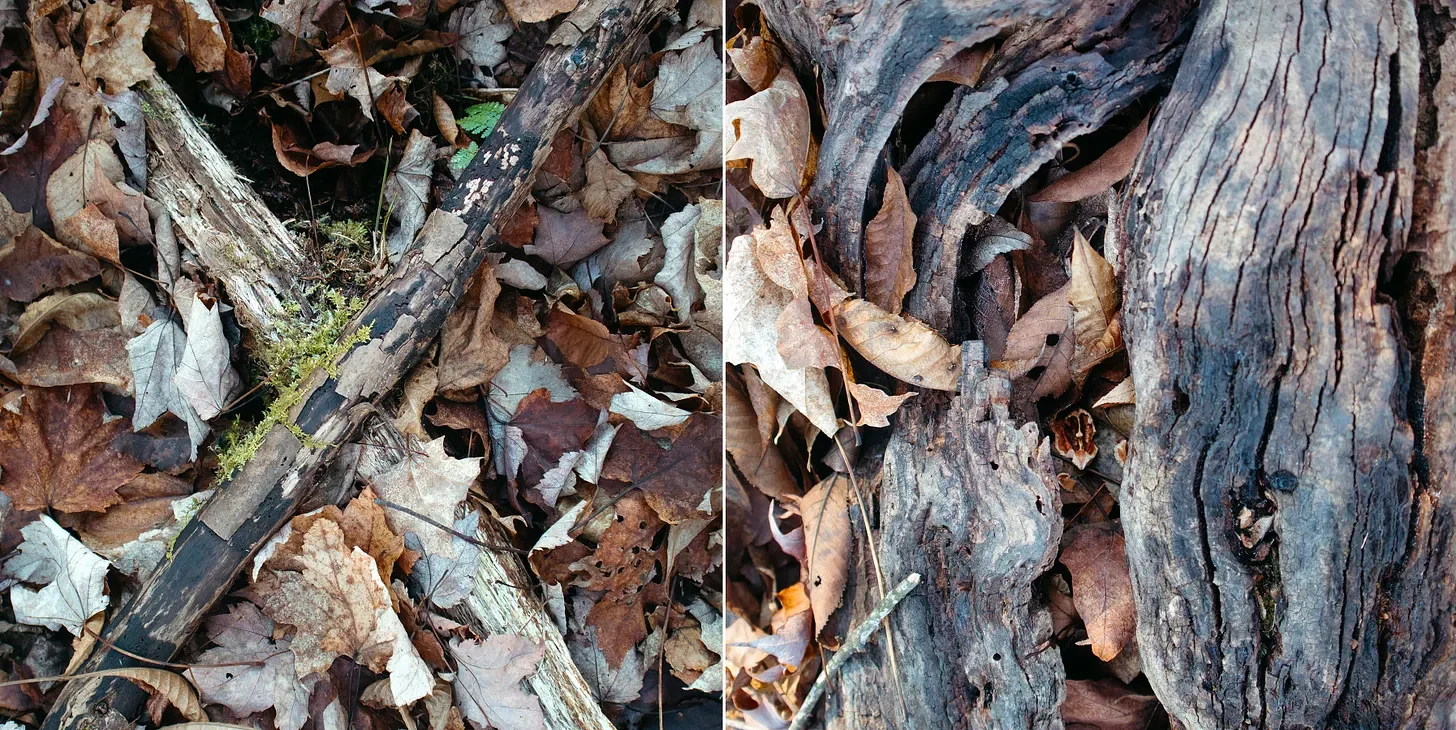
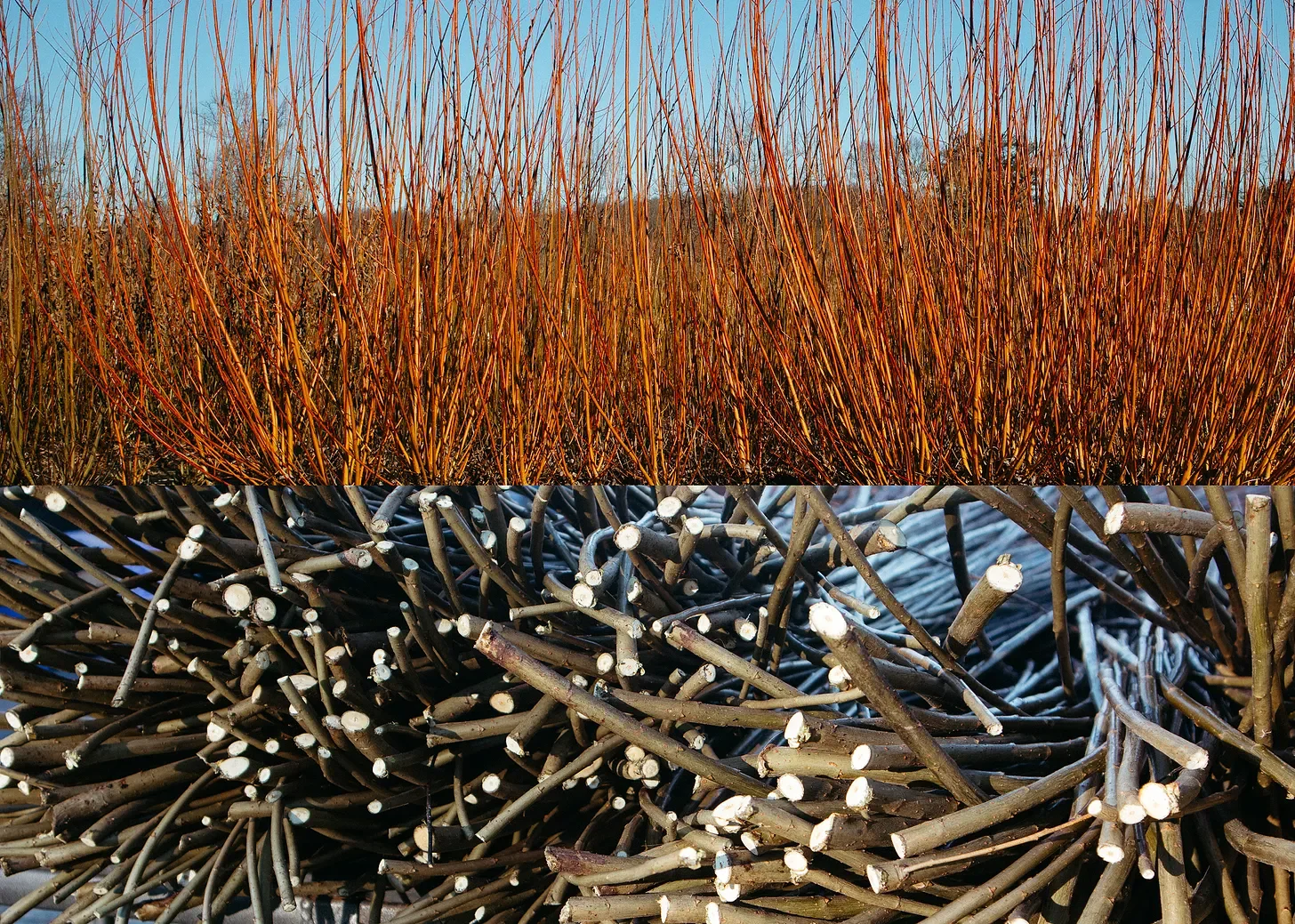
As I struggle with a more scientific approach to art-making, I know Dan wrestles with loosening his own restraints on what exactly is considered basketry. But whether these pursuits are clear or chaotic in our minds, it is the up-close reality of the work that anchors every act: Dan’s gloved hand holding the willow stool as he diligently clips each rod one by one, over and over and over…. My fingertips holding the pencil as it dances for hours atop the paper, drawing, drawing, drawing…
What comes easily often must be reevaluated, edited and polished. What begins with great difficultly can pay delightful dividends down the road. There are messy and meticulous aspects of art, and of life - the sum of which is always, hopefully, a monumental achievement. Along the way, it is the precious and personal relationship with the work that can keep one rooted throughout the journey.
Originally published on December 17, 2023
Art & Agriculture: A Candid Conversation to End Our Biggest Year Yet
Partnership, Artistic Expression & Perennial Patterns
I asked Dan, my partner in life and business, to sit down for a chat about all that’s happened in 2023 with Foggy Blossom and our work with willow.
BETSY (bold text): We’ve had quite a wild year with so many new experiences: Teaching basketry for the first time, doing bigger craft shows, you being involved in gallery exhibitions and making your biggest and most ambitious woven works yet... just to name just a few.
Can you talk about your decision to say yes to almost every opportunity?
DAN: Yeah... why did I do that? (laughing) I don’t know when the genesis of that decision manifested, but at some point it seemed like I was saying yes to everything, and not always asking you if it was okay, which was probably not okay.
But the fickleness of people’s interests really made me think: This could be the last time anyone’s ever interested in me doing basketry… So I just decided that, if we could say yes, we’d say yes.
I’m glad you did, for the record.
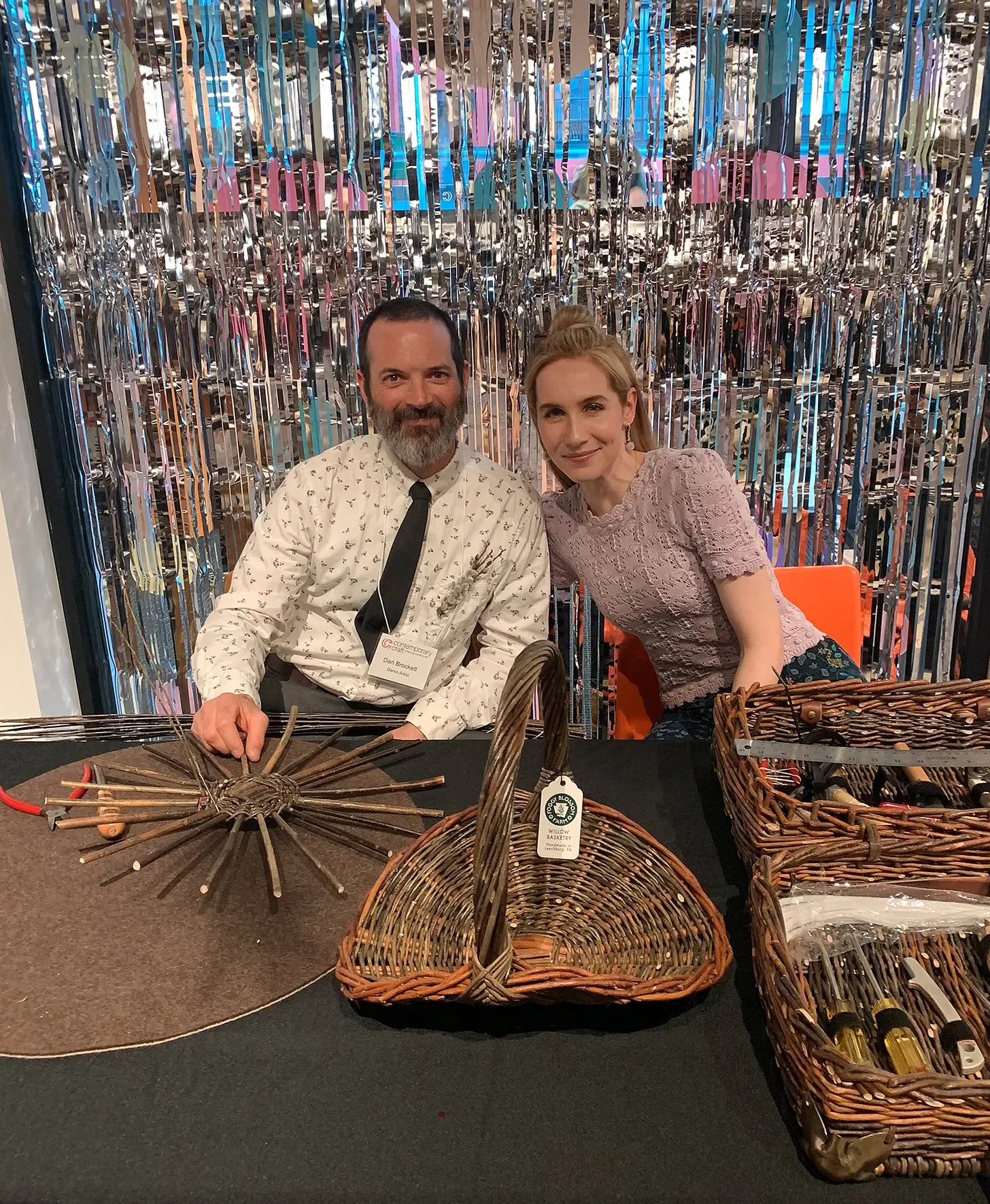
Looking back on everything, though, it does seem like a bit too much. There was definitely some burnout, but thankfully I can move on to harvesting and not worry about teaching or making at the moment. And it was a good blueprint for the future to really look at what built us up, what tore us down. We can use this past year as a litmus test for future opportunities.
We’ve certainly learned a lot, but how was 2023 personally transformative for you? Because a lot of stuff that happened was a solo accomplishment – like getting accepted into the ACC Emerging Artists Cohort.
It was really challenging and pushed me to the limits of my abilities, which was interesting. But the love I have for this craft, and this material, was able to get me through those difficult times.
And I think saying yes to things without dwelling on: How in the world am I going to do that? was a good thing. It put me in situations that I didn’t think I could ever do, but I was always able to figure it out. That feels like growth.
I feel very grateful that you were able to do that. Our world was so incredibly small for a long time, especially during our personal health crises and then the quarantine years, so I’m not sure how we would have otherwise transformed our life so drastically without you saying yes so much.
Yeah, being isolated for various reasons was hard. So to get out there and have people interested and excited in what we were doing, and to make memories and have great experiences together was reason enough to keep doing it.
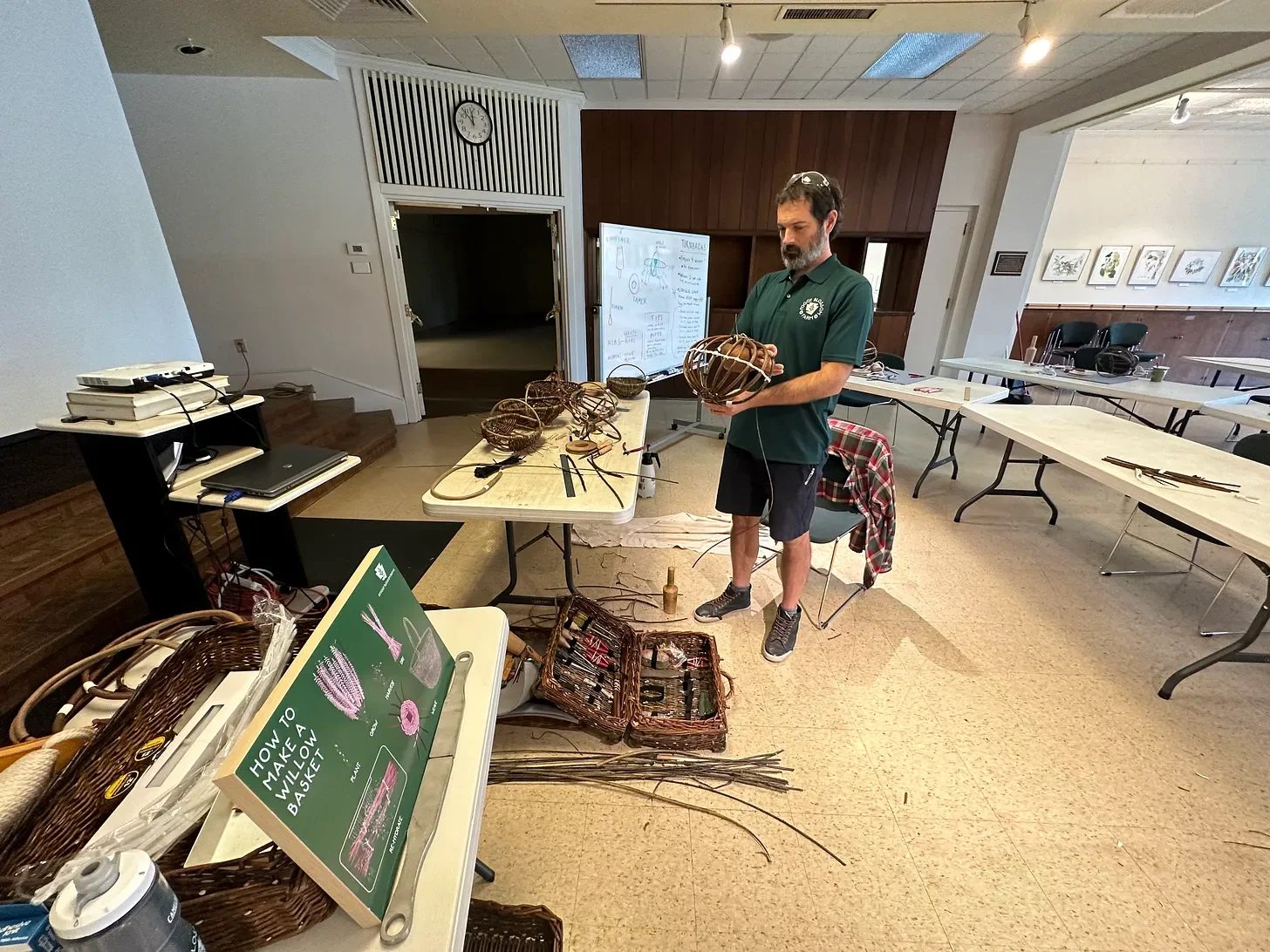
Preparing to teach a weekend basketry workshop at Phipps Conservatory
I’ve only ever known you to be dramatically averse to academic environments, so what was it like teaching for the first time this year?
If I had to use one word, I would say… challenging. I didn’t do well in school, and academic situations really make me anxious, so all those feelings from my past experiences were brought to the surface. And then having to teach people how to do something that I mostly taught myself to do was tough.
A lot of times I thought: This is crazy that you’re teaching people how to do something that nobody taught you. That just seemed like madness. The imposter syndrome within the craft itself is a very real issue to deal with, but then going from feeling like a fake just making a basket to having to teach someone how to do it was like doubling down on that feeling for sure.
But you persevered.
I did, but every time I was faced with a looming class all of those feelings came back.
Personal patterns have definitely emerged this year.
Yeah. I know I’m going to have a near panic attack preparing for a class. And the second before it starts, I’ll feel like I need to be hospitalized, but once we get going everything will be okay.
I’ve always wanted to have something of worth to pass on to others that could inspire them, so I’m very thankful for the joy and connections from every teaching experience that have outweighed the negatives and kept me going.
Personal patterns have definitely emerged this year.
Yeah. I know I’m going to have a near panic attack preparing for a class. And the second before it starts, I’ll feel like I need to be hospitalized, but once we get going everything will be okay.
I’ve always wanted to have something of worth to pass on to others that could inspire them, so I’m very thankful for the joy and connections from every teaching experience that have outweighed the negatives and kept me going.
I know you always hope your students will catch the basketry bug and keep weaving, but I think just your approach to it all is so inspiring. The reason we’re even having this conversation is because five years ago, when you turned 40, you decided you needed to find something to keep your hands busy in the winter.
What advice can you offer to people, perhaps in mid-life or later, who want to undertake a new endeavor like learning a craft?
Yeah, it’s something we talk about all the time. We’ve thought about doing a lot of different things throughout our 10+ years together, and a lot of the stuff that seemed extremely daunting we didn’t end up pursuing because it seemed too big. But then the time passes that it would’ve taken to complete that course, or become proficient in that skill, and we say: If we had just started that back when….
It's like the saying about the best time to plant a tree.
Exactly. The best time to plant a tree is 20 years ago. The next best time is today. It’s not new information, but it’s something that’s taken age and maturity to really understand and appreciate. And the path to me learning basketry was not pretty at times. It was painful, and it was challenging. It made me upset, it made me sad. I felt all of the emotions.
You wanted to quit a few times.
Absolutely. There were months that passed where I said: I never want to do this again. But luckily I was able to keep what little bit of fire was left for the craft alive in me, and somehow rekindle it.
The pain of doing the thing is better than the pain of doing nothing.
Yes. And the fact that the willow was there… that we’d planted it, and it wouldn’t die. I mean, I never really thought about the responsibility of that. I birthed those plants into existence, and to give them purpose and then take it away would’ve felt really bad.
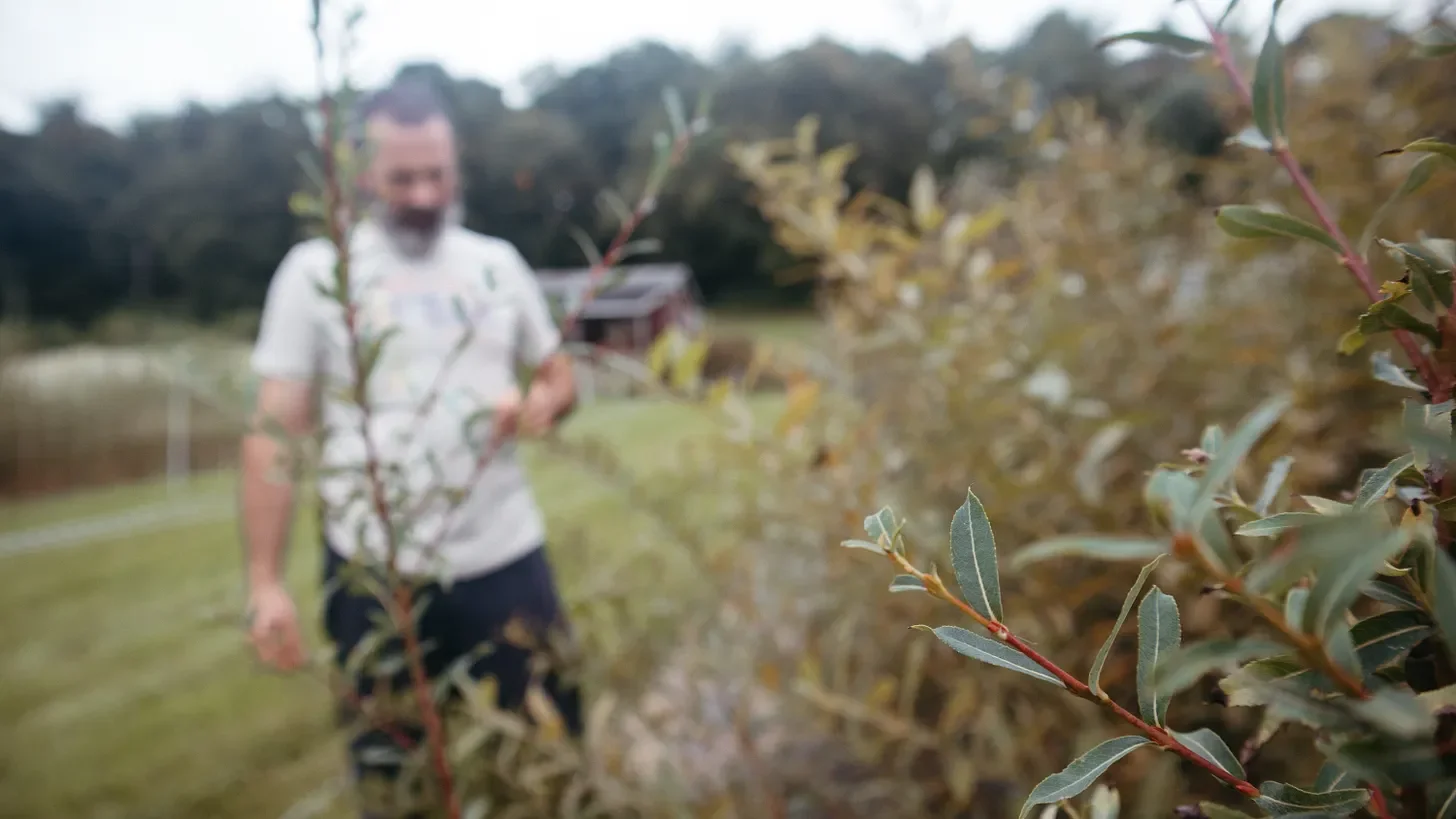
You couldn’t ignore the call. And that’s another thing, you didn’t force basketry to be a fit for you. At this point doesn’t it feel like it found you in a moment where you were willing to be found?
Not only willing, but desperate. And the fact that we haven’t even explored so many avenues of willow… it just gives me hope and confirmation that this was the right thing to do.
I didn’t want to say desperate, even though I know it’s true, because I feel like that energy can sometimes attract the wrong thing. But in this case, it worked. You were desperately open to receive the right thing.
Yeah, I’m just so happy that we were able to find something that could merge our creativity with the farm dreams we discussed the very first week we met. And although it doesn’t feel like we’re real farmers at this point, we kind of are. It’s almost like growing perennials is a craft in itself. They give you the time to figure out what you want do with them.
We’ve finally found the right flavor of farming for artistically inclined late bloomers like ourselves.
Right.
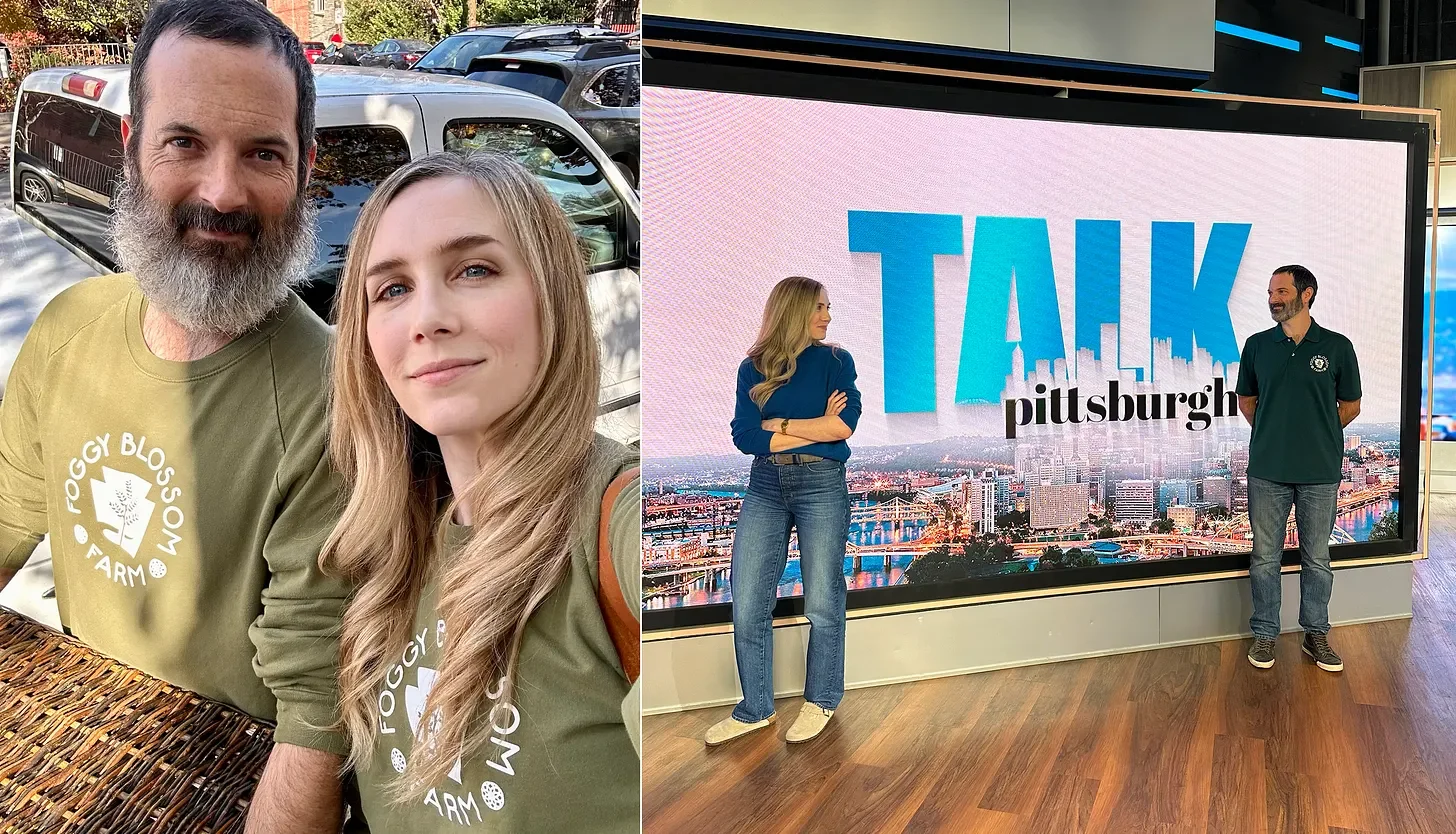
So as 2024 approaches, how are you feeling about the future?
I think what I’m most excited about is having the quantity and quality of material to try all the things we’ve haven’t tried yet with willow: Living structures, large installations, and the weaving projects that require really big material.
I’m also looking forward to fine tuning the balance of in-person pursuits, personal learning, studio time, and finding out how to host people on the farm so they can actually see and experience what we can, at this point, only talk about. And building more relationships.
Everything that’s happened this year has been because of relationships.
Yeah, it’s the biggest thing. Since we met you and I have wondered: How do we build a community? I think we were delusional for a lot of years on what that actually meant and looked like, but this was the first year we made positive strides towards that goal.
Being vulnerable and open with our artistic expressions feels like authentic and solid ground to connect with people on. I guess that’s another thing that’s happened organically, where before it felt like a tactical approach. I’d always thought about community as location-based, but it’s more about interests and passions, and finding the right people that you really click with, no matter where they are.
Which I think was always the goal, even if we couldn’t articulate it.
Yeah, sustainable relationships. To always have that common ground of creativity and art to fall back on… I think is so cool.

Another thing that I’m thinking about now is the nonlinear nature of a creative path. You don’t ascend beyond being a student when you become a teacher, you have to be both. You get to be both. It’s a privilege and a challenge, which only gets more complicated, especially when art is not your full-time job, which it’s not for us. Neither is farming.
Yeah, I was recently talking to someone about the reality of managing all the jobs I have, which don’t include being a partner, taking care of the dogs, keeping up relationships with family and friends, and trying to stay healthy.
I think it came up during a discussion on what it means to be a full-time artist, which feels like a pretend thing unless you have the privilege of being able to go to your studio and just make all day every day. So to be able to accept this version of being an artist, and balance it amongst every other responsibility, is a challenge. But it makes for a worthy life, I think.
Absolutely. And I like to think about how life can be an art, which is also a challenge. I guess it’s all a challenge, but what’s the alternative?
Originally published on December 24, 2023
On the Threshold of a New Year
Documenting & Distilling the Days

For the past 6 years I’ve put together annual photo books of our life, which I order from a place called Blurb that beautifully prints and binds them.
Each one encapsulates all that happened between January 1st and December 31st, neatly book-ending days that would otherwise bleed into a blurry recollection of time. I began this tradition the year after my last cancer treatments, which I endured throughout the winter and spring of 2016, and which first began back in the summer of 2014.
Next year marks the 10 year anniversary of my initial diagnosis (Peritoneal Mesothelioma), which I’ll share more about at that time. These photo books are free from those incredibly difficult memories, but in hindsight they were very clearly the catalyst for the direction and tone our life has taken throughout each page.
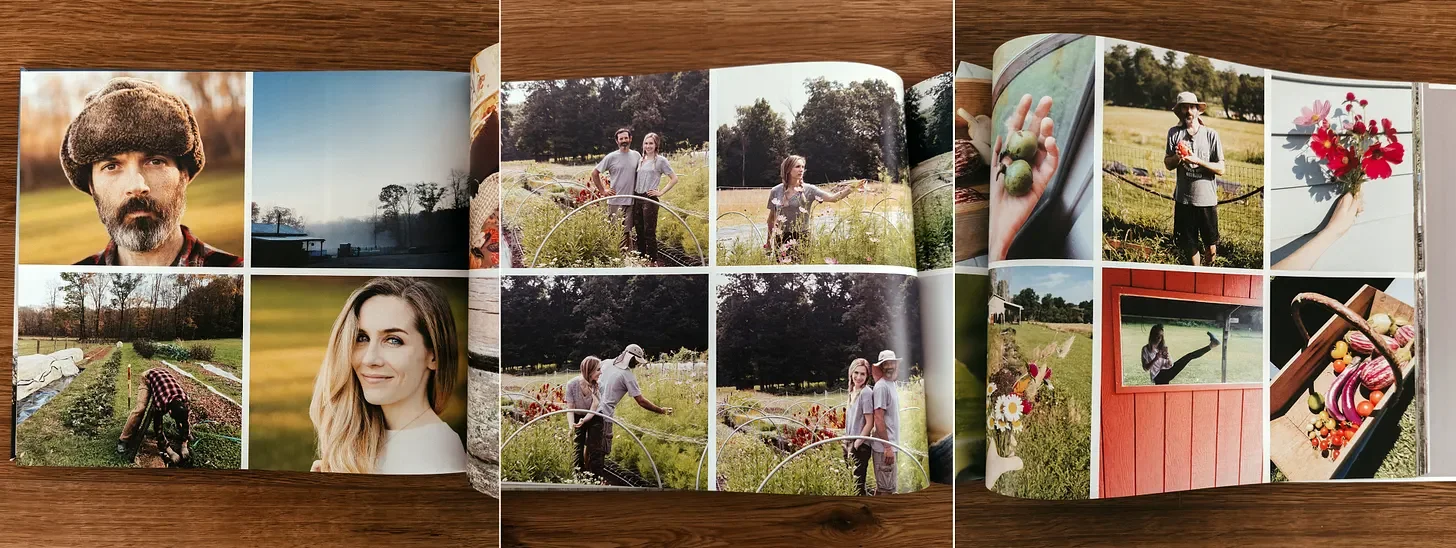
In 2017 we moved onto the acreage that would eventually become Foggy Blossom Farm, although at that time we had no idea how. These tomes tell the story that we couldn’t see then: How every pursuit informed us to zig this way, or zag in the opposite direction… how perhaps we needed to try all the wrong things in order to find the right ones… how powerful intuition is when you listen to it, and how the answers have somehow, usually, been there all along.
It can be difficult to look back on days that were frustratingly lacking in direction, but the distance adds a dreamlike quality. We are no longer the people in those pages, but we were born from their audacity. We see what they cannot, and here at the threshold of another year as I prepare to order our 2023 book, I know that these most recent manifestations of ourselves will someday be strangers too.
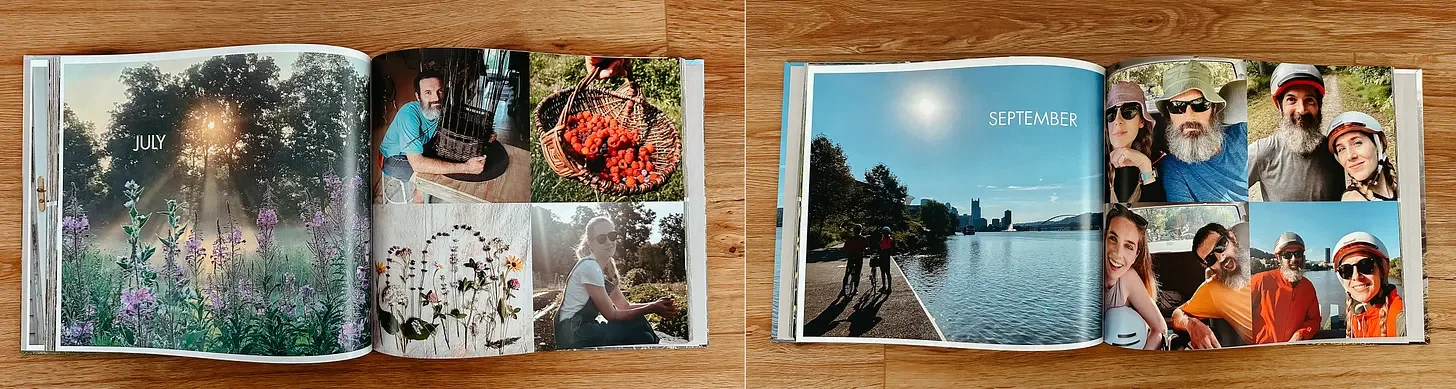
As the resident and self-appointed archivist of the household I love documenting our life, despite the mind-bending quality of watching ourselves shift and age up close. In addition to the photo books I also always put together an annual video of our life, which we watch on New Year’s Eve. To see an entire year play out in about an hour feels like existential whiplash, the contents of which is always peppered with highlights and full of the magical, often forgotten, mundane.
Tonight we’ll watch our 2023 video and I’ll light a bayberry candle that will burn all night. It’s another tradition I started a few years back and is my symbolic clearing away of the past year in order to make space for the new. The clean slate of 2024 stands on the other side of tonight, and despite already having more calendar days filled than any other year in our history together, there is much mystery around how those experiences will be colored in.
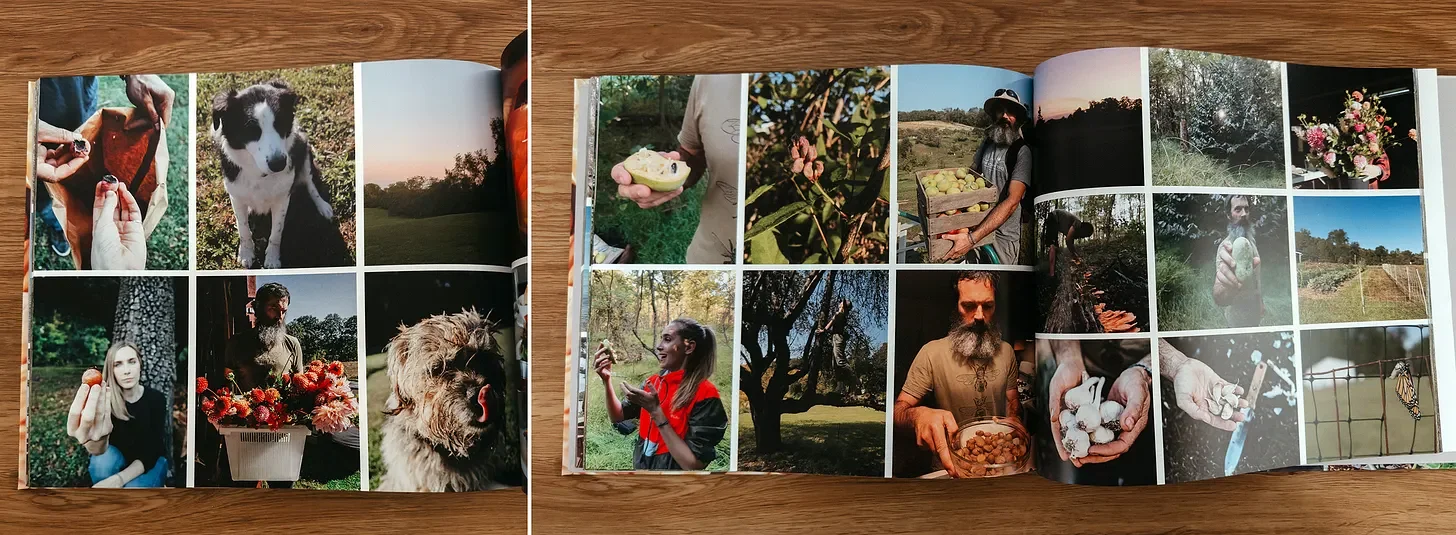
If I’ve learned anything throughout the past decade it’s that there’s very little of life that can be controlled, but when I look at these books I’m reminded how quickly every iteration of myself becomes an immovable ghost on glossy pages. No matter how hard I’ve tried to mold myself into something, or not, I wonder why I haven’t simply danced through each day with unabashed honesty and gusto, knowing existence is so transient.
Life has been the most beautiful to look back on when I’ve been able to flow through time rather than steer it, and my wish for 2024 is to do just that. The opportunity to move freely as one’s true self exists on the threshold of every moment.