The Truth Behind Teaching a Tough Craft
hurdles and highlights, toting and traveling
We’ve taught 8 willow basketry classes in the last 7 months. Our 9th, and final of 2024, is in one week.
A majority of these workshops were far from home, requiring 26 total days of travel. The others were local, and involved commuting to and from Pittsburgh a dozen times, which is about 40 minutes each way.
Total time spent teaching is well over 100 hours, with hundreds more invested before and after each class. We’ve given so much of our lives to sharing this incredibly challenging craft to nearly 100 students this year, resulting in around 150 new baskets being created, and an abundance of lessons learned.
No plan has ever gone perfectly, and a few strayed farther off course than others, but some semblance of success has emerged from them all.
Workshops in March and April
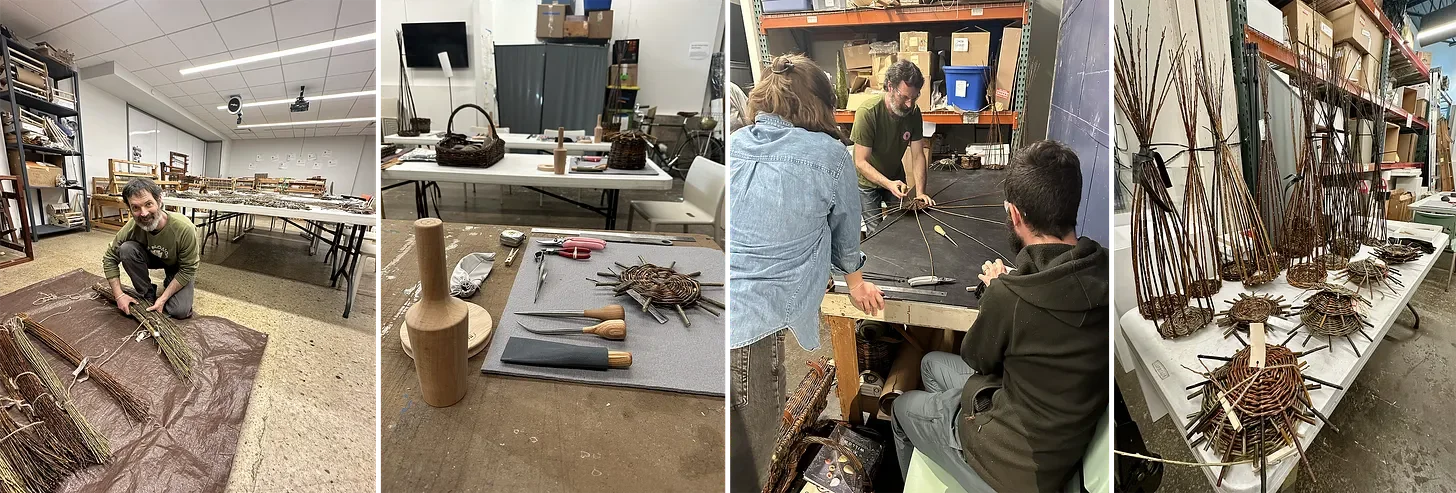
It was only last year that we taught for the very first time, and in 2023 we only led 5 workshops - all of which were local, and relatively short. To say we are novices in this field of craft education is an understatement, but we’ve gone all in.
Has it been worth it?
Here’s what we know so far.
“By failing to prepare, you are preparing to fail.” - Benjamin Franklin
The process of getting ready for a class takes weeks, but if you count our growing, harvesting, processing and drying time, that adds up to at least half a year.
In the final month leading up to a class, prep looks something like this:
We make the particular basket together, from scratch, in order to estimate how long it will take, and to iron out a plan for how to best teach each step
From here I design and illustrate a supplemental infographic of the project
Dan weaves another two samples or so by himself, recording a vocal narration of the entire process, which he later transcribes and uses as teaching notes
We soak all the necessary material (plus extra), then mellow and/or freeze it
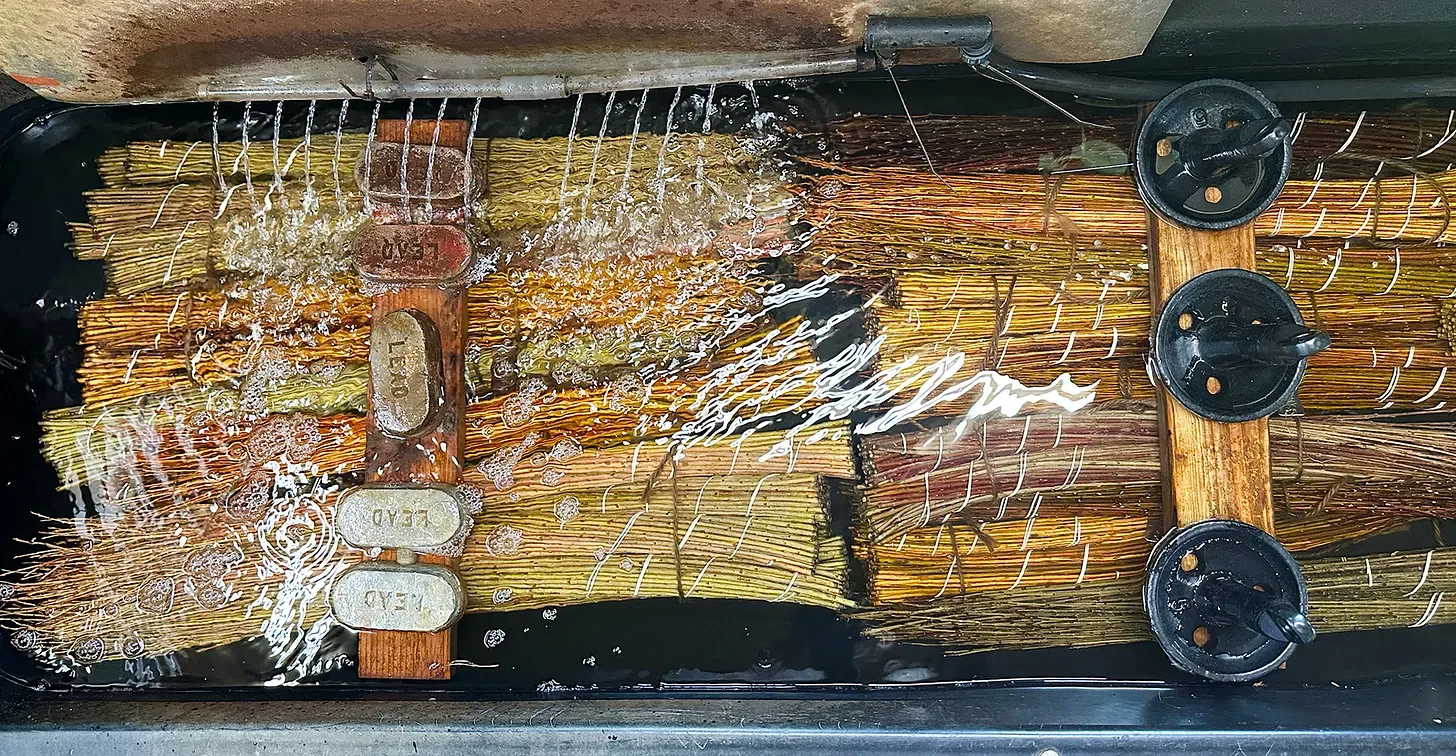
A full soaking tank in preparation for a class
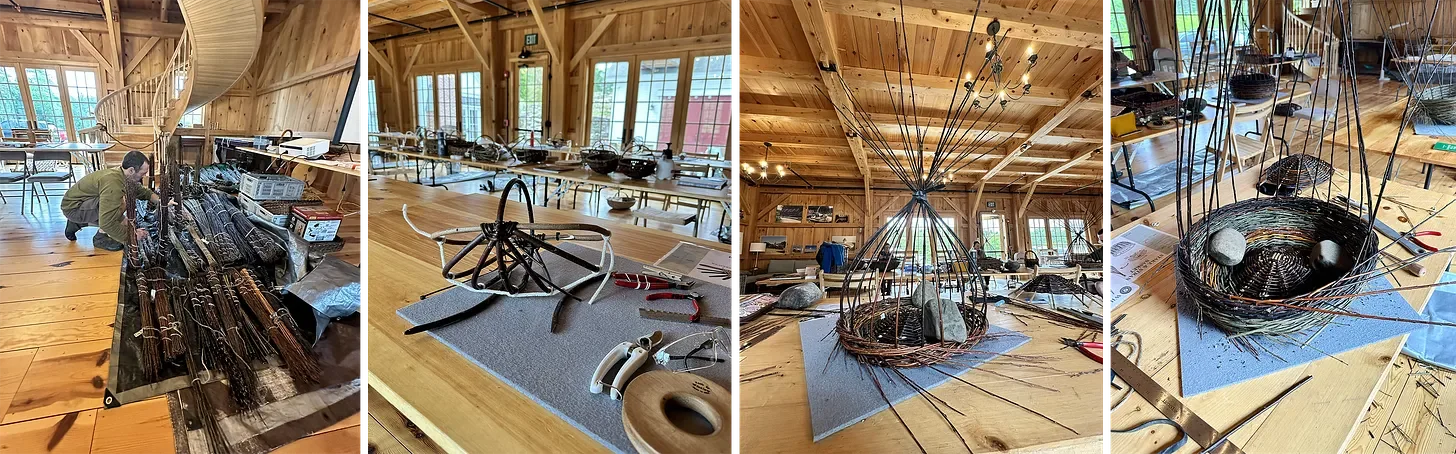
When it’s time to go, whether near or far, we pack and tote the following:
10 sets of ~20 tools for each student, plus a tarp for each to hold their soaked material (and prevent it from drying out as they work)
Many bundles of hundreds of soaked willow rods wrapped in tarps that look (and weigh) like 2 - 3 body bags
72 gallon Heavy Duty Garden Bags for collecting all scrap and trimmed material to be composted later
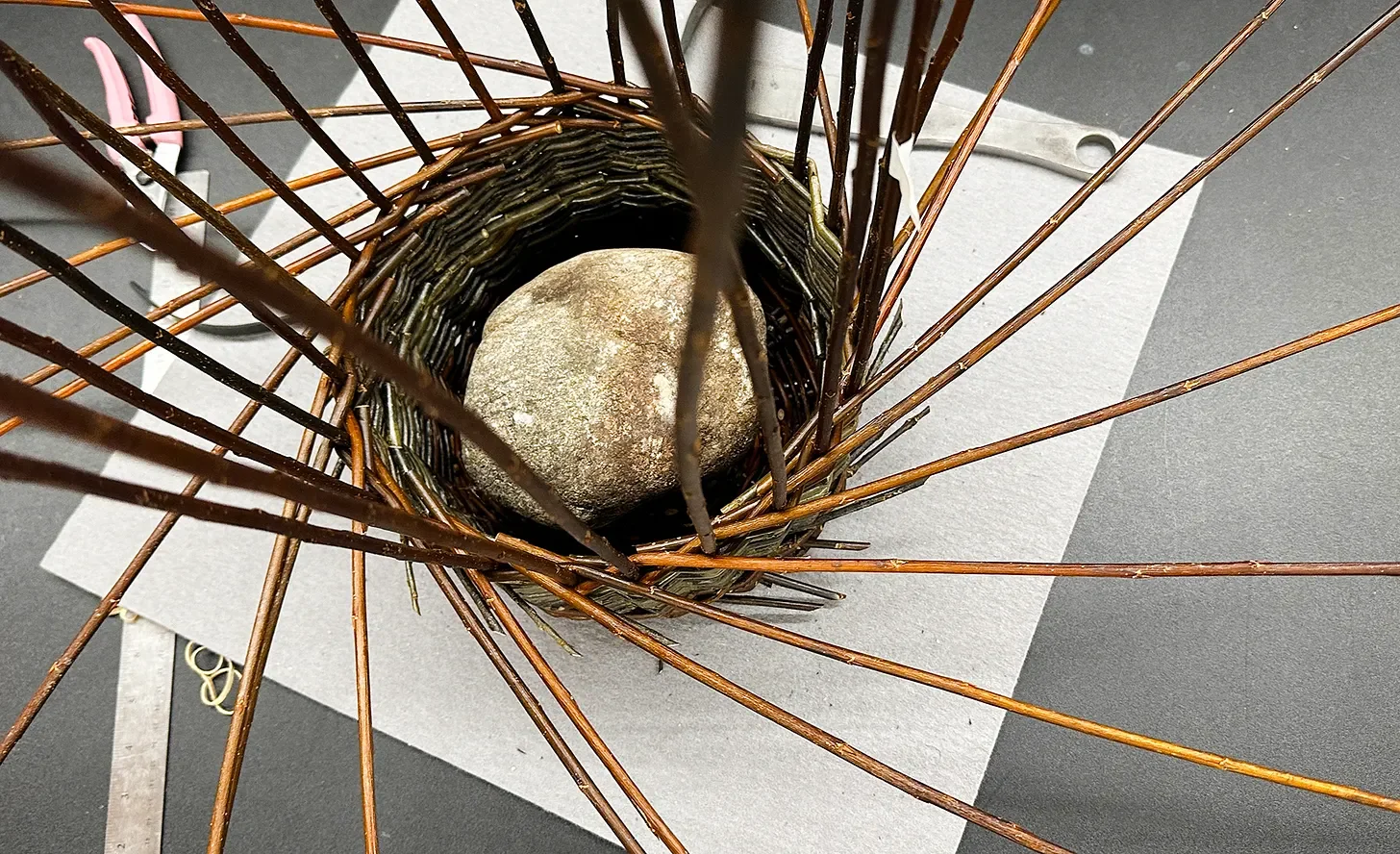
15 or so collected rocks that serve as anchors within baskets during weaving
Sample baskets in various stages of completion for demos
Dried bundles of willow, and Dan’s baskets for display (and sometimes for selling)
Basketry books and homemade infographics
Personal belongings, snacks, water, camera, etc.
Our process and packing list gets sharpened into more efficient shape with each passing class, and the extensive attention we place on preparation has served us well.
Workshops in May
Start from the most organized place possible as a best defense against the inevitable chaos to come.
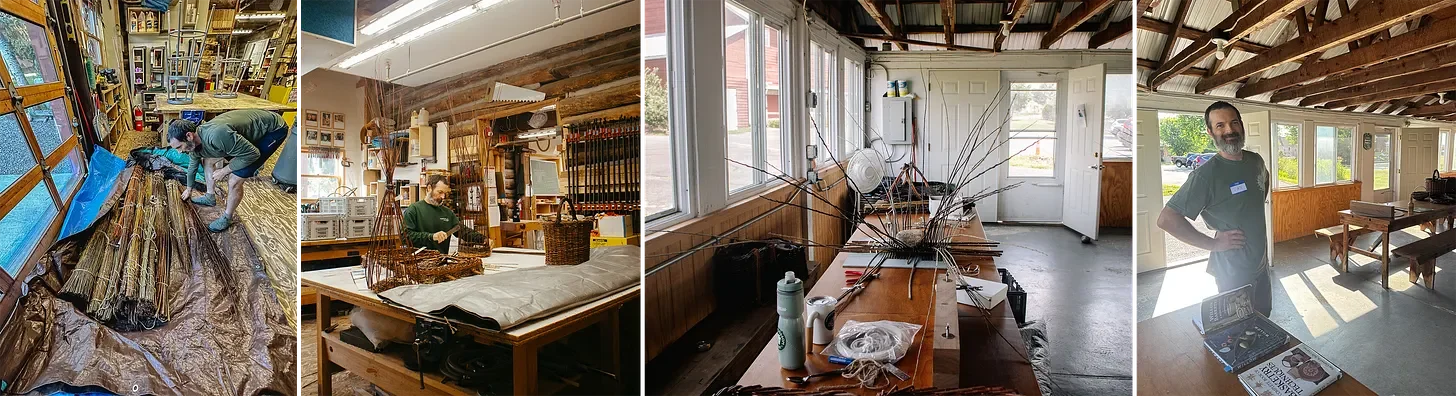
We have yet to teach in a basketry specific studio (do they even exist?), and in every place that’s hosted us, they offer their best proxy: a wood shop, a painting studio, a great hall, a pavilion, a back storage room. Each have come with unique, unavoidable obstacles.
Our opening ritual involves assessing these spatial challenges, and rearranging as best as we can to suit our needs. Each student must have their own table, with enough surrounding room to accommodate the over 6 foot wingspan that often grows as the weave takes shape. We also need at least 2 tables for our own demos and supplies, plus ample storage space for the tarps of willow, and our assortment of tool containers.
We hope to one day design and construct the most perfectly ergonomic/spacious place here on the farm to fit willow basketry’s unique needs, but until then we make do.

All efforts towards organization dissolve into a mess as soon as the making begins, but it seems to be a great first impression, as well as a north star to return to.
Workshops in June and July
Establish expectations, and the nature of the environment, early.
In the description for all of our workshops, we try to make it clear that this craft requires significant strength from shoulder to fingertip. It can be downright painful, requiring force from the body to maintain tension throughout the incredibly robust rods as you weave, which is often a shock to brand new students. It certainly was to me!
Our approach to setting the somewhat intimidating scene of what lies ahead may seem startling to some, but we soften the blow with the promise of “Level II Fun” - grueling in the moment, a life highlight in retrospect.
When it comes to being aware of what one is about to endure, we believe in full transparency. The less blisters, and regret, the better.
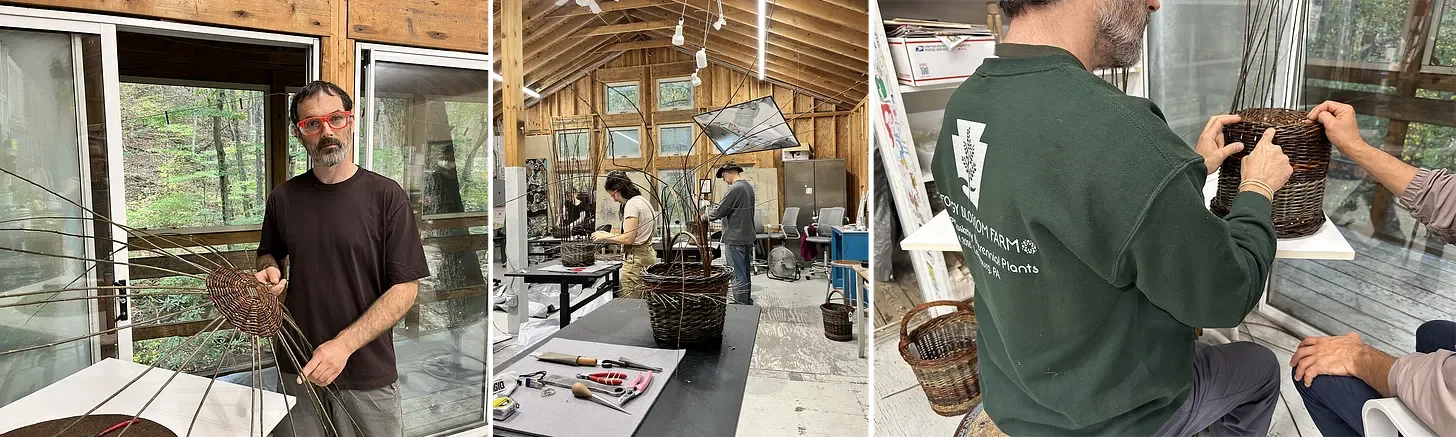
Scenes from our most recent workshop at Touchstone Center for Crafts
Stay together, even when we stray apart.
The goal is always to keep everyone on the same pace of making, as each step builds on the last, and it’s difficult to fracture the group for both logistical reasons, as well as for camaraderie. In multi-day workshops, though, this is unavoidable, which turns teaching into a high wire act of juggling baskets at various stages of completion.
Unfortunately, my skills in assisting students only go so far at this point (but getting better each time), and towards the end of a long workshop, Dan is sprinting through a fast and furious dance of one-on-one teaching to support the success of each student.
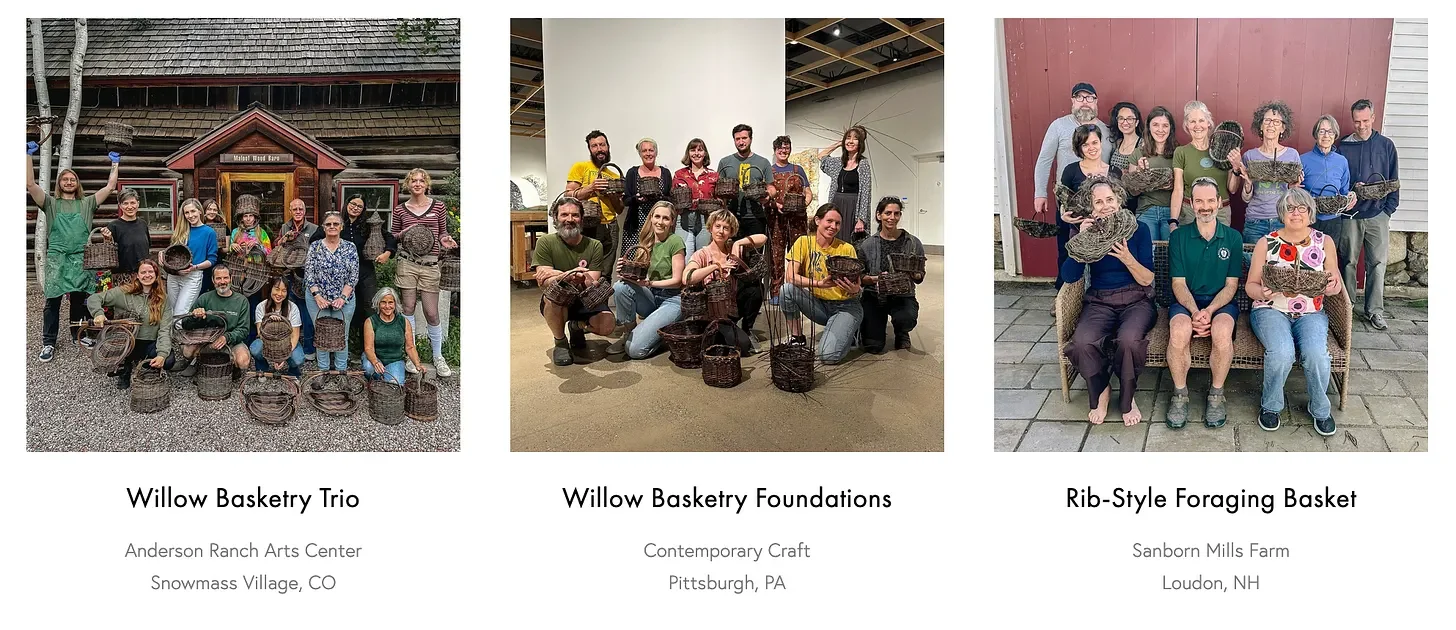
Maybe this is too earnest an assumption, but I believe Dan’s enthusiastic and tireless efforts are so contagious that inevitably students begin supporting and helping one another where they can. I say this because no matter where each person lands with style or skill, the room feels held by a collective focus on perseverance.
Cheers are often heard from beyond the doors as each win, big or small, is celebrated. And we’ve been so lucky to always have an incredibly wonderful group of people in every class we’ve ever taught.
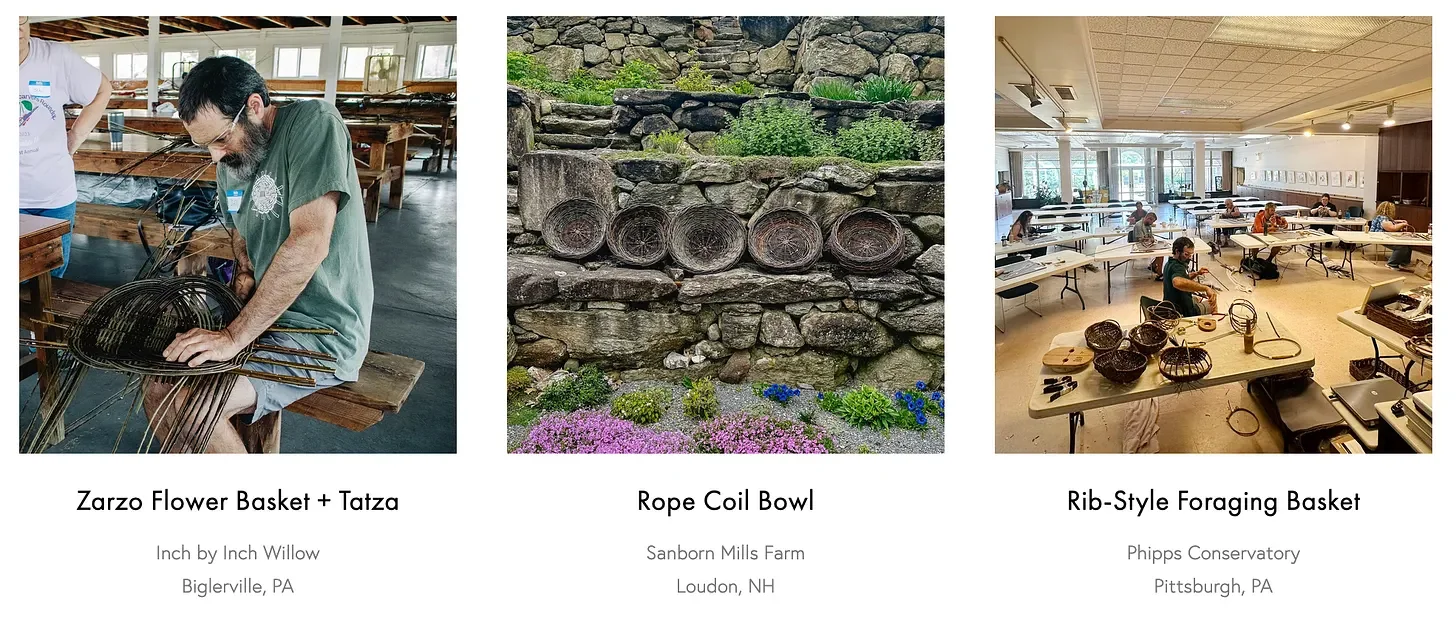
Pivot, react, adapt, repeat.
Our most recent workshop (3 days long) felt like a true race against the clock, and at least a third of the class was still weaving up until the final allotted hour. Basketry is not a fast craft, and the limits of the day are always a concern. We can only do our best to guess how long it will take a new group to move through the steps, and the behavior of the material is also always a worry.
We like to reiterate the fact that willow is not made in a factory. Even though we cultivate it very carefully, it is just a plant, and therefore full of eccentricities and relentless reactions to the environment.
We can only do so much to prepare it as perfectly as possible.
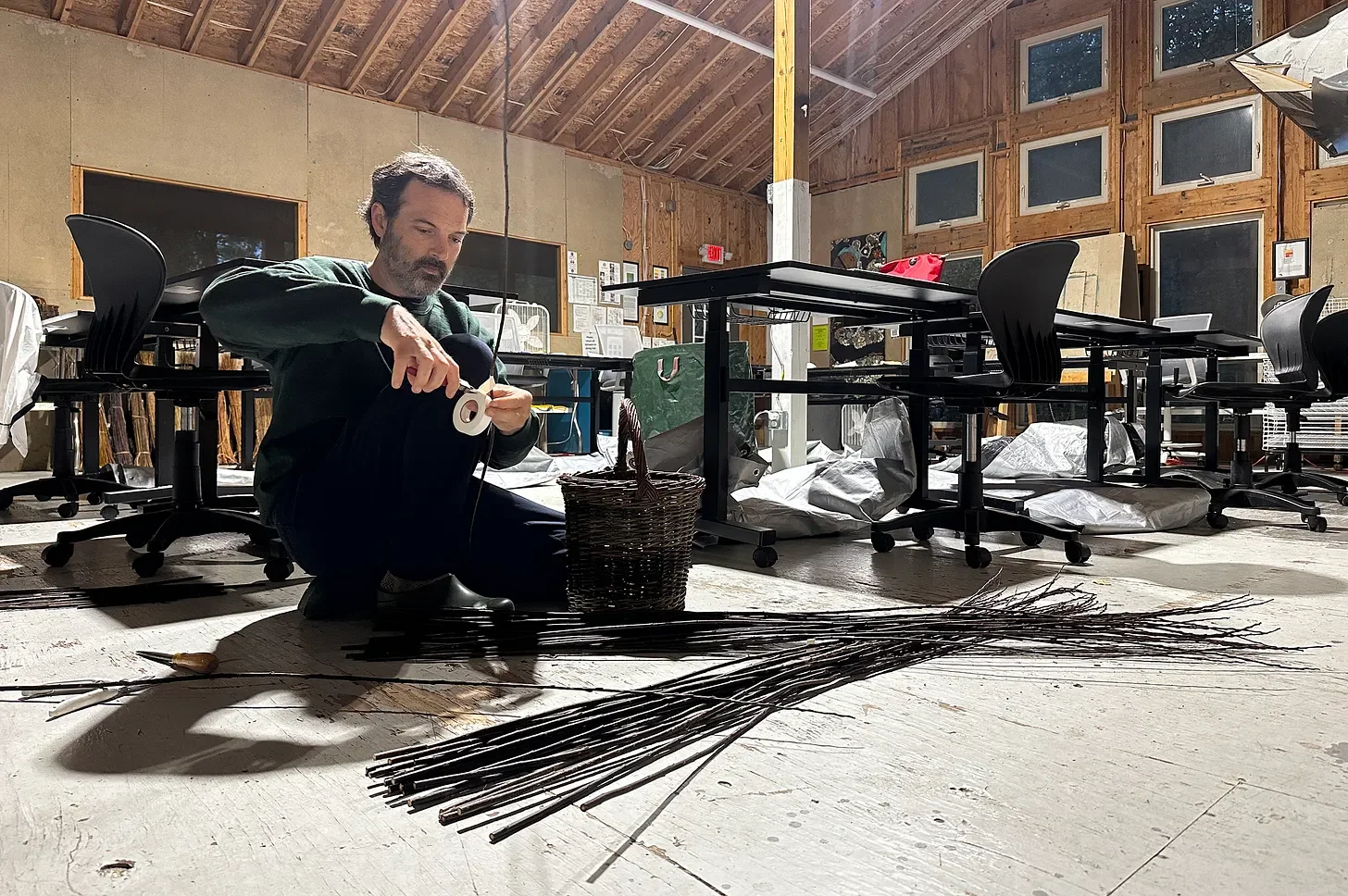
Working at the crack of dawn to mitigate some unforeseen timing issues in the day ahead.
If there are issues on the day, we work to rectify them, and we have learned a great deal this year about how soaked rods react to things like being transported on dry ice for days at time, existing at high altitudes, or extreme heat, and much more.
Recover.
The amount of energy we expend preparing for, traveling to, and executing a workshop is enormous. We do our best in the studio to appear like graceful swans gliding atop still water, but underneath we’re furiously flapping our feet just to keep it all together, and sometimes we show our hand as frazzled humans.
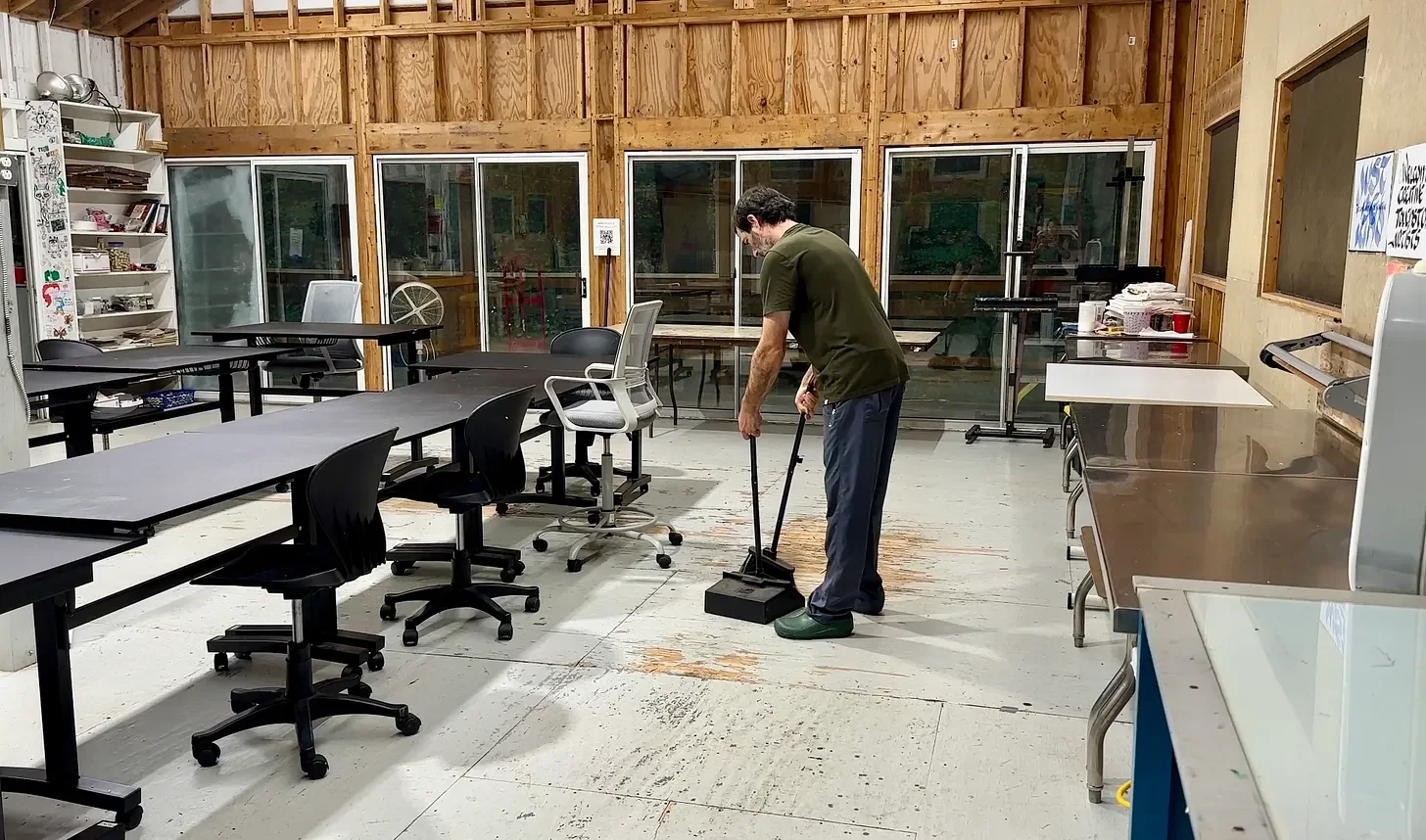
I like to joke that the final cleanup and sweeping of the studio is our “off-gassing of stress,” which it truly does feel like. And after that we fully excavate the experience on our drive home, brutally assessing ourselves and what we could do better next time.
Once we’ve fully fleshed out our wins and losses, and have taken detailed notes on it all, the pendulum swings towards the realm of recovery. We’re in that space now, and looking forward to getting back our strength and vigor to face our last class, but also the next big task that will support next year’s teaching - harvesting.
The cycle continues, and the question remains - is it all worth it?
Of course.
Originally published on October 6, 2024
It's Never Too Late
an affirming workshop, a remembrance of my roots

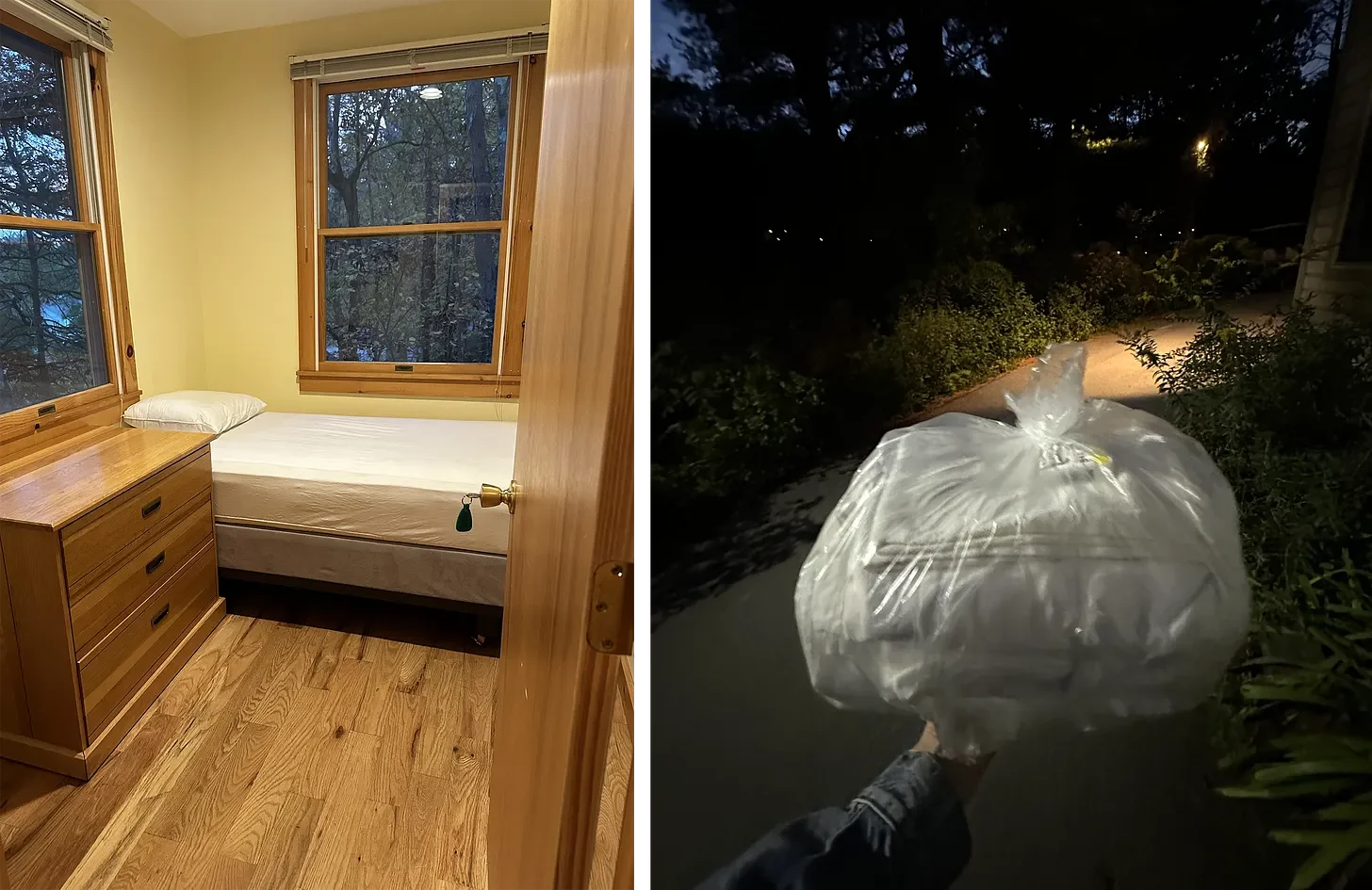
A bare twin mattress stared back at me when I arrived at the Omega Institute at 7 o’clock on a Friday evening.
The room was impossibly small, holding just the bed, a dresser, and a rack for hanging clothes. No sheets, no towels, only the realization that the need to supply my own was a detail that never made it to me, although I’m sure it was there.
In the darkness of that dormitory hall, my weary anger could only be pointed inward.
Thankfully, I was able to rent what I lacked from Guest Services for the low fee of $10, cash only, which miraculously I had on hand. By the time I got everything sorted it was nearly 8 o’clock, which was when the writing workshop officially began.
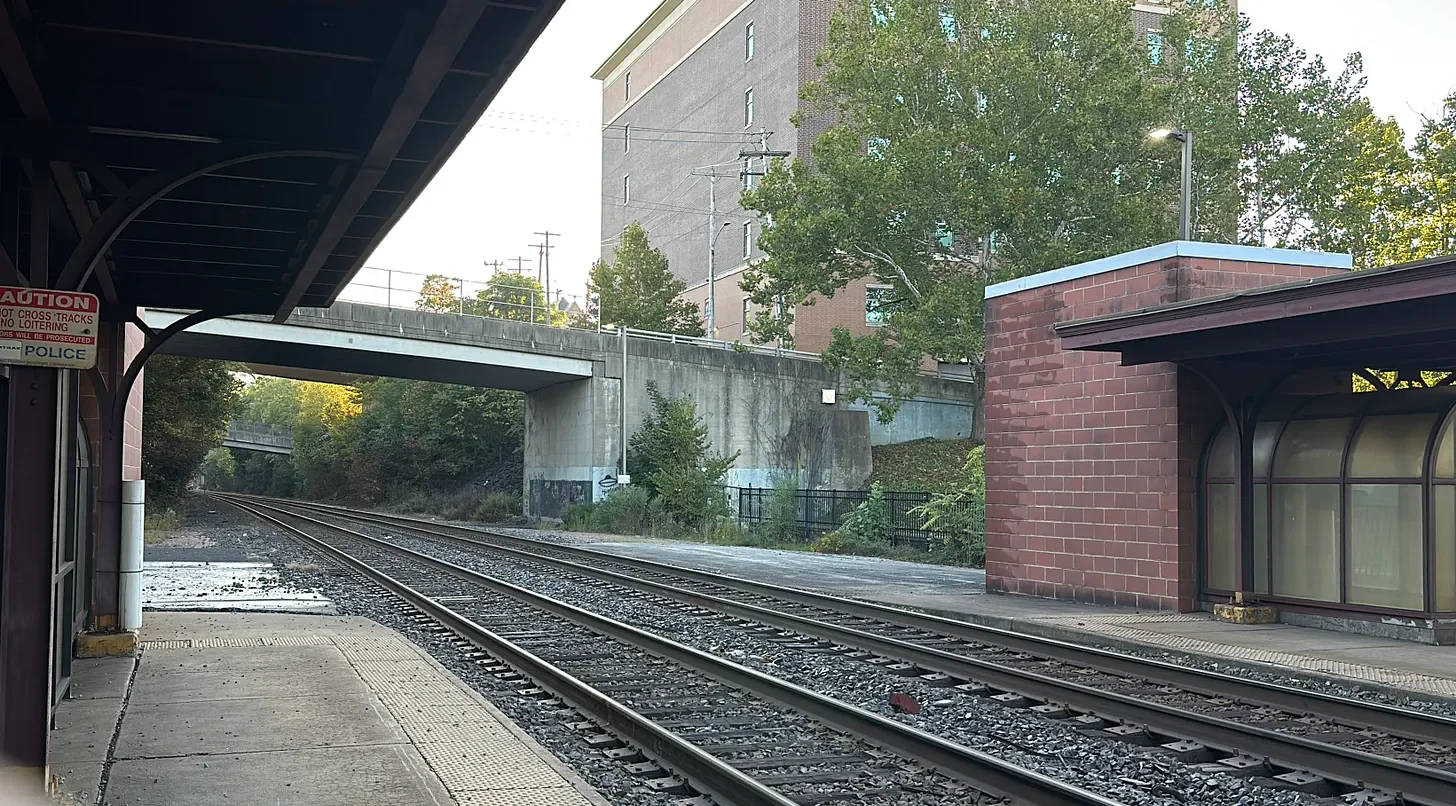
The day before I’d woken up around 4 am, not unusual for me, and took the train from the greater Pittsburgh area to New York City, where I spent the night with my oldest friend. Still recovering from a long weekend of teaching basketry with Dan, I was exhausted, to say the least. But having a sleepover with someone who’s known me since I was 15 was a lift to the system.
By the time I boarded another train at Penn Station on Friday afternoon, I was back to running on fumes, but looking forward to the solo adventure ahead.
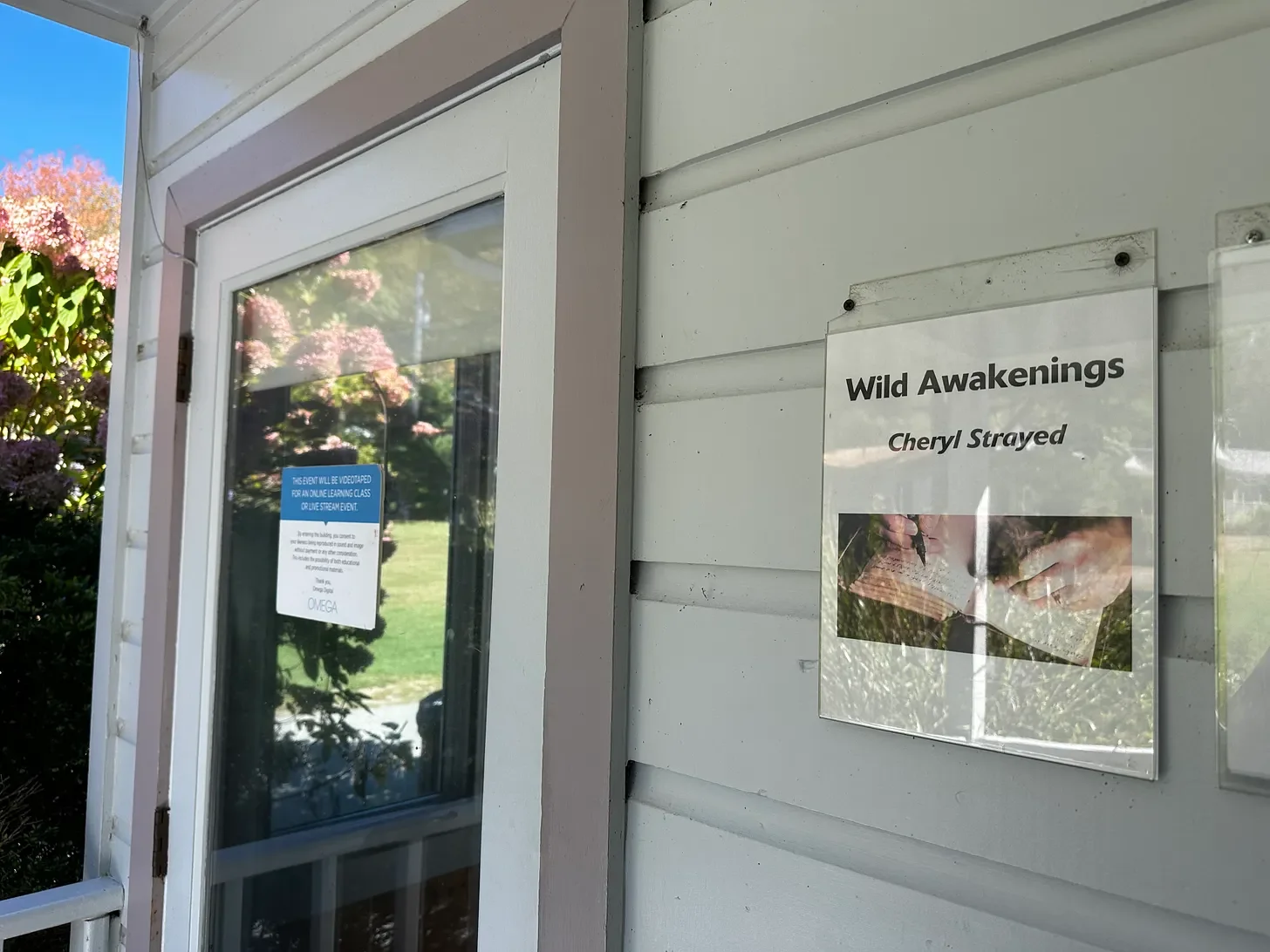
Sitting in the Main Hall on that first night of the workshop, I wondered how I was going to stay cognizant until 10 pm, but the great Cheryl Strayed, author of Wild, was on stage, energetically orienting the room of 200+ (and another 100 or so on Zoom), to our weekend together.
The power of her presence matched that of her writing.
As the clock ticked well past my usual bedtime, around 8 o’clock, I relaxed into the role of a student in good hands, my attention buoyed by the eagerness around me.
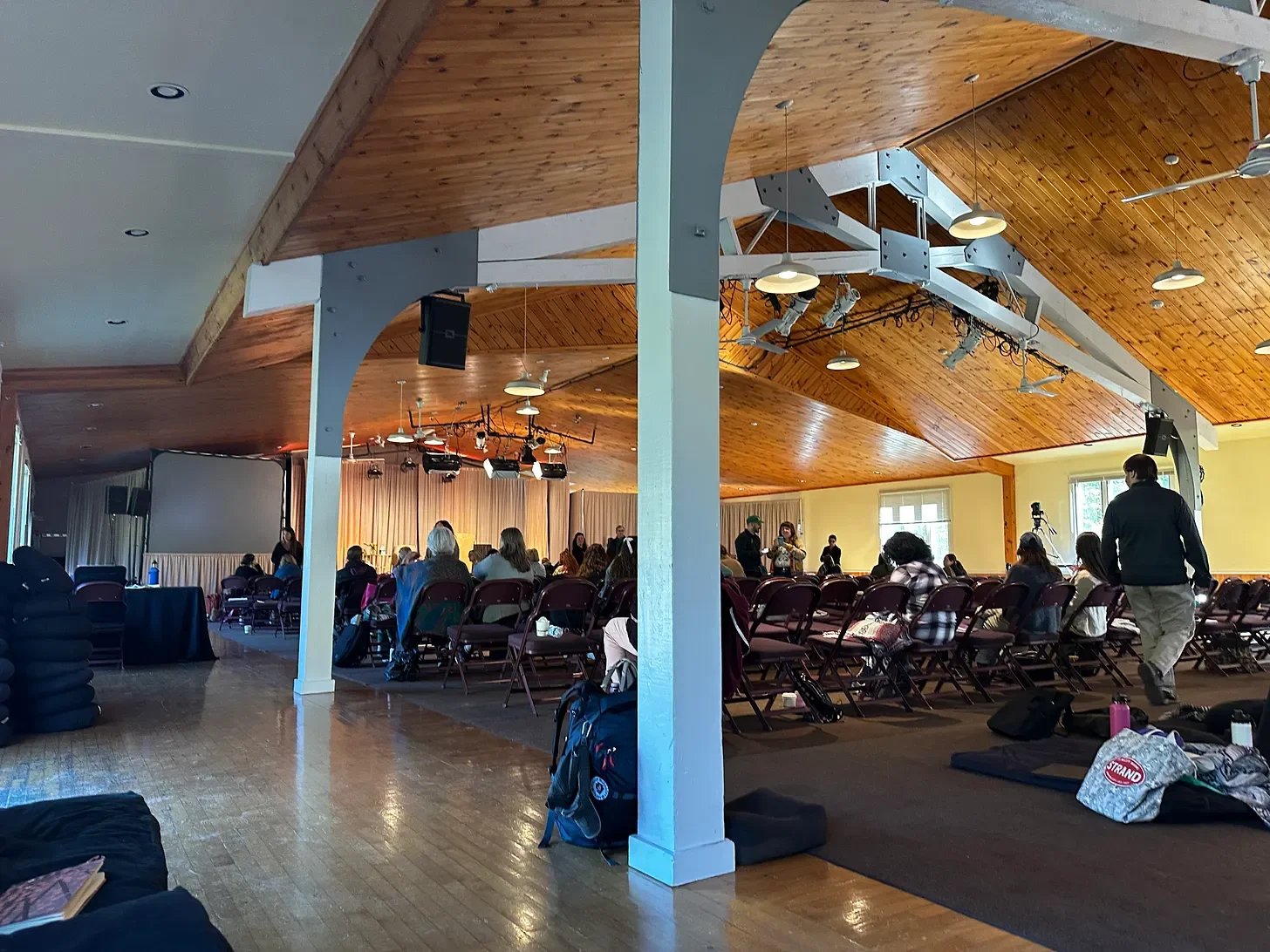
The Main Hall, home of the Wild Awakening workshop.
By Saturday I felt rested and ready for the rhythm of the workshop, which we’d repeat for hours: Receive a lecture, then a variety of prompts, then 10 minutes to scrawl on our chosen one, followed by time to share our words with a partner.
As pairs swapped readings, Cheryl roamed the room and randomly chose 3 people to read their work to the entire group. Folks from Zoom were chosen as well. In a surreal moment, I was asked if I wanted to be one of the first readers of the day.
I said yes, and immediately vacated my body as I shakily shared.
After a lifetime of dalliances with writing, I started Field Notes a year ago with the intention of establishing a source of accountability “steam” to push myself forward.
Momentum used to be so much easier to sustain, I mused.
In 6th grade, I’d willingly forgo recess to sit in the computer lab with a friend, where together we’d work on writing a sprawling story about anthropomorphic characters, for no reason at all other than it was fun.
Around that time I also got seriously into composing poetry, the dregs of which sit somewhere in a cemetery of floppy disks.
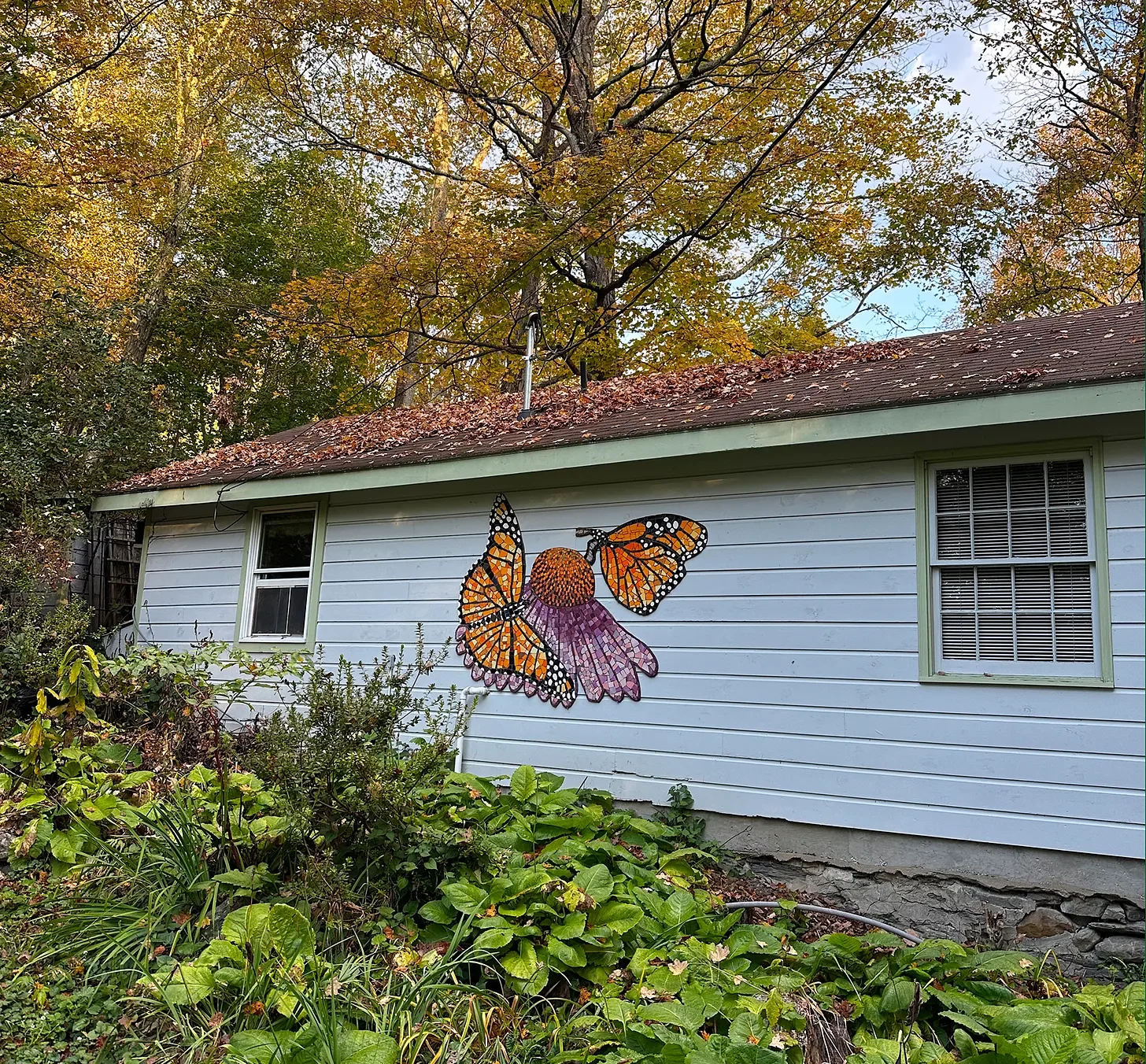
Autumn was shining brightly around the Omega campus.
Later, as an incredibly subpar high school student, I somehow managed to secure a coveted spot on the staff of my hometown newspaper’s weekly teen column. I’d write editorially on topics like AOL Instant Messenger, or movies of the day, but when no one wanted to tackle an investigative and immediate story about the impact of 9/11 on our peers throughout the region, I took it on.
I may have been flailing academically, but getting published in a real piece of print media always felt like a spark from some other source of light.
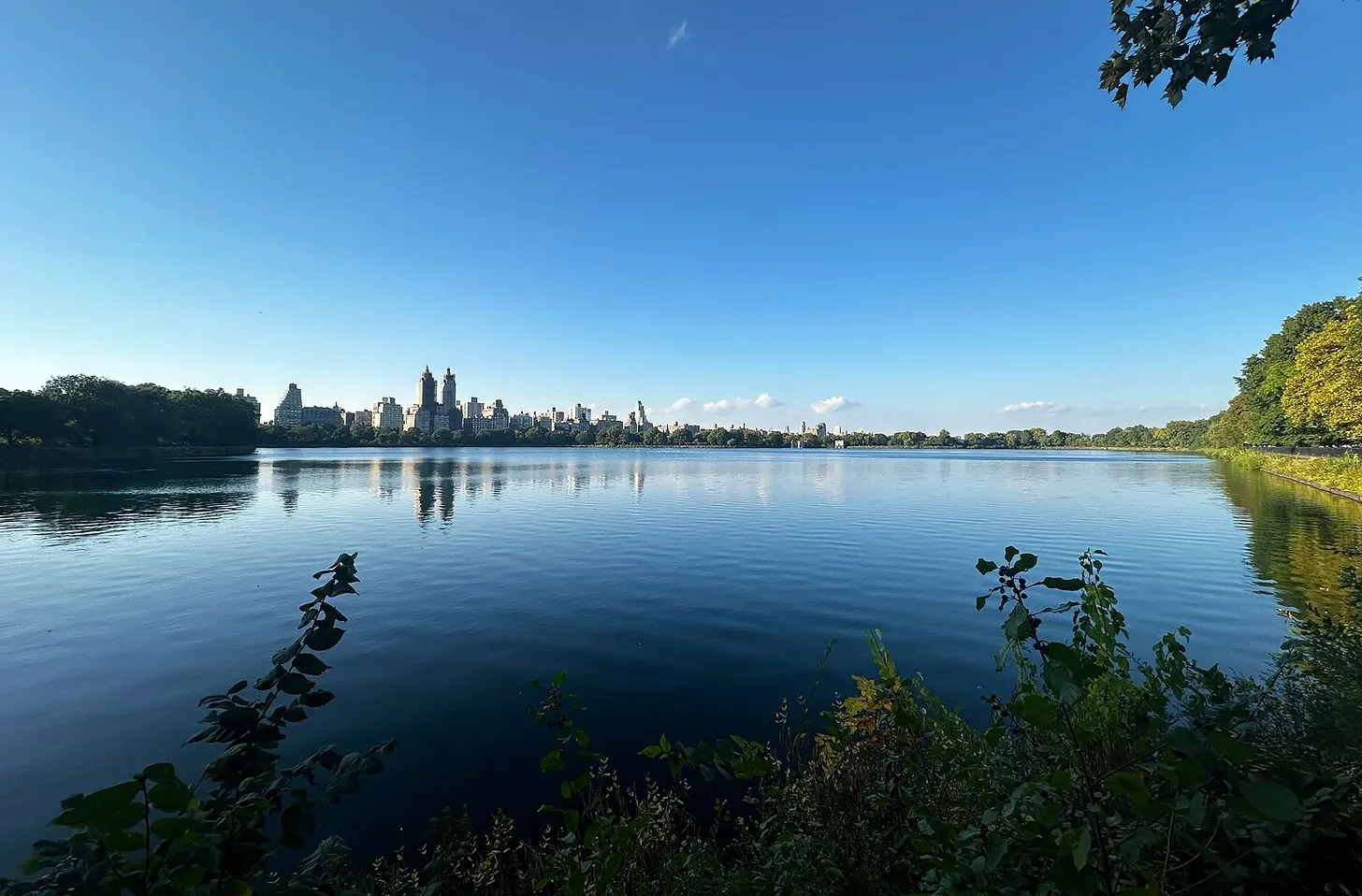
A glimpse of Central Park, during my brief moment in the city.
I developed a penchant for journalism, and after relentlessly badgering the producer of the local TV news station’s morning show, I spent half of my senior year there as an intern. I’d wake up at 3 am and spend hours working before school, mostly running the teleprompter, or calling police stations and hospitals for any overnight news.
Once, in a bewildering moment, I got connected to the room of a hit and run victim, who, from her hospital bed, asked 17 year old me if I could get her a ride home.

A beloved blast from the past in one of Omega’s buildings.
After that I dreamed of being an on-air broadcaster, which led to an initial major in Communications when I got to college. My poor grades only granted me admission to one school, and when I got a taste of what their specific program entailed (which was not centered around journalism), I chose art, with a focus on photography, instead.
The tilt towards journalism appeared within my photographic pursuits, however, leading to an internship with my hometown’s paper during winter break, this time with a photojournalist.
I mostly remember capturing negative space - a bare field that was destined to become a Walmart Supercenter, the empty interiors of someone’s home, and, reluctantly, a bloodstained silhouette in the snow, where an elderly man had fallen in his own front yard and passed away.
That one never made it to print, but every image revealed a new dimension on shaping a narrative, and a new way to notice.
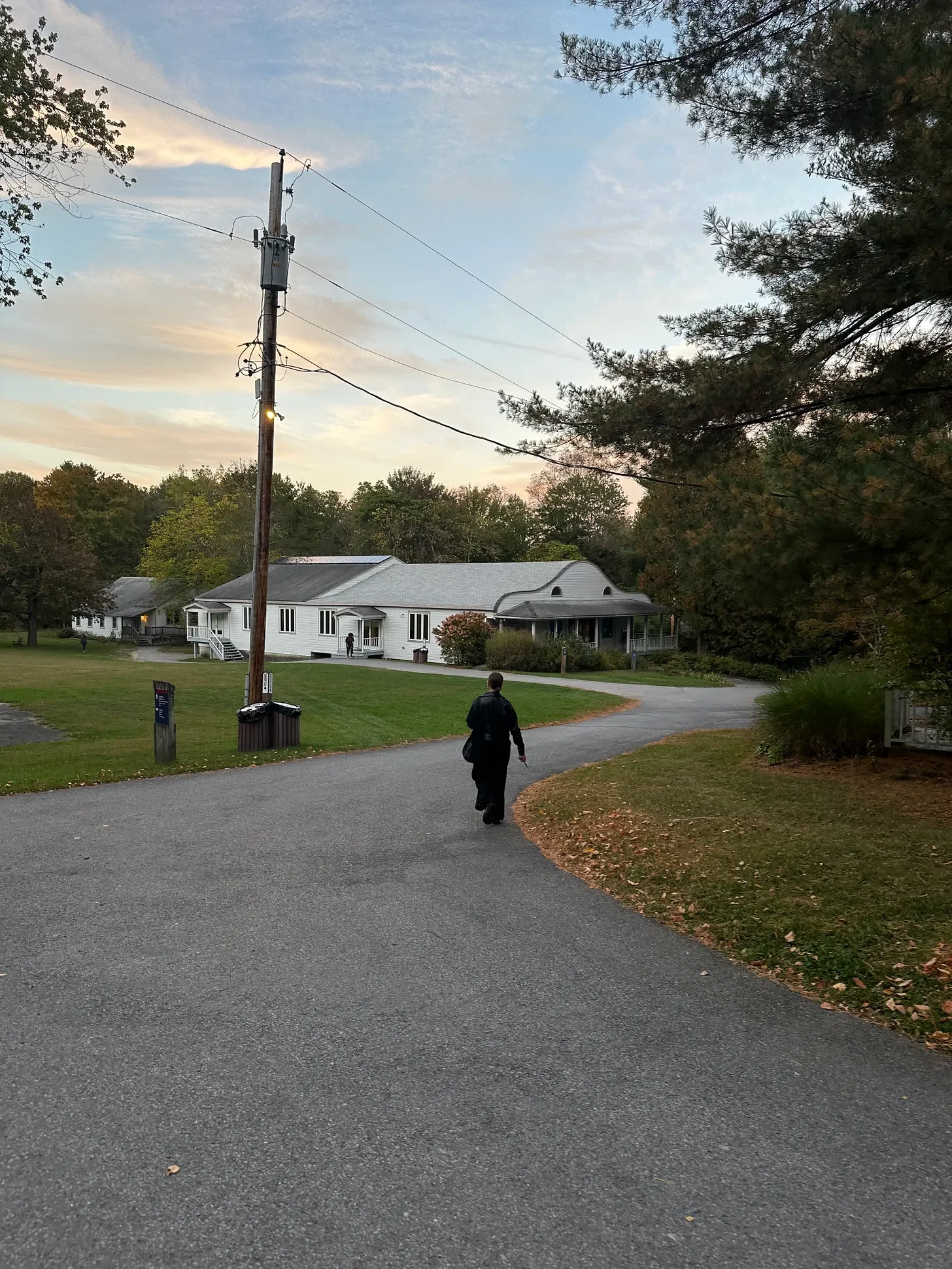
A look at Omega’s Main Hall from the outside.
Photography, however, became a medium to hide behind. The lens literally obscured my face, providing shelter from the vulnerability of being on the other side. Taking pictures also freed me from writing the proverbial thousand words, further shading out the eager seedlings of storytelling that started in me so young.
Pictures felt far more sterile and safe than the soul baring confrontation of writing, and fears around sharing eclipsed my more youthful enthusiasm over the years.
But perhaps the words, and I, just needed time to percolate.
Fervent curiosity, and an obsession with noticing things, however, have never left me.
Ironic, then, that my arrival at last weekend’s workshop was clouded by such a clear lack of noticing pertinent details prior to my stay. Life has been so hectic lately, but after the sheets and towels incident I made it a point to truly pay attention during my time at Omega.
I keenly observed the rainbow sherbet lighting that glowed onstage, along with Cheryl’s red nails, and the wooden sunrise inlaid into the ceiling. I deeply absorbed the stories from everyone else who read aloud, feeling affirmed by a collective desire to share what sits within us in a dynamic, brave way.
I wrote down everything I wanted to take with me, filling dozens of pages with jubilant cursive.
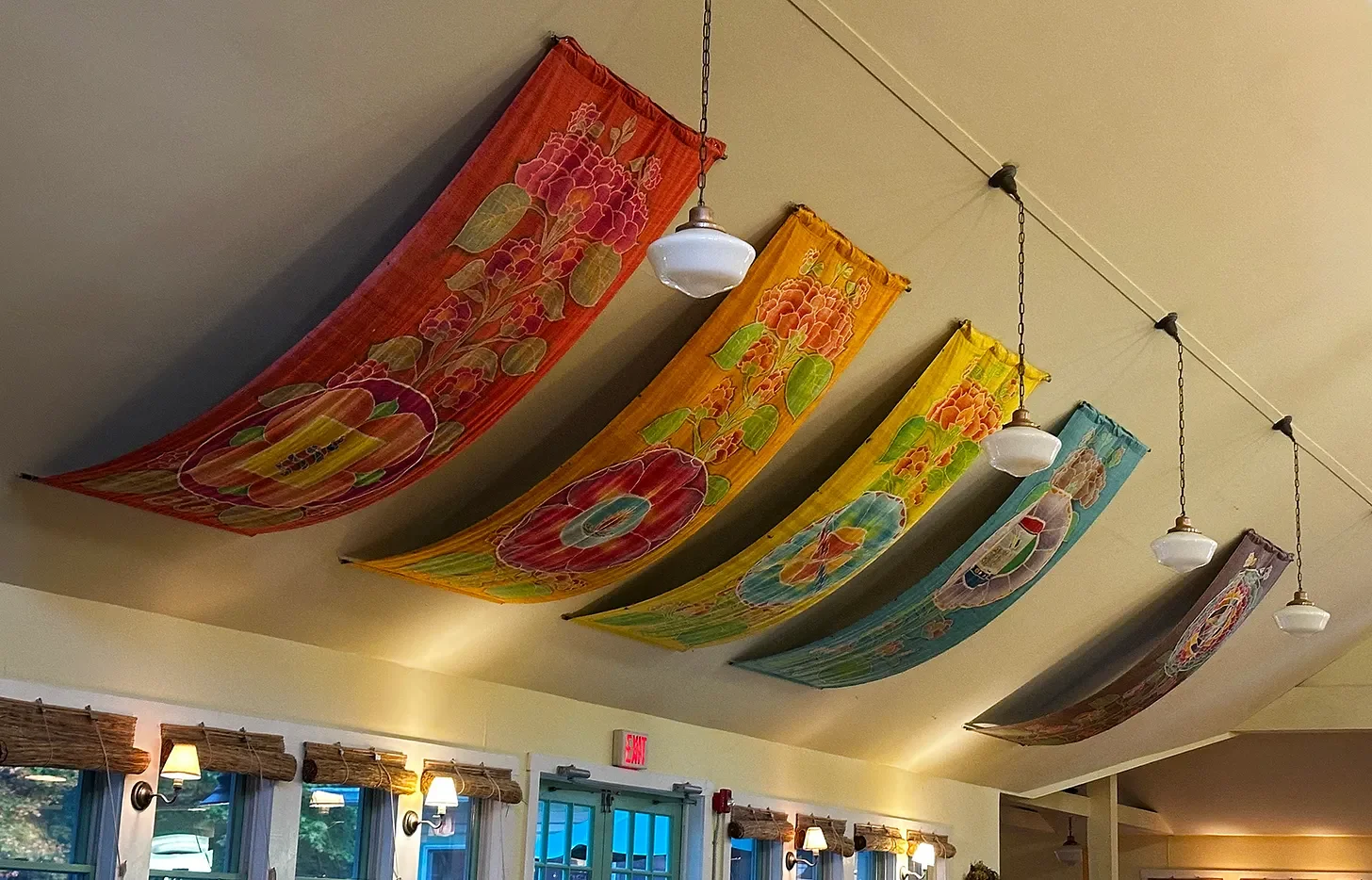
The ceiling in the cafe.
I listened to the mixing of a screaming milk steamer, new age music, and sounds of a video on someone’s laptop blend together in the cafe, above all of which someone nearby remarked to a friend:
“All I heard is ‘be mindful,’ but don’t stop rushing.”
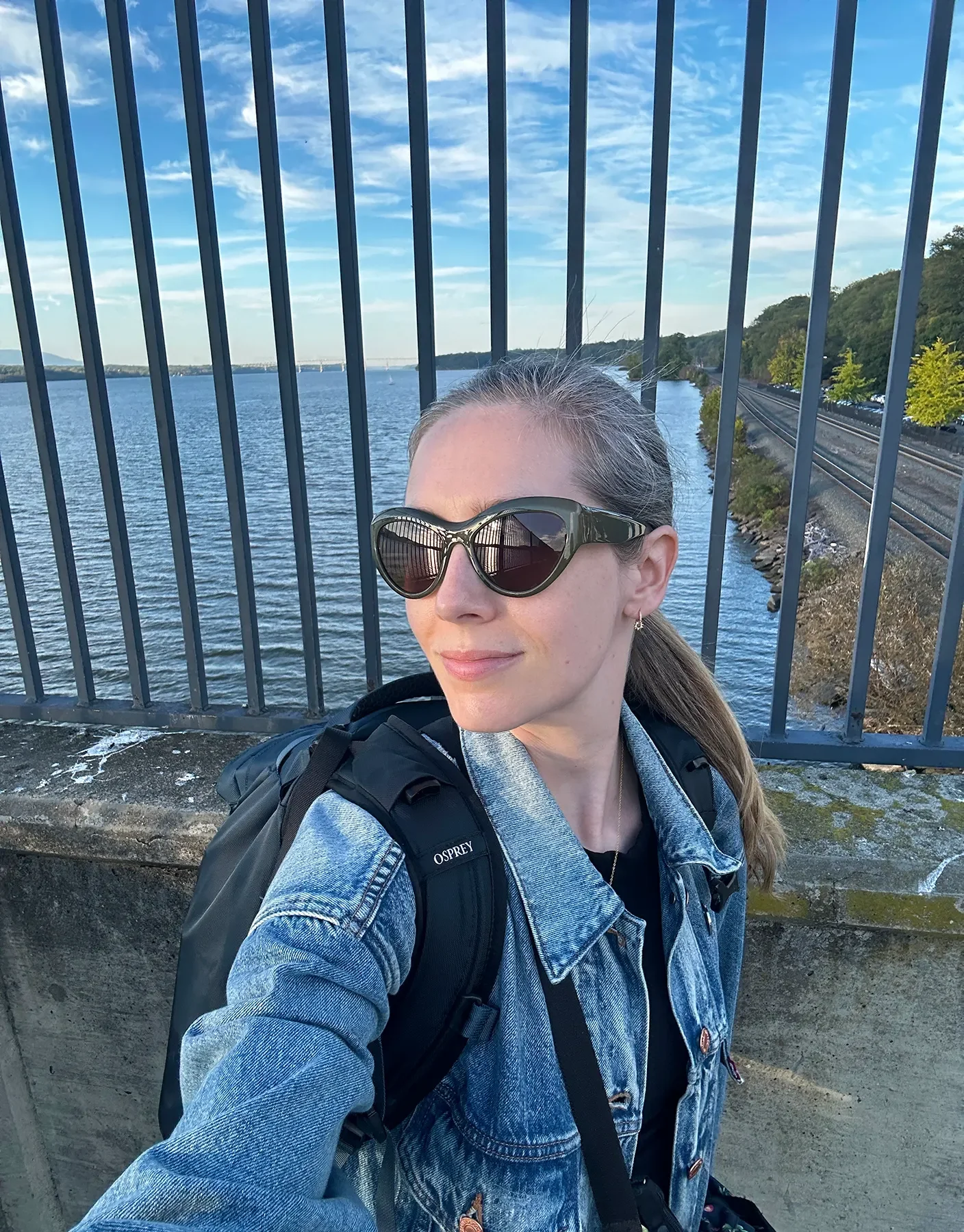
Taking in the views at the Rhinecliff, NY train station.
Dan found basketry the year he turned 40, which shifted his attention in a direction that has proven fruitful, for both of us, in many unexpected ways. That landmark birthday is still nearly a year away for me, but pointing my compass on work that is more fearless and confident than ever is propelling me to wake up now.
I can only trust that my decades of latency were a necessary hindrance, and that whatever fogginess I feel about the future of my writing is just fine, as long as I keep moving through it.
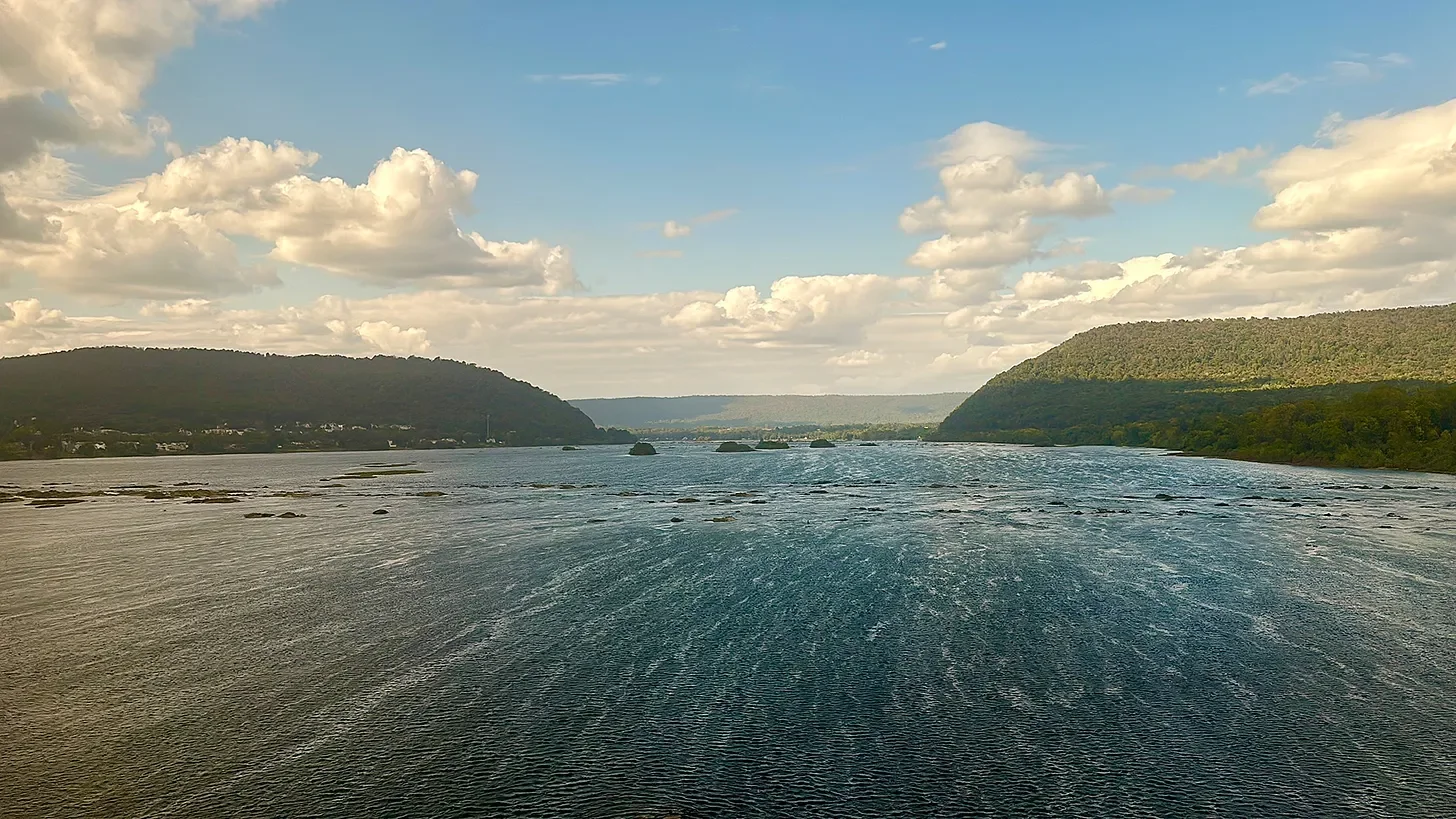
View from the train, somewhere in the middle of Pennsylvania, on my way home.
At Omega I also heard the sentiment: “What we lose inevitably finds us again,” and after decades of gradually receding my attention from it, storytelling has indeed returned and recaptured me.
Like friends who’ve been patiently eyeing each other from opposite wings of the stage, words and I can no longer ignore the cue to start the damn show already.
It’s never too late to return to who you once were, or always dreamed of becoming.
Originally published on October 13, 2024
The Lives & Layers of a Land
7 years here
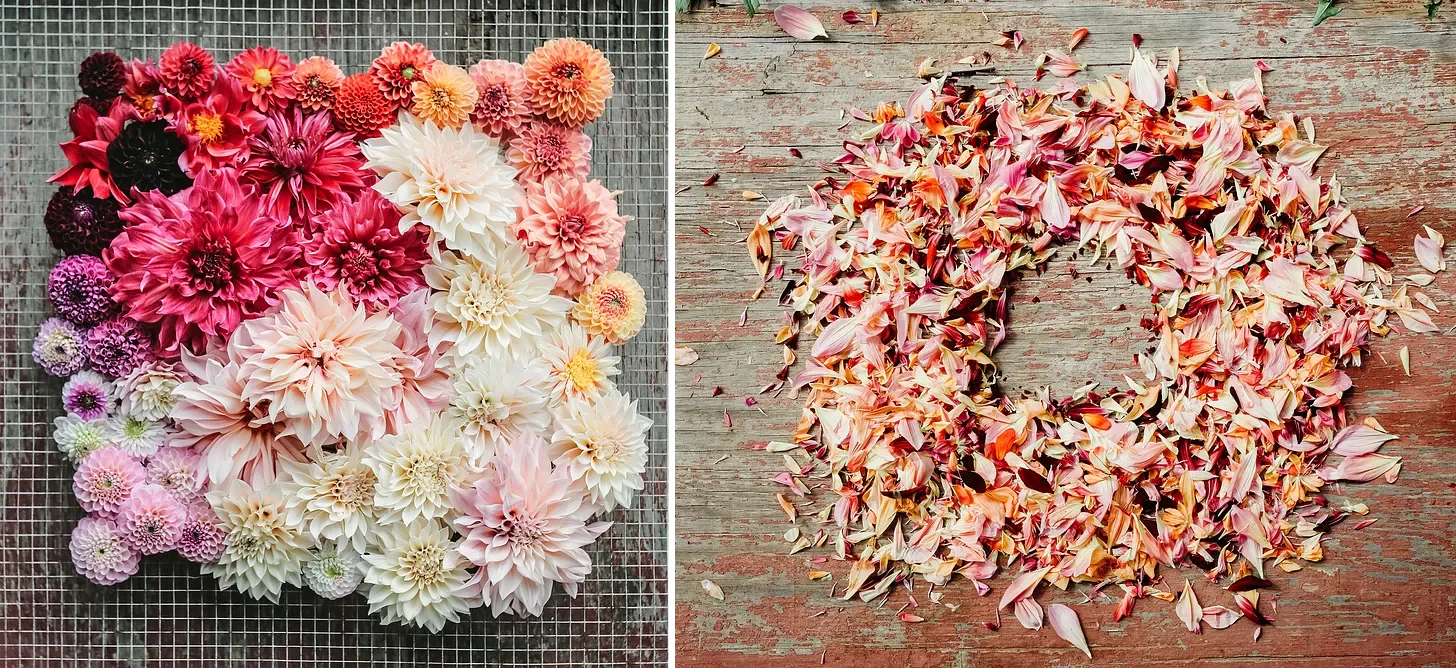
2018 & 2019 - When we grew Dahlias, and a couple of my arrangements of them
Foggy Blossom, and our home, sit on 12 acres. In all the years of this land’s life, ours have only intersected for the past 7 - an overlap barely perceptible in tree rings.
This year has been our most divergent yet, presenting a paradox here in Field Notes, where much of my storytelling has been focused on events that have happened, literally, far afield. Every adventure had origins tethering us back to the farm, but the possibility of something like international travel, or cross country teaching opportunities, never entered our initial imaginations.
Now that traveling has tapered, and we’re heading towards the relief of hibernation and winter harvest, the full scope of our 7-year cycle here is emerging.
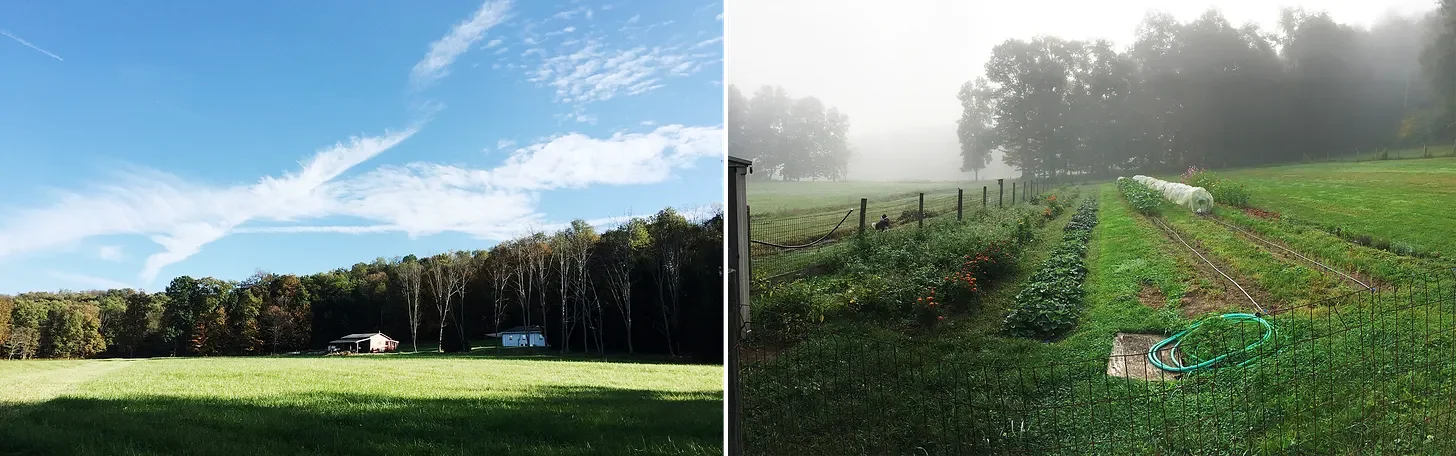
2017 - Field and nursery, now both too densely populated for such clear views
In that first summer of 2017, we felt silently grandfathered in by this parcel, the expanse of which was mostly shorn, and half framed by corridors of spindly forest. Whatever plans and visions we brought with us were passively encouraged, and implemented with as much ease as working of the earth allows.
We’ve learned, however, that sand is hospitable when you’re building in the proverbial box, but if nature wants to challenge or reject your efforts, she will in due time.
Before moving here, Dan and I had both only known suburban backyards, the manicured boundaries of which present a ceiling on feral wonder, so we were determined to get acquainted with the blankness that had become ours to put a monumental mark on.
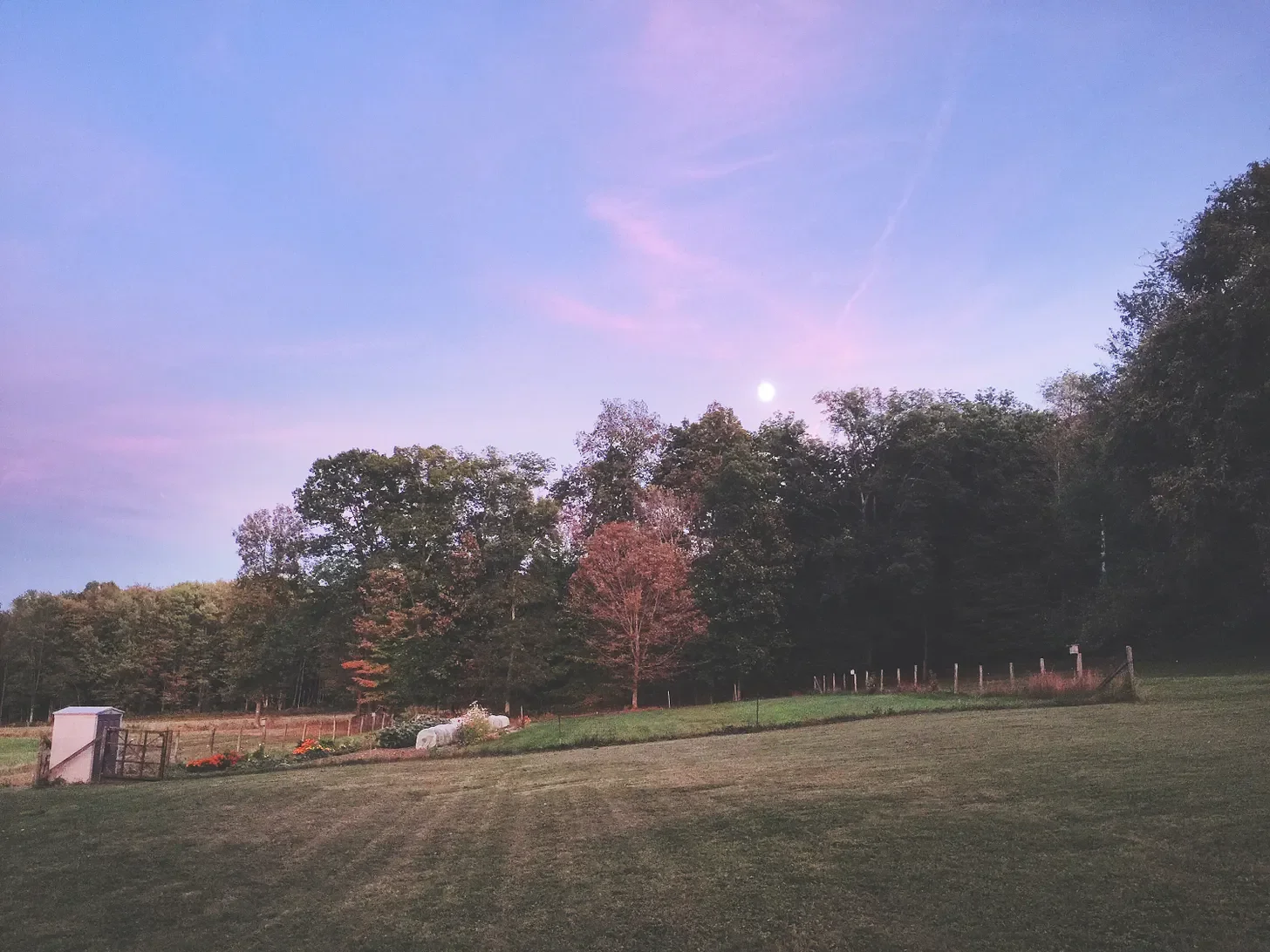
October 2017 - Full Moon
The north star of our farm dreams became a coalescence of both wild and cultivated spaces, allowing room for both the inherent characteristics and personalities of this place to shine, as well as our own.
As we’ve set our focus in that direction, the shape it’s taken continues to surprise us.
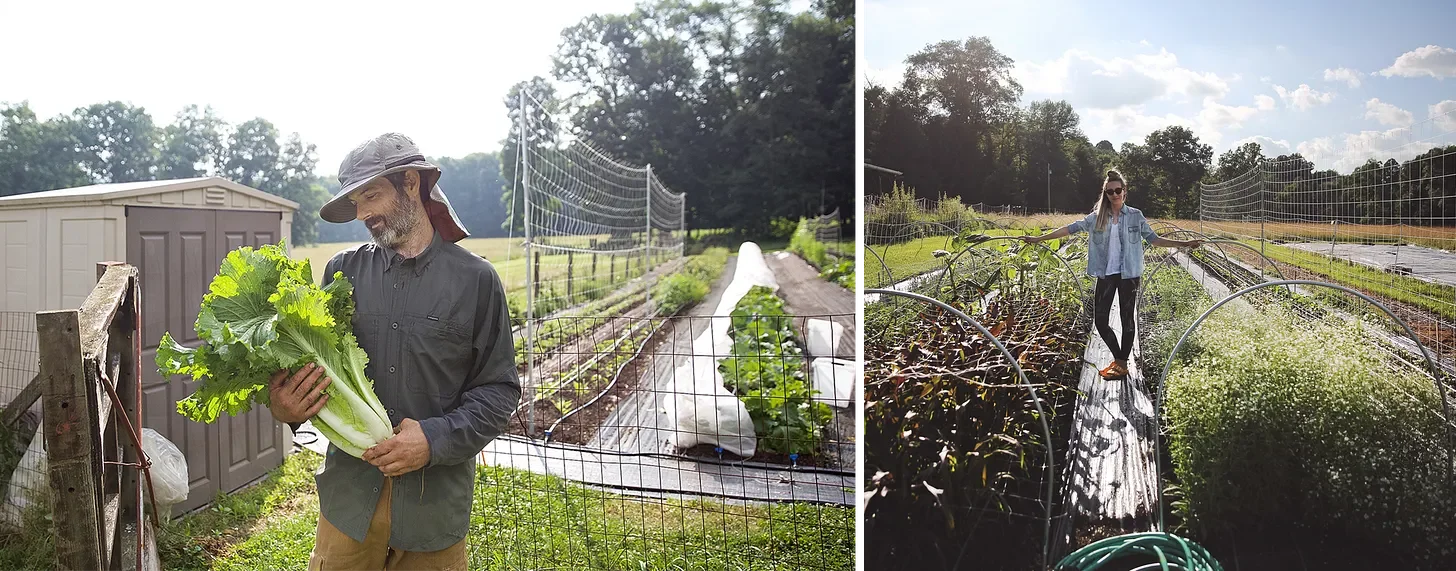
Summer 2018
Even though it was an Eastern Bluebird who, perched atop a fence post, served as a harbinger of hopeful affirmation during our first visit here with a realtor, we were blind to the scope of the web we’d be inserting ourselves into.
Beneath us lay centuries of dimension and history, every nook and cranny replete with longstanding lineages of flora, fauna, fungi, mineral and more. Towering canopies overhead loomed large as yet another incomprehensible realm, engulfing us in a clear container of space, with the blurriest edges of time.
After nearly 30 seasons here, these are the thoughts that rise to the surface.
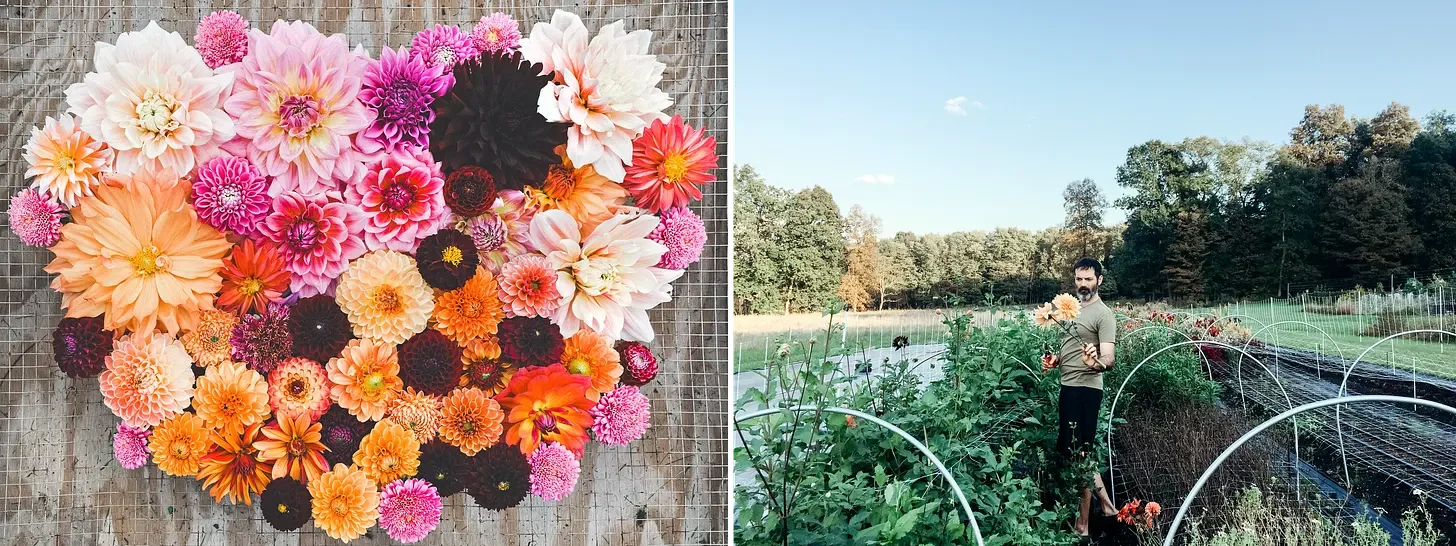
October 2018
By now there’s been countless creatures who’ve etched their numinous energy across our acreage, reminding us that it’s not, in fact, ours.
Bear, fox, possum, and racoon hold no ownership, but traipse through with an unmatched confidence on their quests. Snakes routinely slip from their skins, snagging the husks on unassuming shrubs, creating the most macabre windsocks.
Just put that anywhere, I think.
Winged predators rule every sunlit sky, while owls invisibly echo under the moon. Ticks, wasps, beetles and aphids are reliable tormentors, with deer and rabbits a close second in their relentless obsession with green youth. Spiders, mice and stink bugs see no edges between outside and in, adopting our house as their luxurious larder, and lounge.
The beautiful blue omen that met us on day one has been eclipsed by this eternal traffic, challenging me regularly to not turn away from all that’s wild.
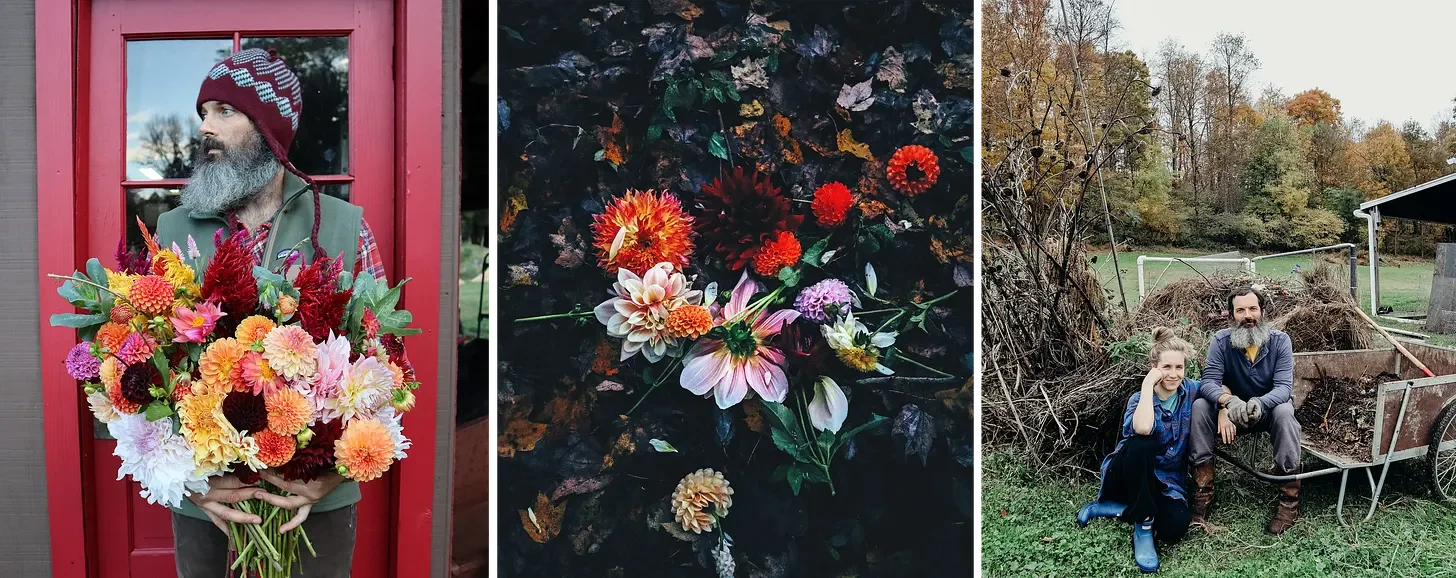
October 2019
Quickly humbled to mere nuisances, we continued on in those early years, sourcing and collecting plants from purveyors across the country, and plunging seeds, tubers, bulbs, cuttings and trees into the ground. Each one led a parallel life within the pixels of spreadsheets, and together earned us a title that never quite felt right - farmer.
The small charm of a fenced in yard never held such pressure.
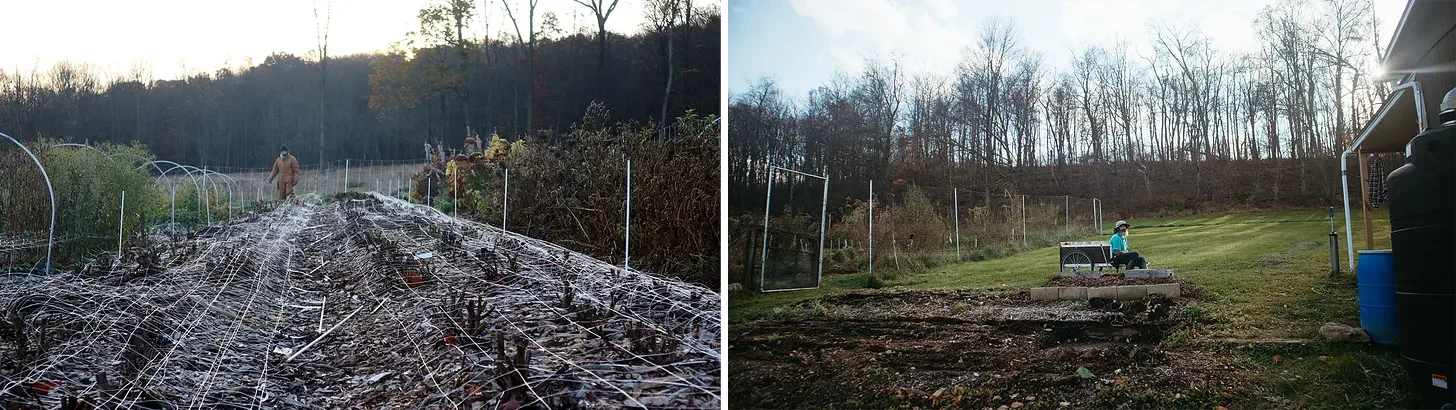
November 2020 | November 2021
Today, the many thousands of results of our efforts have edited this land and remain either intact, or indistinguishably integrated into their final, dark resting place. Every flavor of pace can be found here, from petals that melt away like butter, to tree trunks that thicken with a torpidity matched only by deer bones simmering into soil.
But as we’ve watched this land stiffen under ice, softly hug snow, crackle under the duress of dehydration, or turn to mush under too much moisture, all with an indifferent grace, the silliness of our aspirations becomes clearer.
We may plant in neat rows, or pursue tasks that add up to an enterprising business, but isn’t it all just castles in the sand? The immovable is already here, and has been.
We can hardly carve into the legacy of this land, but we try.
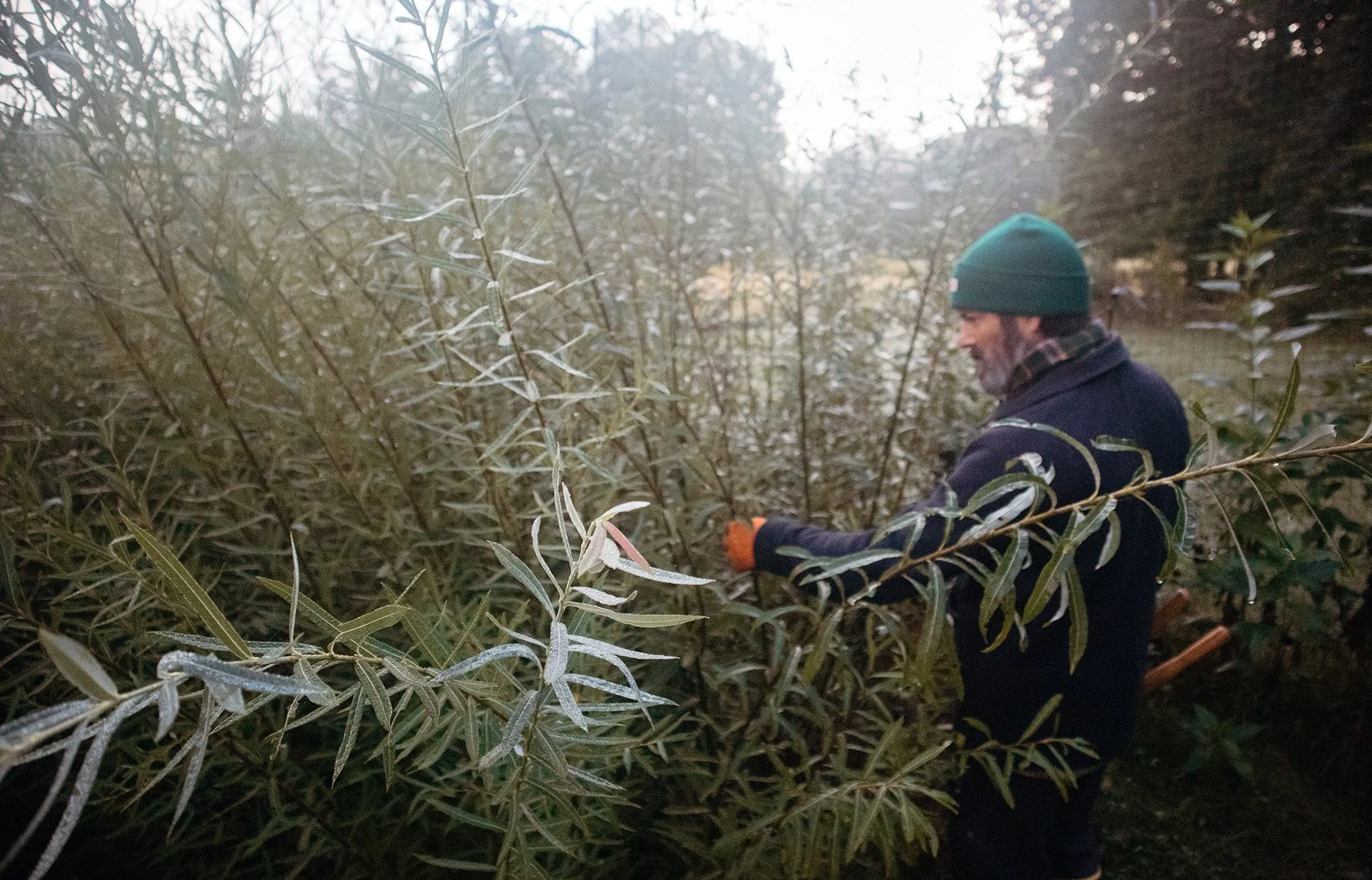
Baskets are peak talismans of this hopeful intention, encapsulating our attempts to cultivate, craft, and carry forward a form, but even they are destined for dust. Every stock of fruit or nut that grew out of a vacancy and now fills out into three dimensions stirs a bewildering memory of 2017 - the beginning, which is not that far behind us.
We say we chose perennials in order to trade the Groundhog Day game of annuals for one that would remain in play throughout our retirement years, but the transitory nature of all reality is unavoidable.
And yet, I can’t blame us for gravitating towards plants whose roots tend to stretch into decades, rather than vanish each winter.
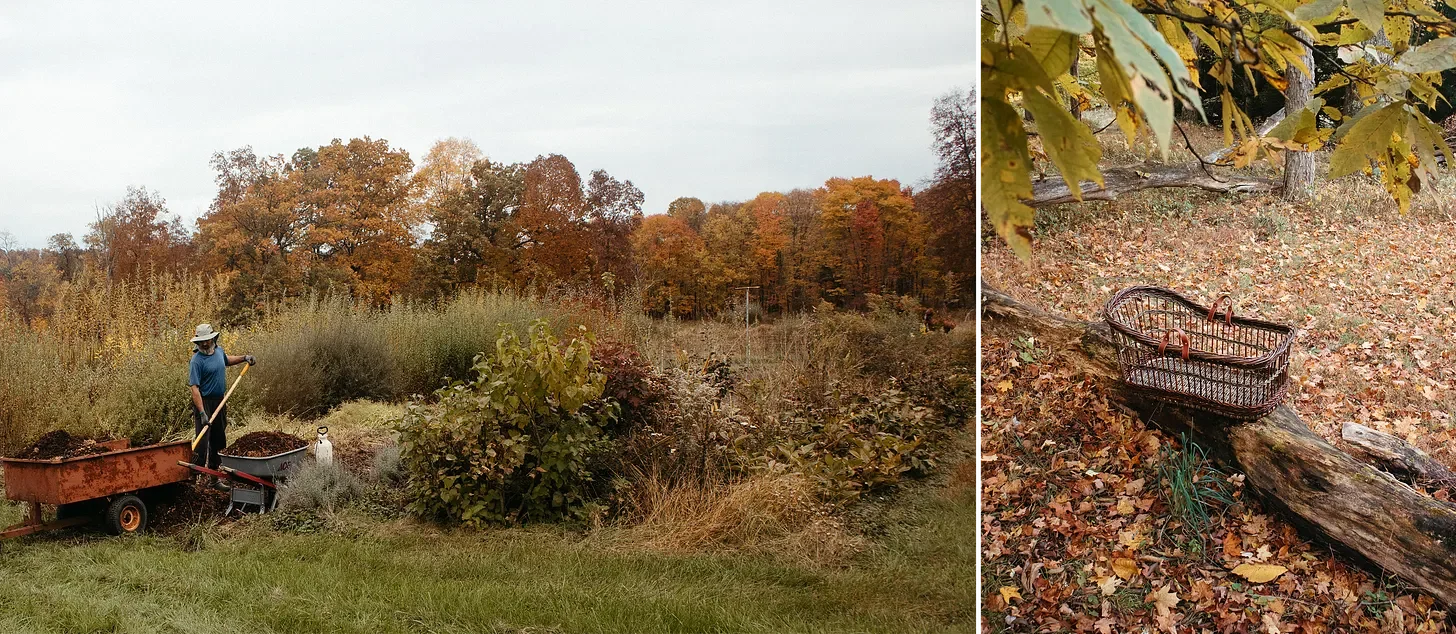
October 2023
This acreage has been a playground for exercising our ambitions, as well as a balm for our biggest fears, thanks to its consistent neutrality. More people, and art, have flowed through this portal than any other we’ve inhabited, but while our original goal was to come here and make something, I think we had it all backwards.
The only thing that ever needed coalescing on this land was us.
Originally published on October 20, 2024
Ode to October's Translucence
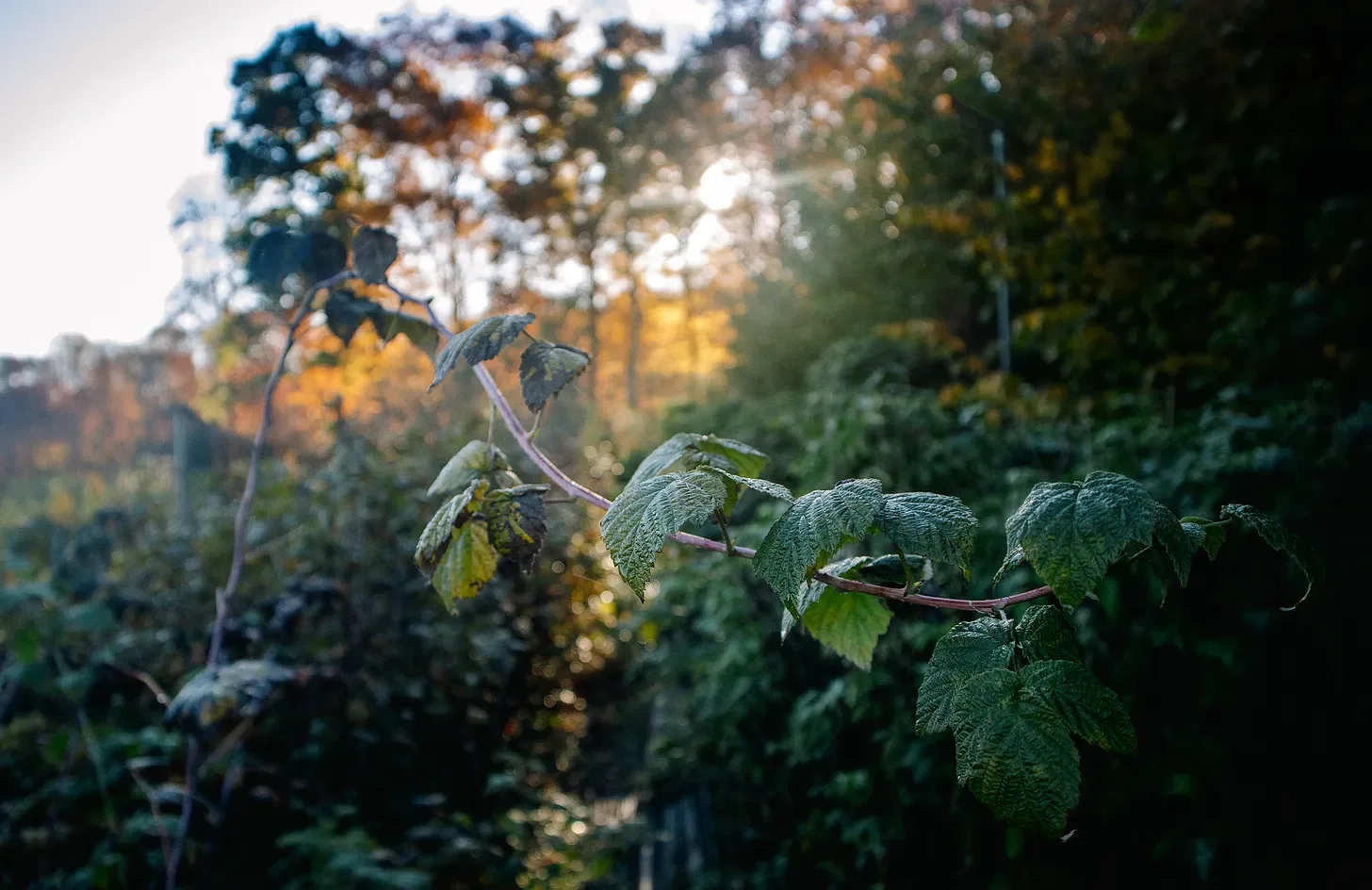
Most of the time I ride a bike, it doesn’t go anywhere.
The Peloton sits in our laundry room, a thin sliver of utility space with one window where the shade is always drawn. We tend to store our garlic there in the winter, hence the darkness, but I got used to, and really enjoy, riding in a veritable tomb, so we’ve kept it that way year-round.
This past week, however, Dan brushed the dust, and bird droppings, off our bicycles so we could take them out for an overdue spin under sunlight.
For years we rode throughout the fall, filling baskets with nuts and other foraged findings along the way. This favorite autumnal hobby has been edged out by other obligations in recent seasons, so when I saw Dan sprucing up the hardware on our handwoven baskets that sit below the handlebars, I was thrilled to have it back.
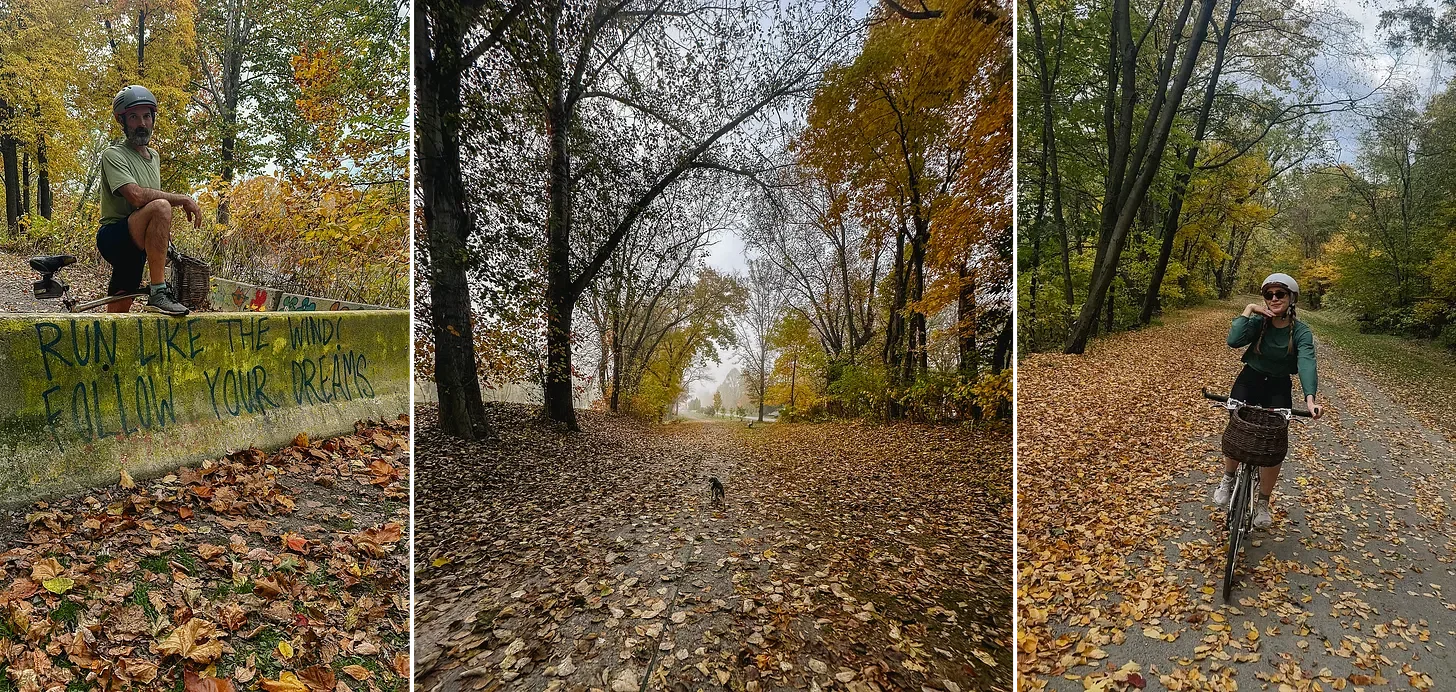
Dan, Baron, and me on the trail
We pedal on a nearby trail that runs parallel to the river, the views of which were once enjoyed by railroad passengers, rather than cardio seekers. Our first ride this week was overwhelmingly vibrant, and unseasonably warm, which meant that a snake nearly become a speed bump as it sprawled across the path. Dan, ever more fearless than I in the midst of the legless, ushered it back into the brush, bringing to mind all the times this has happened on rides past (too many times, for the record).
A second ride the following day was far chillier, requiring fleece around ears and fingers, but it was on that journey that I noticed our tires noisily cutting through the carpet of fallen leaves below. The sound was almost deafening, like static from an old TV set, but unlike that chaotic crackle it was a pleasant, crunching chorus, behind which our minds could freely buzz into oblivion.
Early Friday morning I returned to the trail on foot with our dog Baron for the final, and most frigid, visit of the week. Instead of a snake I saw a frozen worm, sugarcoated in gravel, stuck between seasons. In place of thunderous wheels crackling along, our footsteps softly shuffled as I mused over the rest of the week’s events.
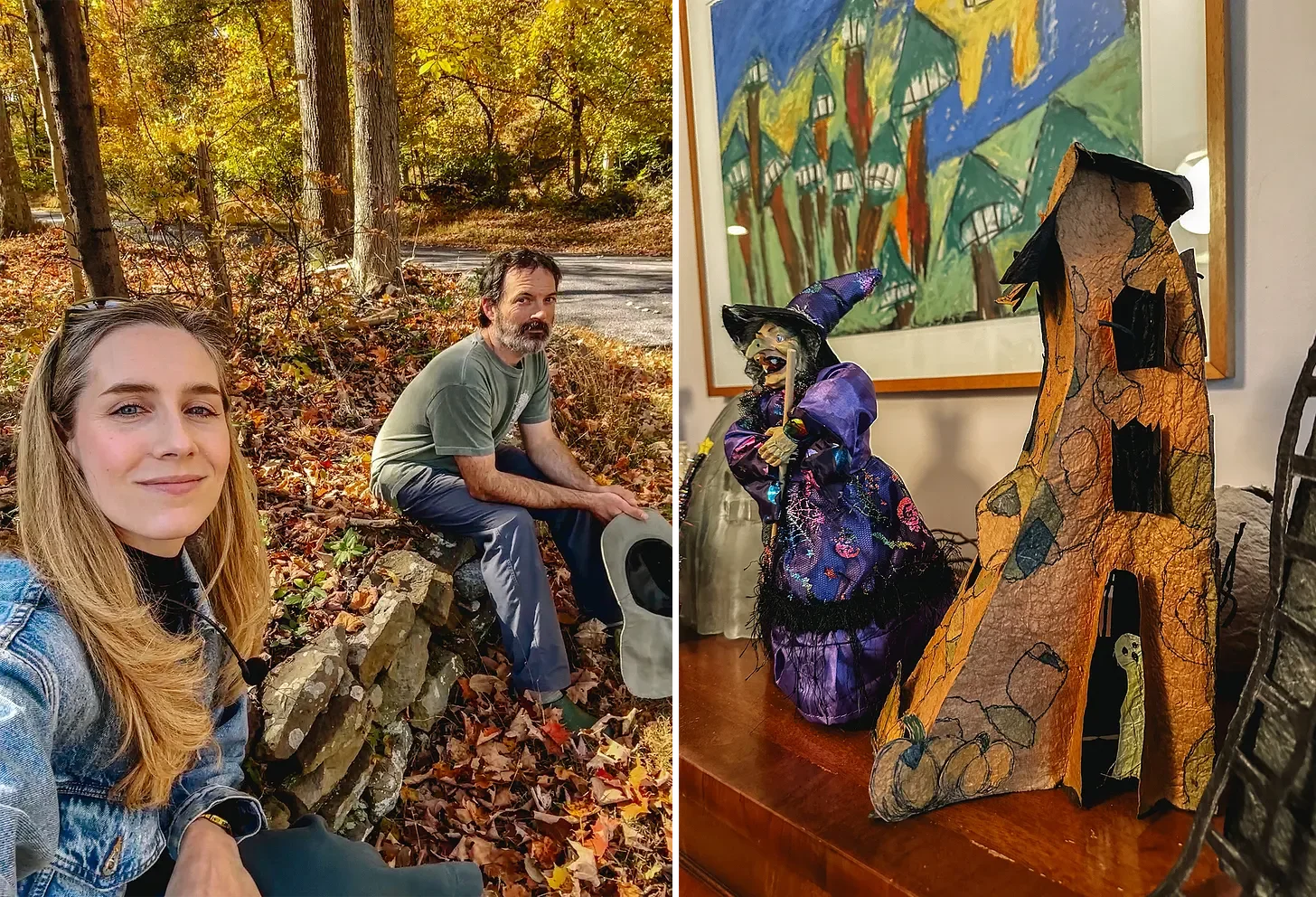
Waiting for visitors to arrive for a tour, and a glimpse at our friend’s decor
We’d had dinner at a dear friend’s house on Tuesday, which was adorned in an absolute plethora of eclectic Halloween decorations, many of which were older than us. This friend is an energetic, prolific and inspiring artist, but also an octogenarian whose company always feels like a kick in the pants to live life fuller, braver and more creatively. Her propensity to bedazzle her home with half a century of collected and handmade décor, however, was an unexpected bonus. Halloween is not a holiday either of us have observed in recent memory, so to enjoy a slice of unabashed festivity felt warm, and wholly nostalgic.
Reminder: You never need a reason to celebrate.
I also thought of last Sunday, when a group of 30 stopped by amidst an afternoon of local farm tours hosted by our historical society, and how we spruced up the place, and ourselves, in preparation. We had diligently practiced our separate legs of the highlight reel version of a Foggy Blossom tour - the studio/shed was mine to share, the fields were Dan’s – and in less than an hour, it was all over. In that time, however, we got to see ourselves, and what we’ve done here, through new sets of fascinated eyes.
I remembered that it’s scary, but good, to allow yourself to be perceived.
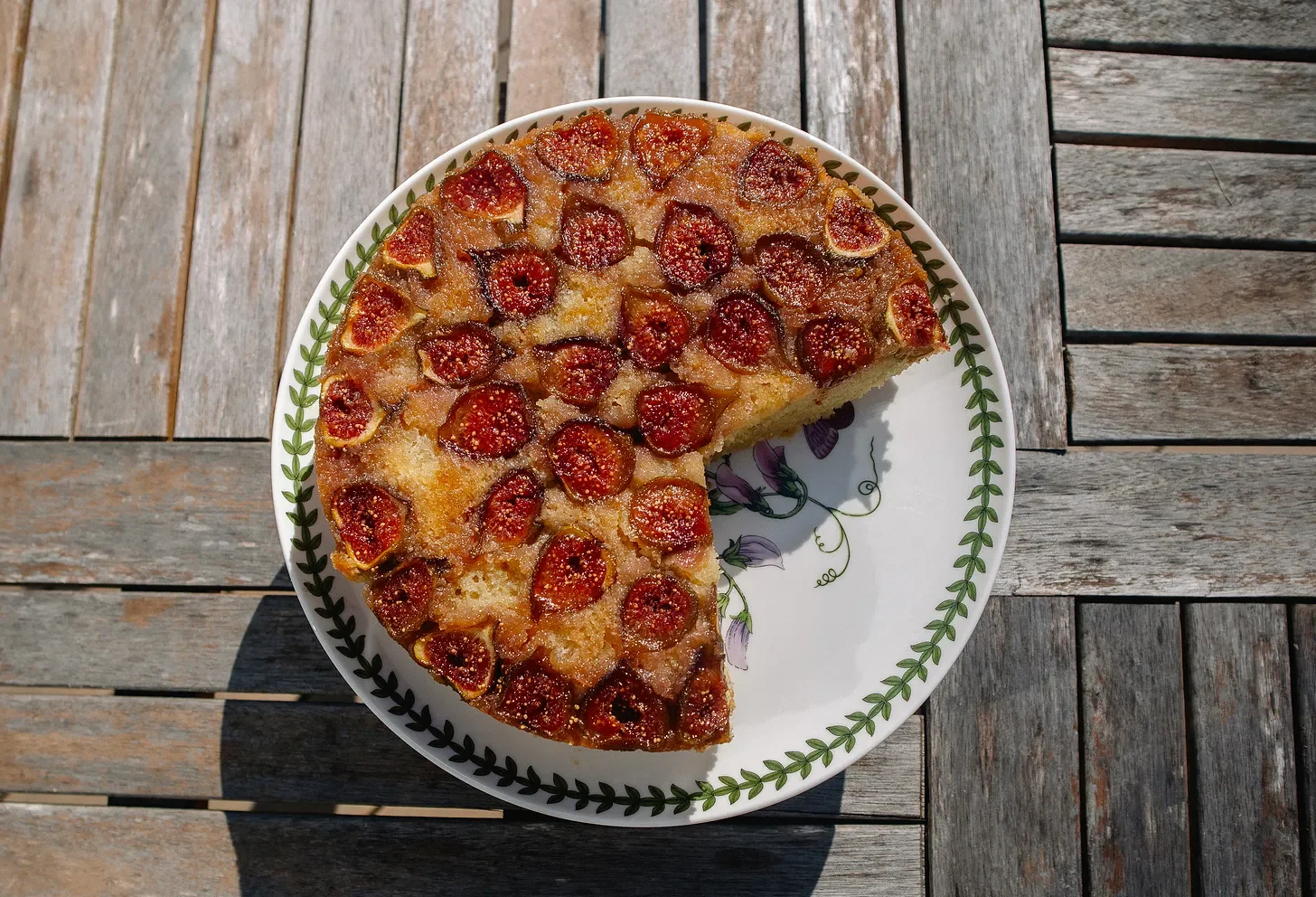
Upside-Down Almond Fig Cake - I used this recipe
I thought of the ripe fruits that drooped and begged to be plucked from the fig trees outside Dan’s studio windows. Answering the call, I halved and baked the fleshy teardrops into a cake that was pure comfort - so much so, though, that I ended up freezing most of it to enjoy at later date, when the solace of sweetness may be more needed.
I thought of the basket Dan made inside the studio this week, which I intermittently filmed, and then made a little reel of.
I also thought of the first time we saw each other, in October 2010, at puppy kindergarten. Our dogs were babies, and we each were committed to someone else.
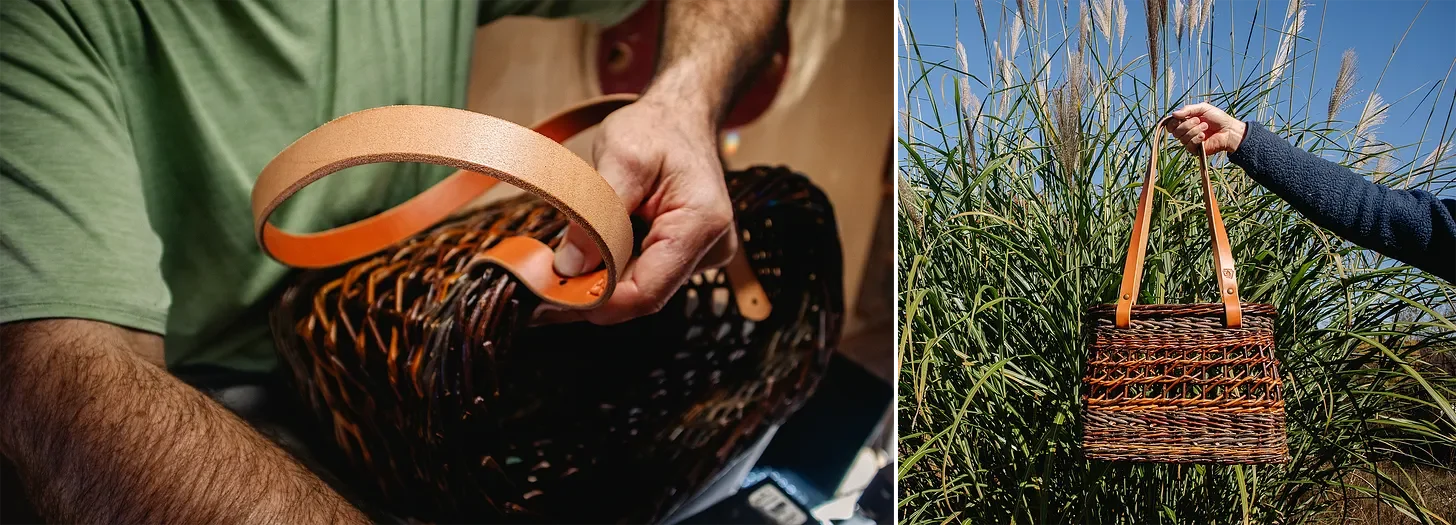
Irish Twill Bag with Leather Straps
Back then our friend was hanging the same Halloween decorations we saw for the first time this week, but we didn’t know her yet. We barely knew each other.
Back then my life only intersected with Dan’s for the tiny slice of class time each week, and it would take much unraveling - independently, together, and apart - before we could weave ourselves together into a final form that wouldn’t go anywhere.
Here at the end of October, time seems as translucent as the leaves.