
Where There is Heat There is Life

The title of this post is a quote attributed to Leonardo da Vinci in Twyla Tharp’s book, The Creative Habit.
Upon further research, however, I can only find one source, from Cambridge, which has it reversed - “Where there is life there is heat” - apparently said by da Vinci in the context of an autopsy where all heat, and life, had obviously been lost.
Tharp’s version was included in a section about embracing all types of warmth - candles, campfires, a hot bath, etc - as rituals for rising up out of a rut in fiery phoenix fashion. As a prolific dancer/choreographer, she references heat often throughout the book, citing it as a paramount force to build inside one’s body.
After her version of da Vinci’s words, “where there is heat there is life,” she adds:
That vitality is the luxurious reward that heat provides me. Unlike most luxuries, though, it is abundant and virtually free. In its embrace, particularly after a day of despondency, I feel capable of anything.
I read this after Dan and I spent an especially hot weekend teaching basketry, and despite the discomfort of spending two days stewing in our own sweat, there was an undeniable intensity that had life feeling electric. Extremes of any kind offer a ride along the experiential spectrum, which indeed feels like living at its fullest.
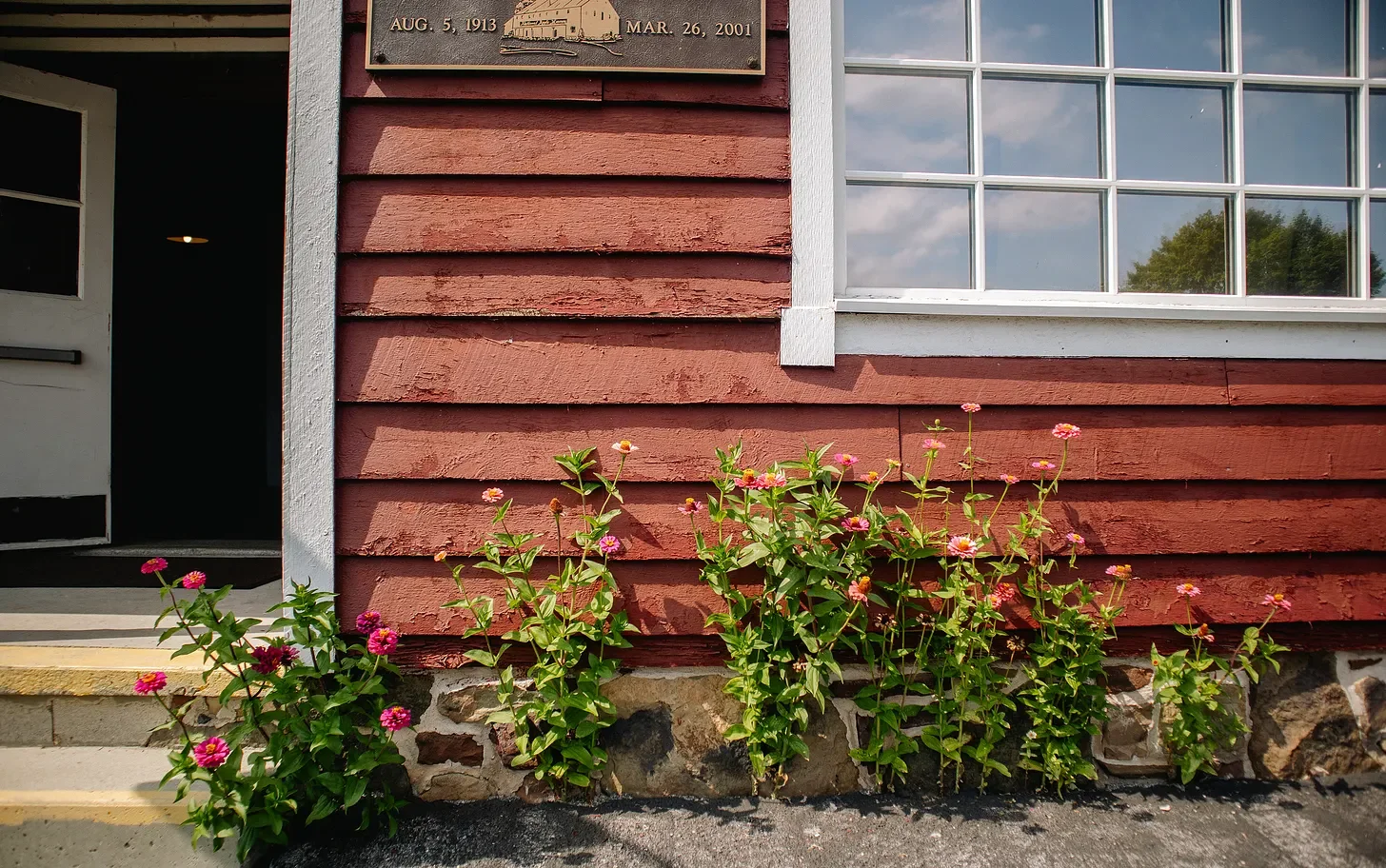
During college, in the summer of 2006, I interned at a museum that was kept so frigid I’d have to dress for winter to endure the climate. Returning to the sizzling sidewalk at the end of each day was a sharp shift back into the reality of the season, which imprinted a distinct memory, and attuned me to the edges of corporeal experience.
In other words, it was a sensory thrill.
Perhaps it was then that I began to crave an intentional orbit around the outermost possibilities of how a body can feel, which has led to regular practices of cold immersion, hot yoga, and more ever since. I seek these specific scenarios, but Dan will face whatever weather is present if there is work to be done outdoors.
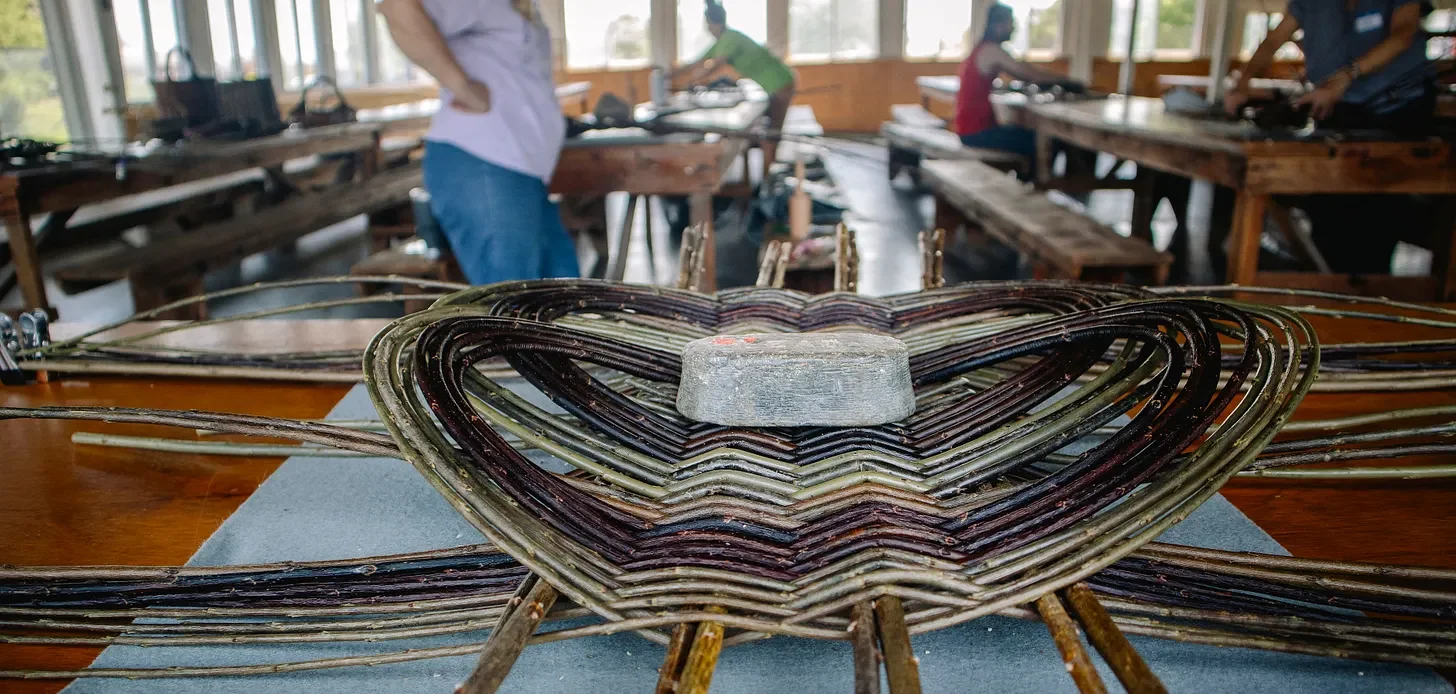
Both approaches have primed us to endure all sorts of unbearable situations, both environmentally and emotionally, but perhaps only successfully because we know the solace that comes from the proverbial pressure relief valve that gets pulled on the other side. It doesn’t ever get easy, or pleasant, to exist in an intolerable state, but becoming intimately acquainted with the transiency of everything bolsters a sense of freedom to ride the rhythms.
A crackling fireplace is much cozier after you’ve spent a day in the bitter cold, just as stepping into the first air conditioned room after our hours of teaching offered more ecstatic relief than if we’d been in a steady 70° all along. Embracing extremes has nurtured a sturdiness within us, and bolstered our sense of anti-fragility, which seems to become more important with each passing year.
The thrill has become more of a task, as much resilience training does, but worth it.
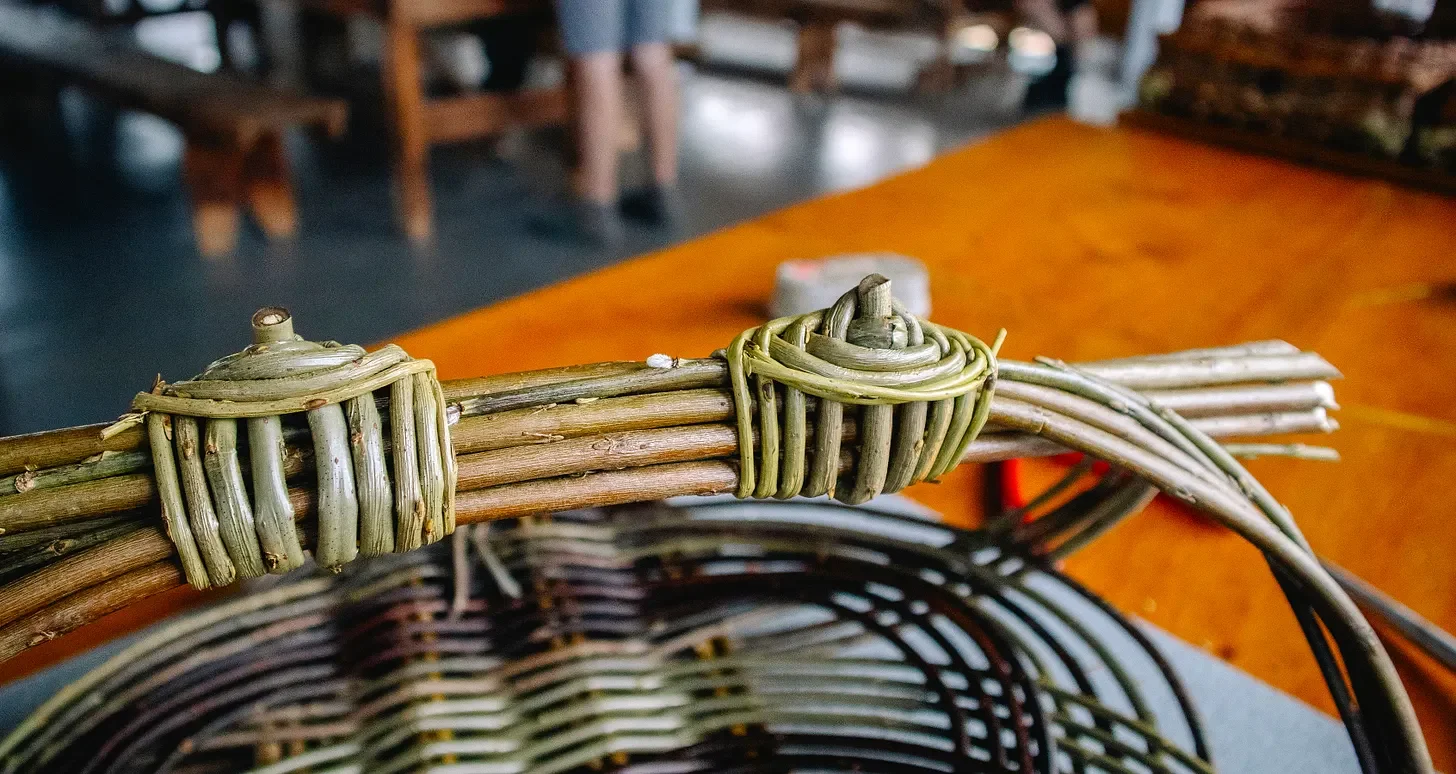
So while the willow was absolutely thriving in the humid heat, we were pushed to the edges of our comfort zone in a situation that already felt critically important, as all teaching gigs do. In the end it was a wonderfully successful weekend, and one that will have me remembering that where there is heat there is indeed much life.
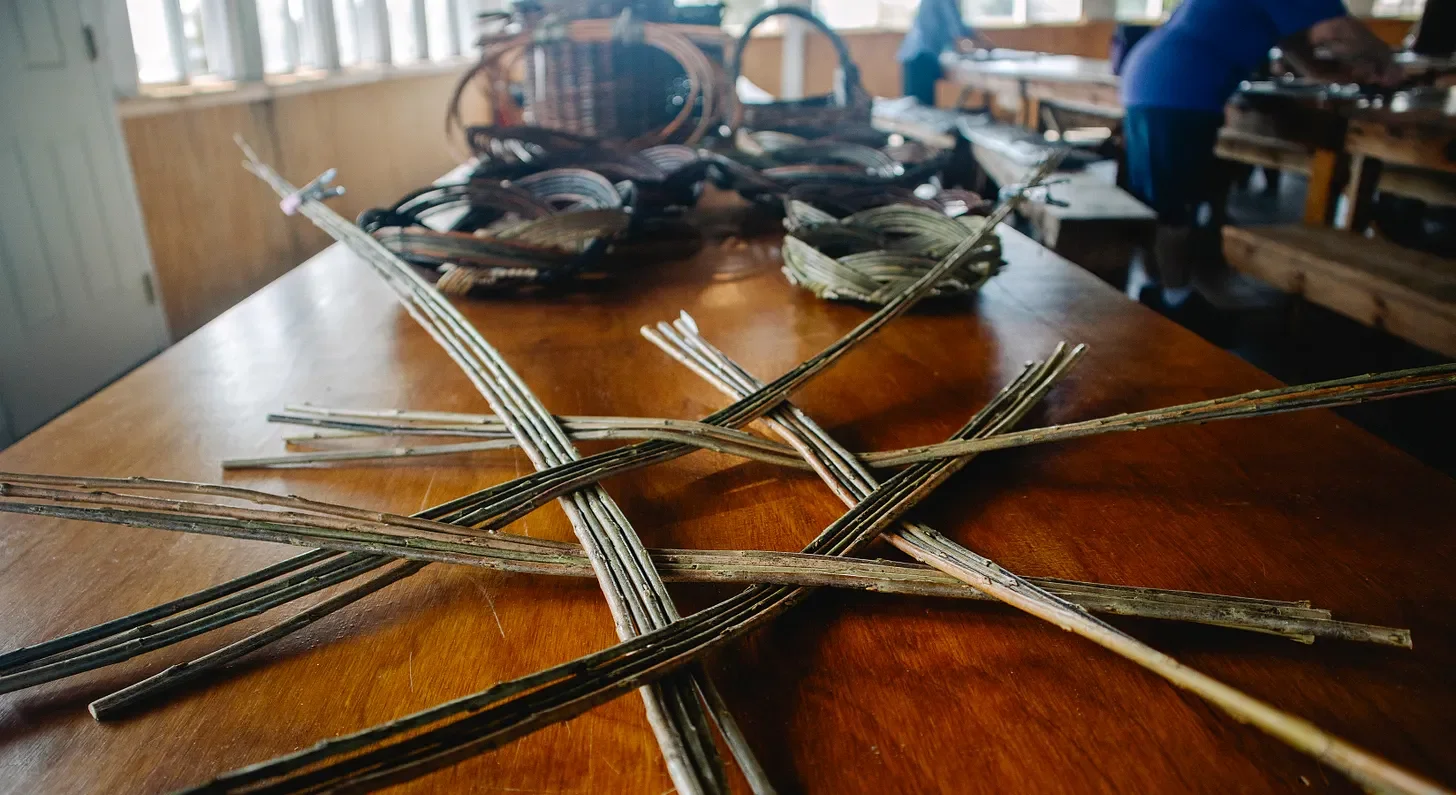
These photos are from workshops we taught in collaboration with Inch by Inch Willow near Gettysburg, PA throughout the last weekend of July 2024.
Originally published on August 4, 2024
The Ups & Downs of Drying
a passive/paramount step
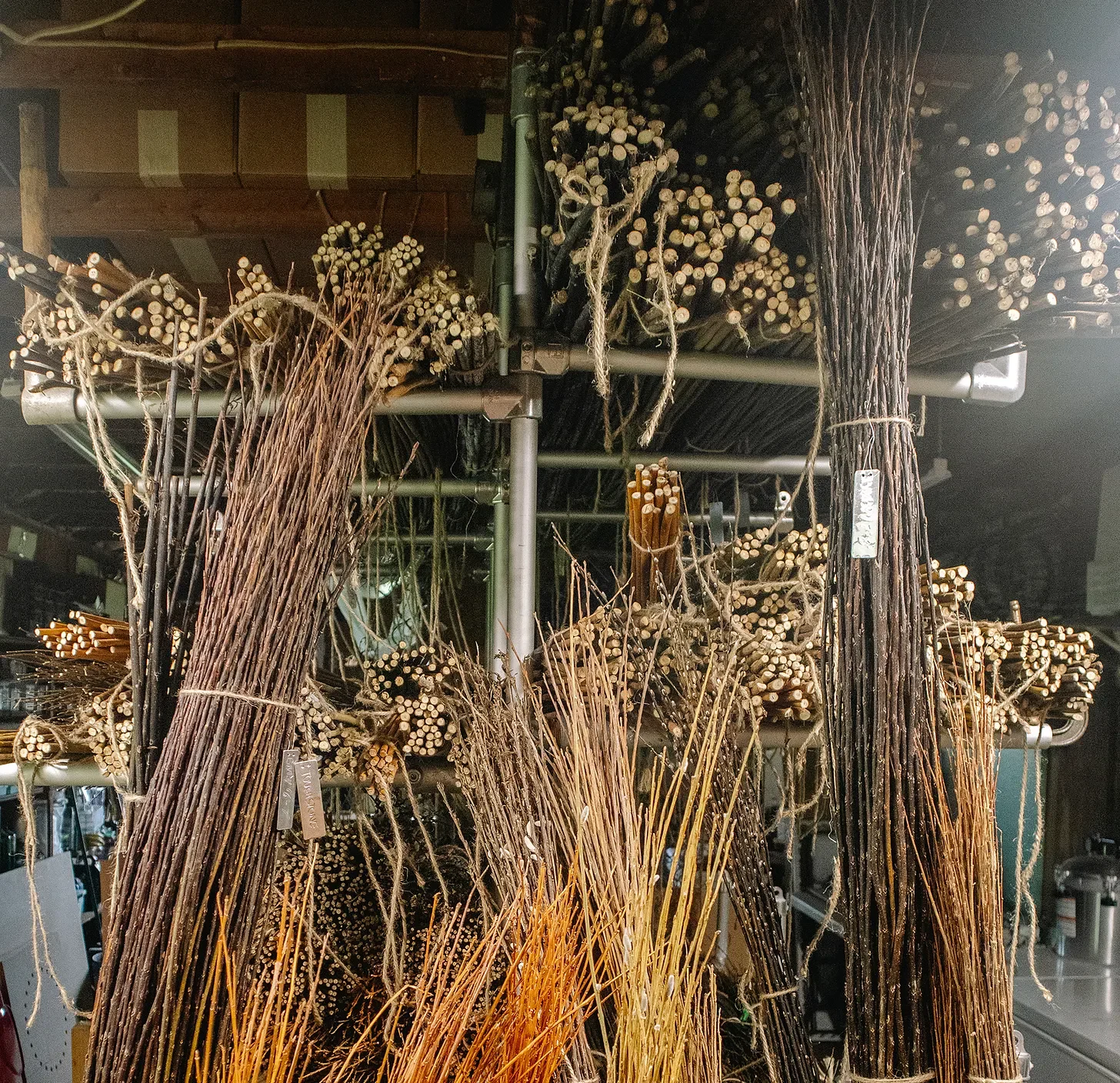
One of the most important parts of preparing willow for basketry is perhaps the most passive: drying.
This phase is also the longest, usually taking a minimum of 6 months to complete, but often much longer. Throughout that time, rods go from freshly cut (albeit dormant) to fully dried, “brown” willow. A significant amount of shrinkage occurs during drying, which ultimately yields a much tighter form when woven. Fully dried willow can last for years when stored properly, with pliancy just a soak away.
As our harvests have increased, our limited storage space has required MacGyver-esque solutions in order to accommodate it all. For nearly 5 years we’ve done our best to piecemeal a suitable drying station, both outside and within our shed, but it’s still a work in progress.
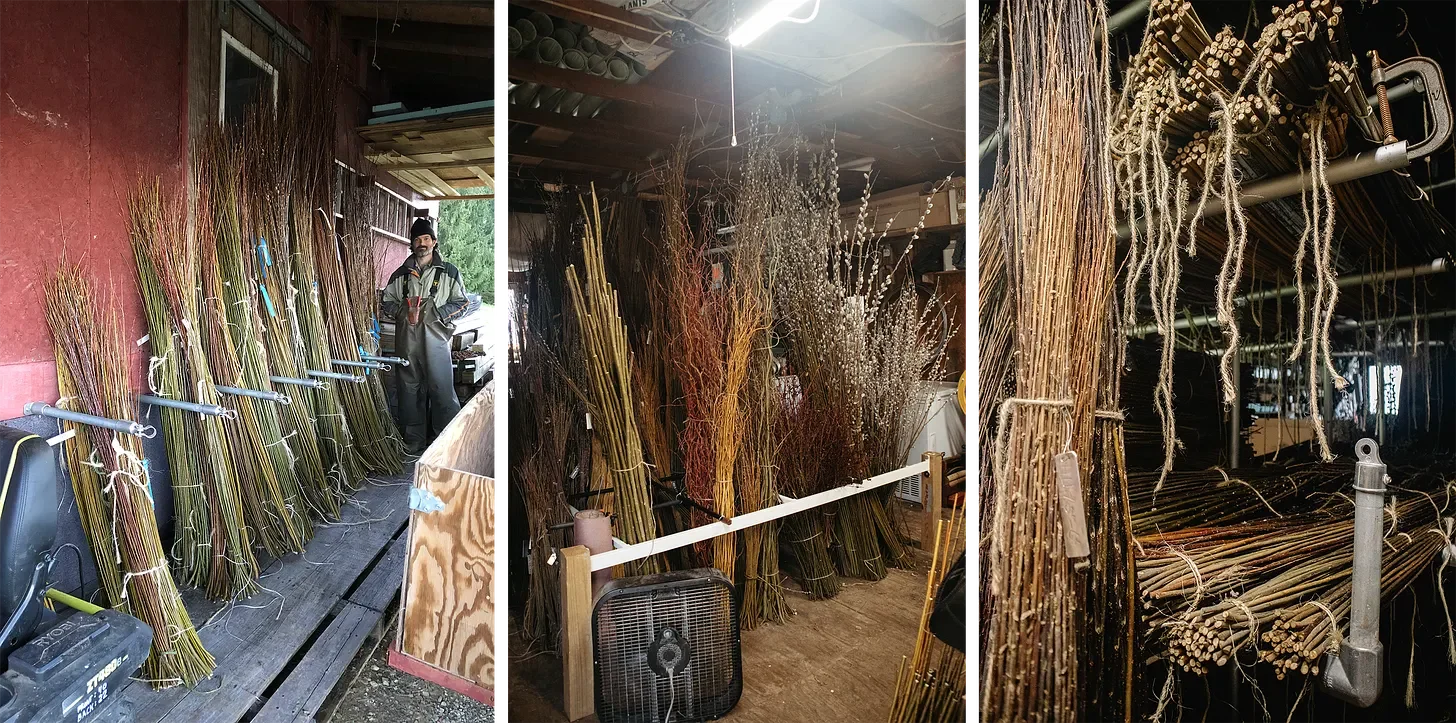
2021: Outside, vertical / 2022 - 2023: Inside, vertical / 2024: Inside, horizontal
We first began storing our harvests behind the shed, underneath an overhang where we store equipment. This seemed all well and good, as it was covered and had ample airflow (a must), but the outside climate kept the willow aggravatingly alive. By spring the rods had sprouted fresh roots - hardly the dry we were after.
So, the following year we cleared out as much as we could from inside the shed, and concocted a “proper” area using an old bed-frame. Within it, sections were laid out so that the bundles could be organized by height and type, keeping curly willow and those with catkins sequestered from the rest.
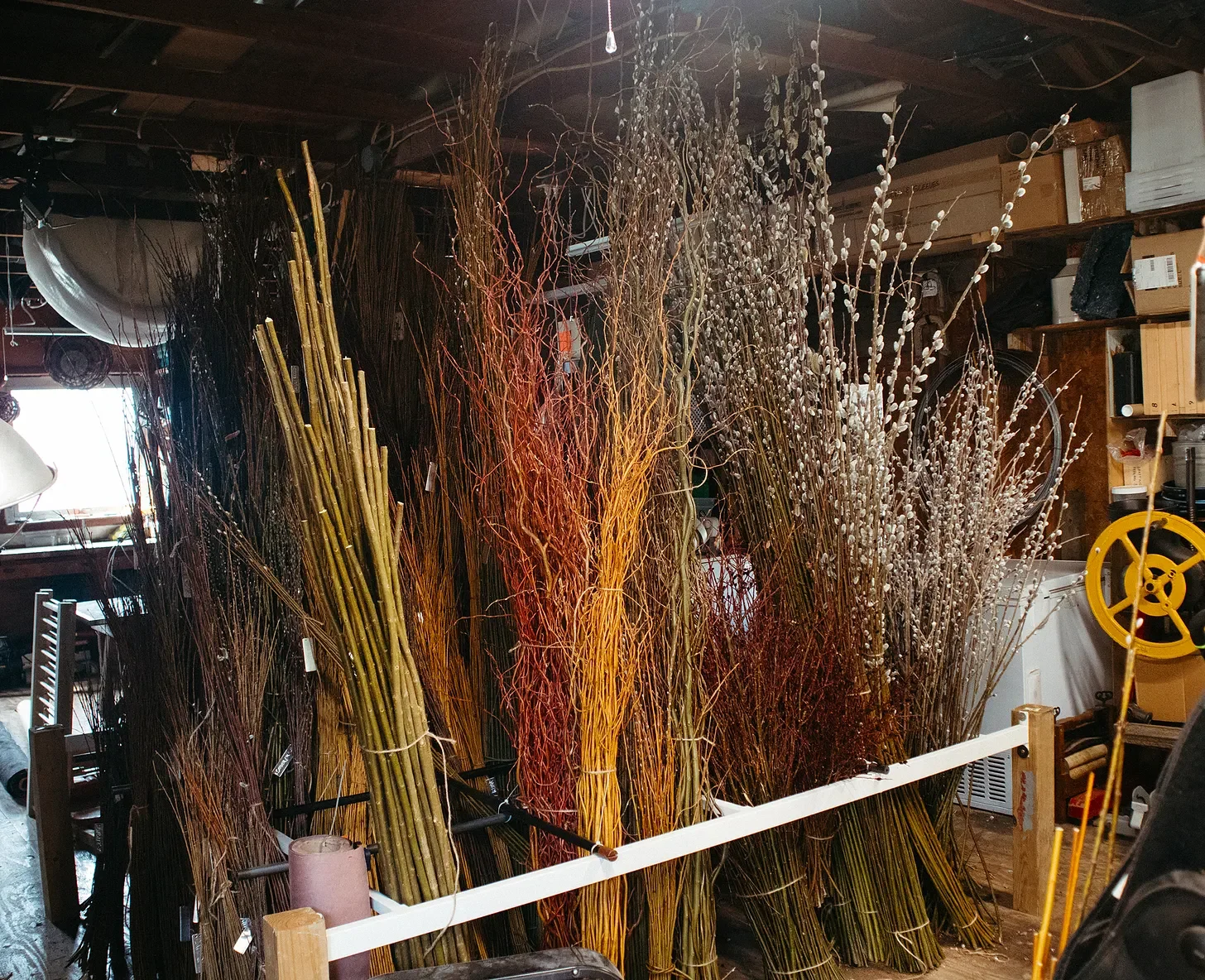
This solution worked much better, and was aided by the use of constantly running box fans, but it was still far from perfect. We used it for several years, but mostly because there was no other feasible option.
In an ideal situation the bundles would be laid horizontally, not vertically. This would allow their butts (the thicker end) to face the fan and receive the airflow much more abundantly.
Recently we decided to retire this configuration and all its vertical shortcomings.
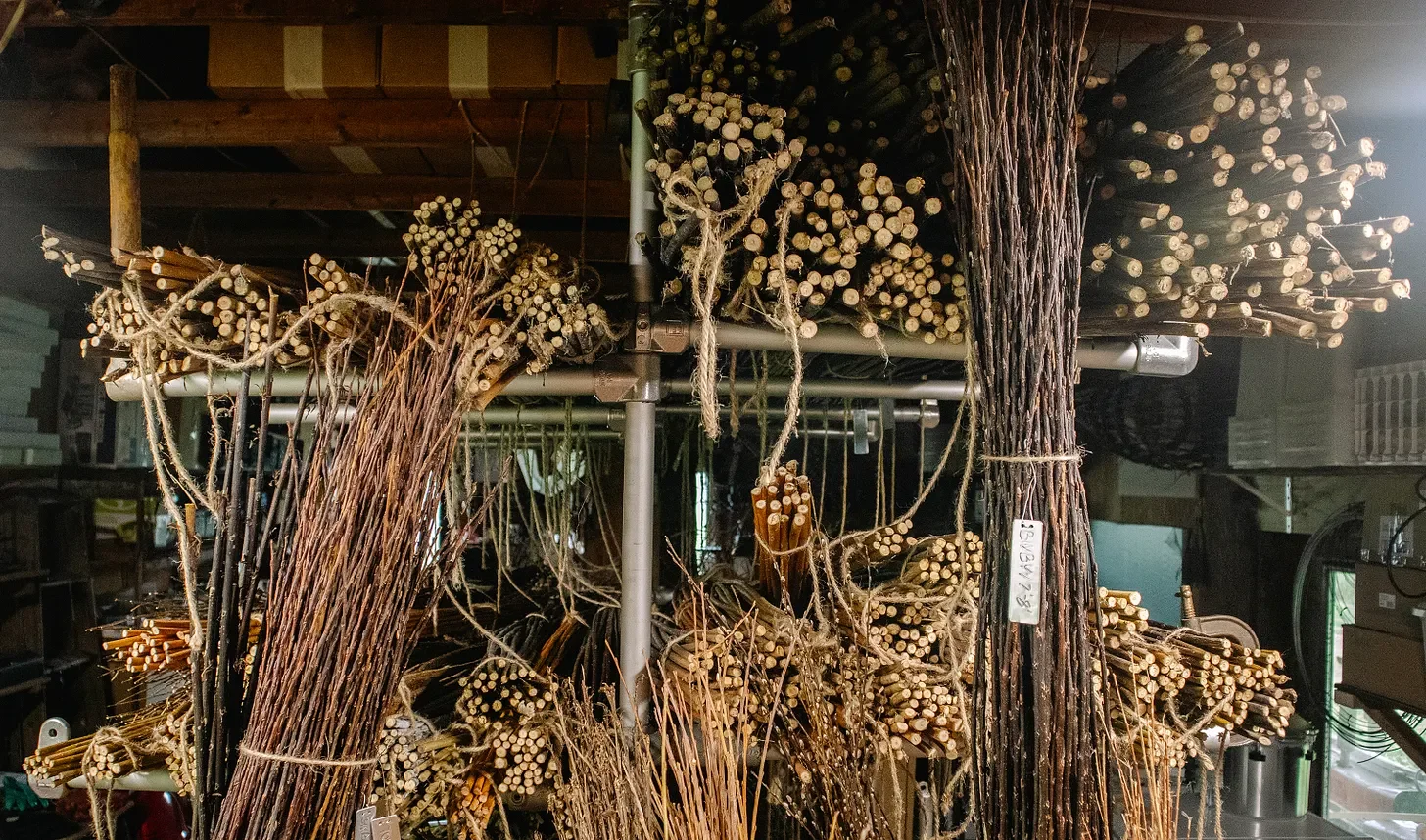
When we moved here in 2017 we inherited this shed, which was built by the former owner (who had passed) and came stocked with a plethora of his tools, and odds and ends.
Some may see that as a burden, but Dan has used the bounty to construct all sorts of things over the years, and this most recent creative solution to our drying needs wouldn’t exist without it.
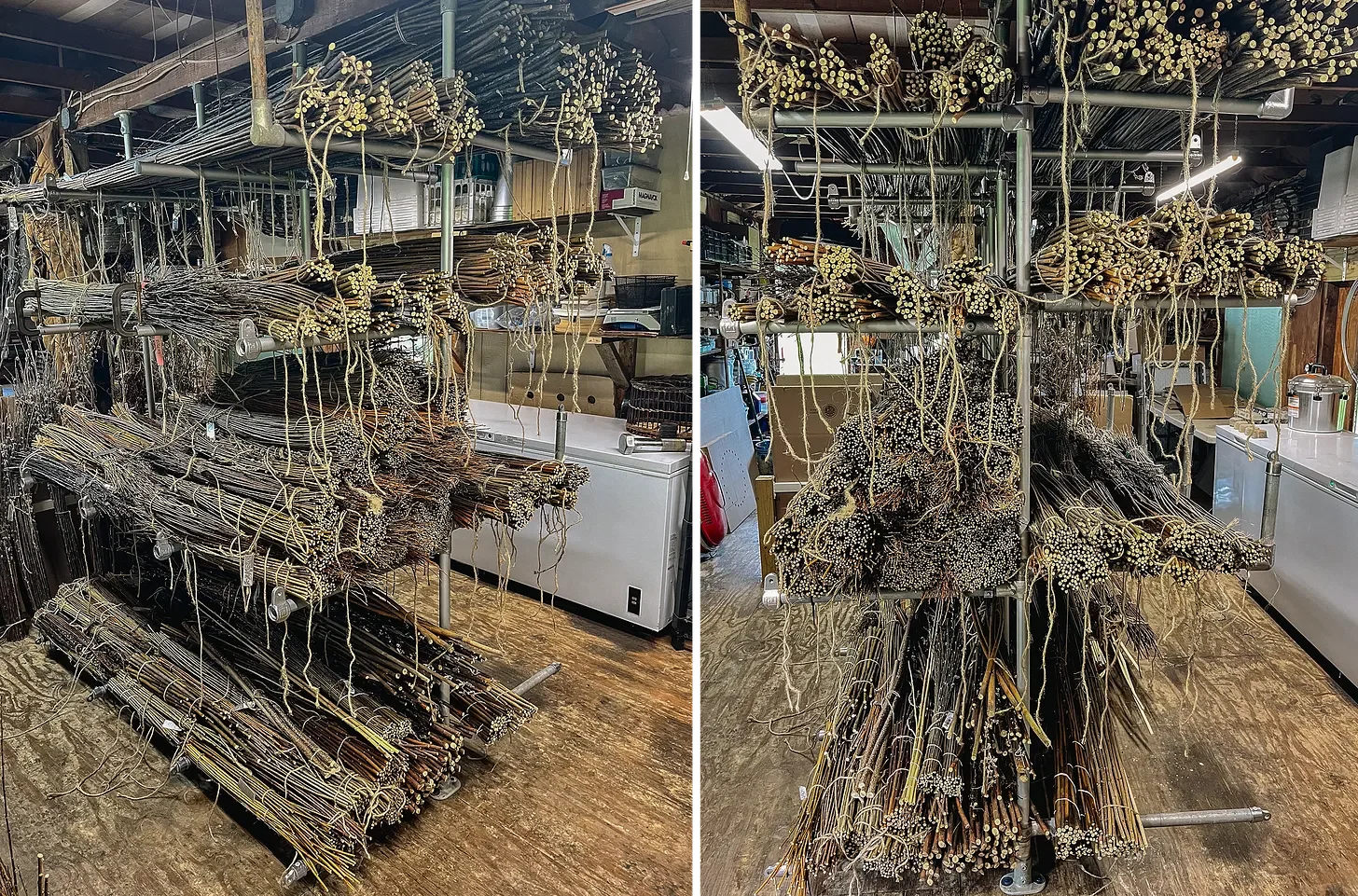
With this new apparatus nearly all the rods are horizontal, which will hopefully yield a swifter and more even drying process from here on out. It’s not perfect, but it’s an improvement, which is usually all we’re after.
One step at a time.
Originally published on August 11, 2024
Quintessential Fog
what’s in a name
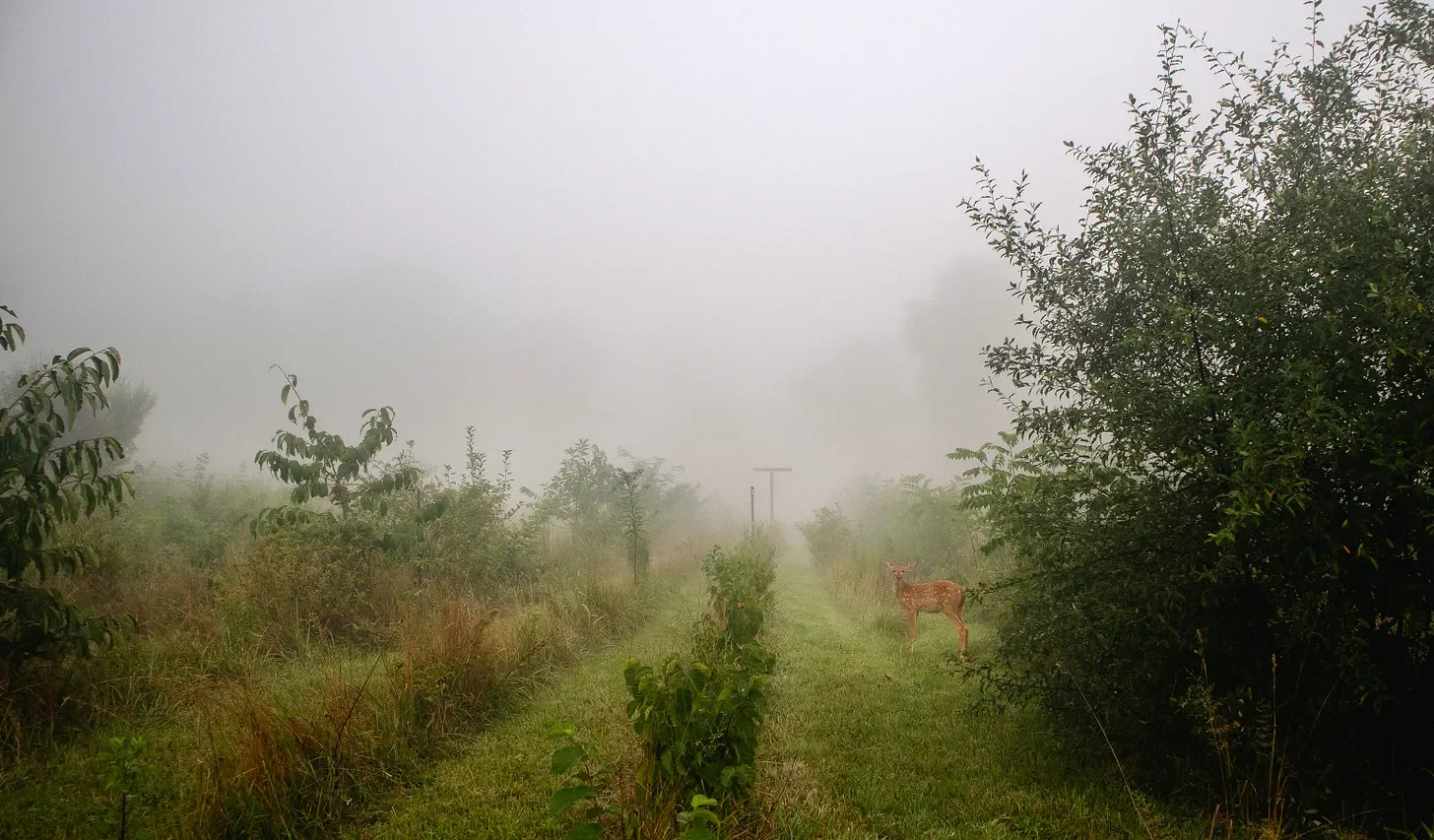
Deciding to start a farm came with the incredible creative challenge of picking a name.
There were long discussions where we each pitched variations on our own names, our dog’s names, this particular location, favorite botanical words, and more.
There was also a game of pool with family members who enthusiastically added to the discourse, but none of these brainstorming sessions were ultimately fruitful.
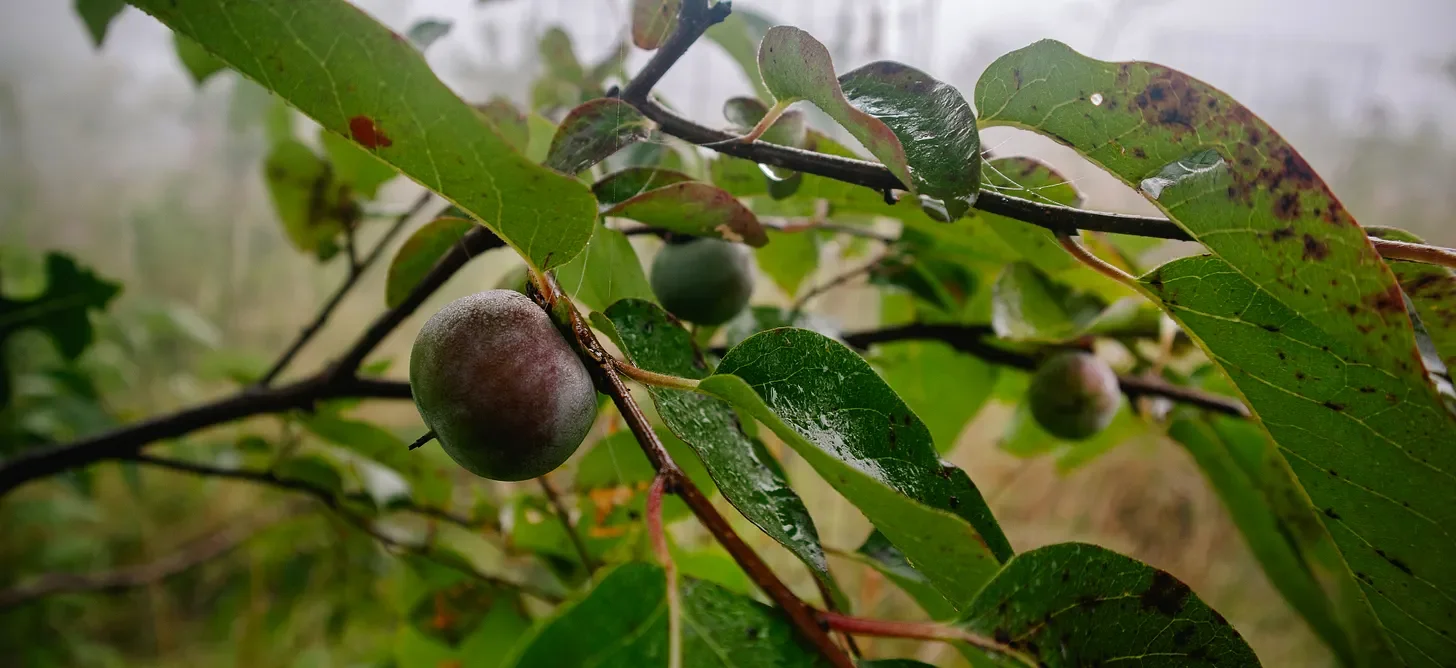
American Persimmons looking plentiful for the first time.
There was no rush to make a final decision back then, in 2018, as we had ambitious growing plans but no intention of going to market, so to speak, for at least a year or two. So we let it simmer.
Those early farm dreams were focused on producing flowers and vegetables, all of which offer a blossom at some point in their growing cycle, and by that point we’d become well acquainted with an unforeseen atmospheric element that joined us on many a morning.
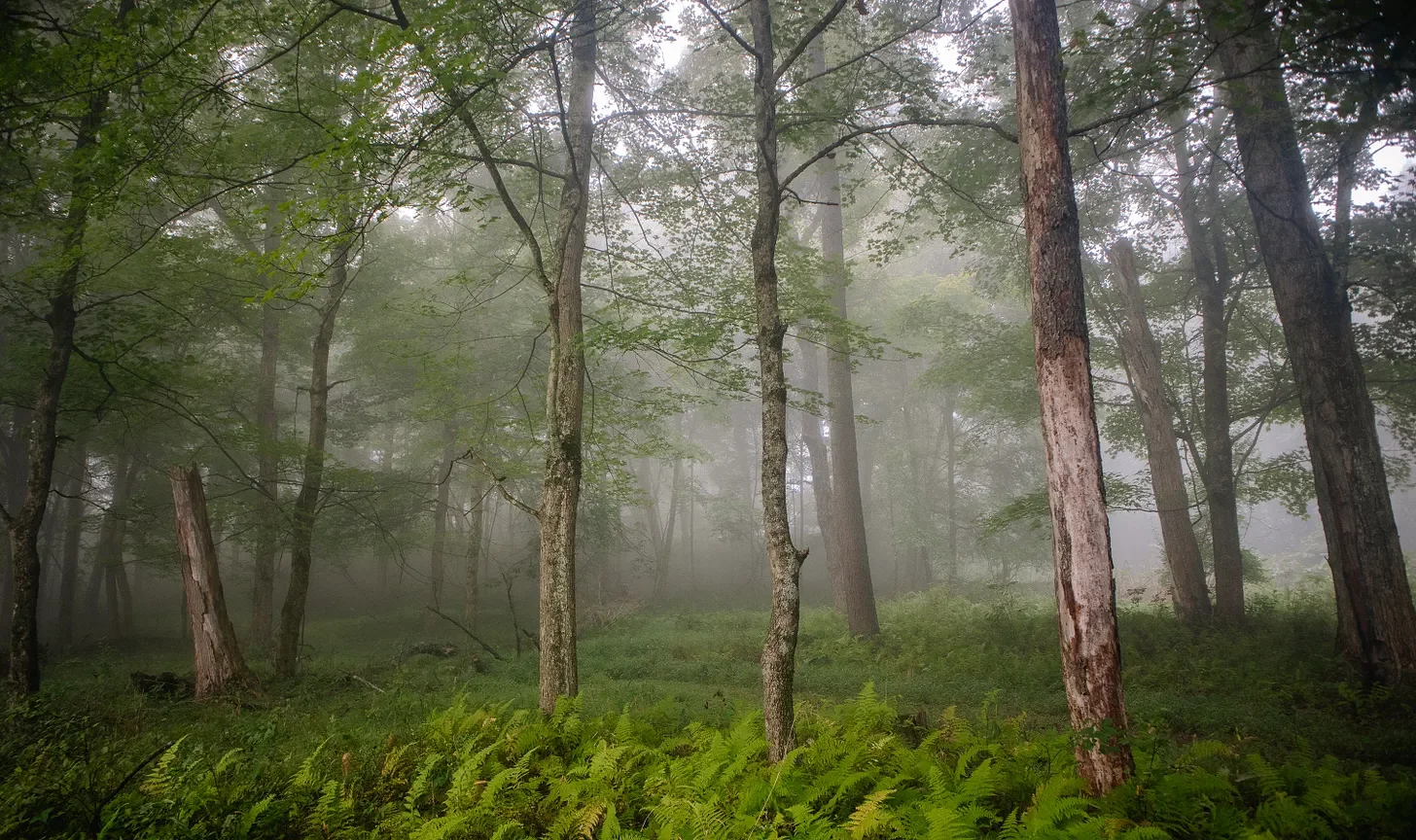
These 12 acres are situated near the confluence of two rivers, which often results in dense fog that engulfs our field. Many mornings have felt like waking up in a pillowy dreamscape that often blurs the boundary between us and the rest of the world.
Heaven.
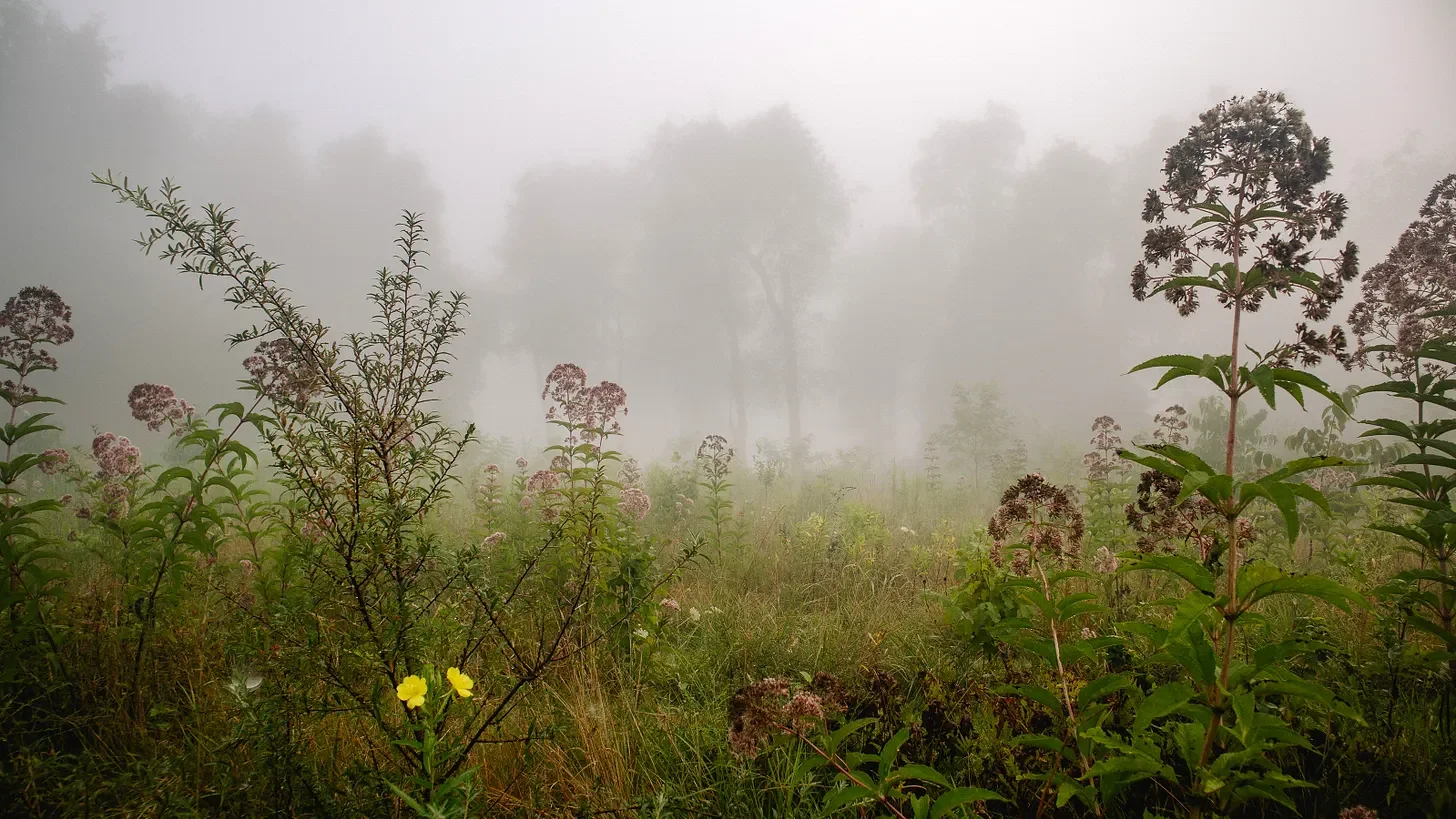
Unfortunately, the moment the words “Foggy Blossom” fell out of my mouth was not well documented, but when they landed between us something felt right. We’d found our farm name, and thankfully it was broad enough to endure through every pivot away from the original plans.
There couldn’t have been a better word than foggy to describe the clarity of our ambitions, which still feels fairly true today.
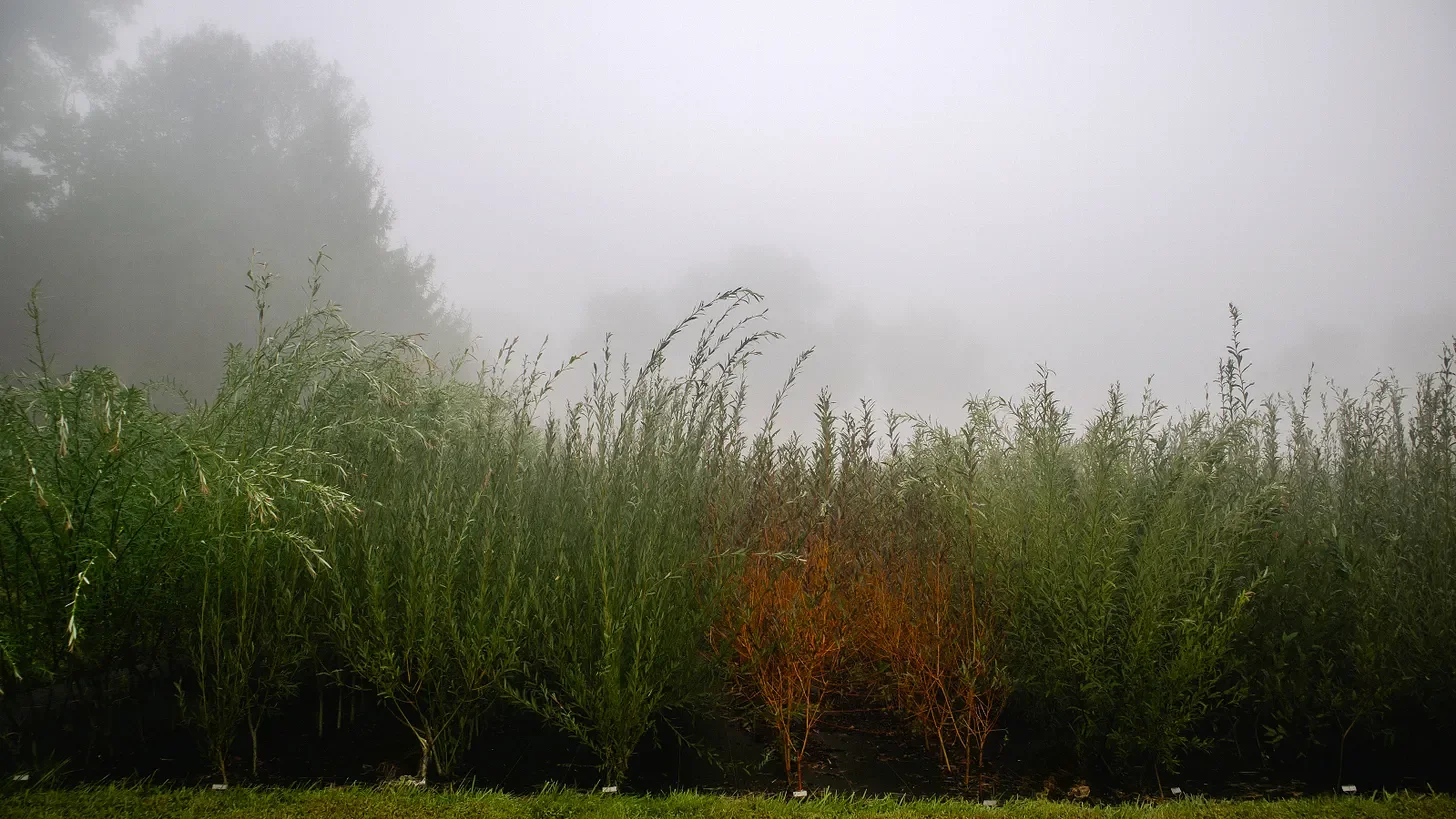
Willow
Foggy Blossom is awfully close to Foggy Bottom, the Washington DC neighborhood, which we’re often accidentally referred to as. There was also the person who referred to us in emails as Soggy Blossom, which was amusing and also somewhat apropos. Our fields as are as swampy as they are misty, and what’s in a name anyway?
We’re just glad to have found such a quintessential word for our ambiguous arc.
Originally published on August 18, 2024
8 Years of the 8th Month
a look at all the Augusts
Back in March, I took a peak through our archives and shared what that month looked like over the years.
It wasn’t a particularly thrilling post, given that the tail end of winter tends to look quite dull, so I decided to give it another try here in famously more fiery August.
Here we go!
🌻 2016
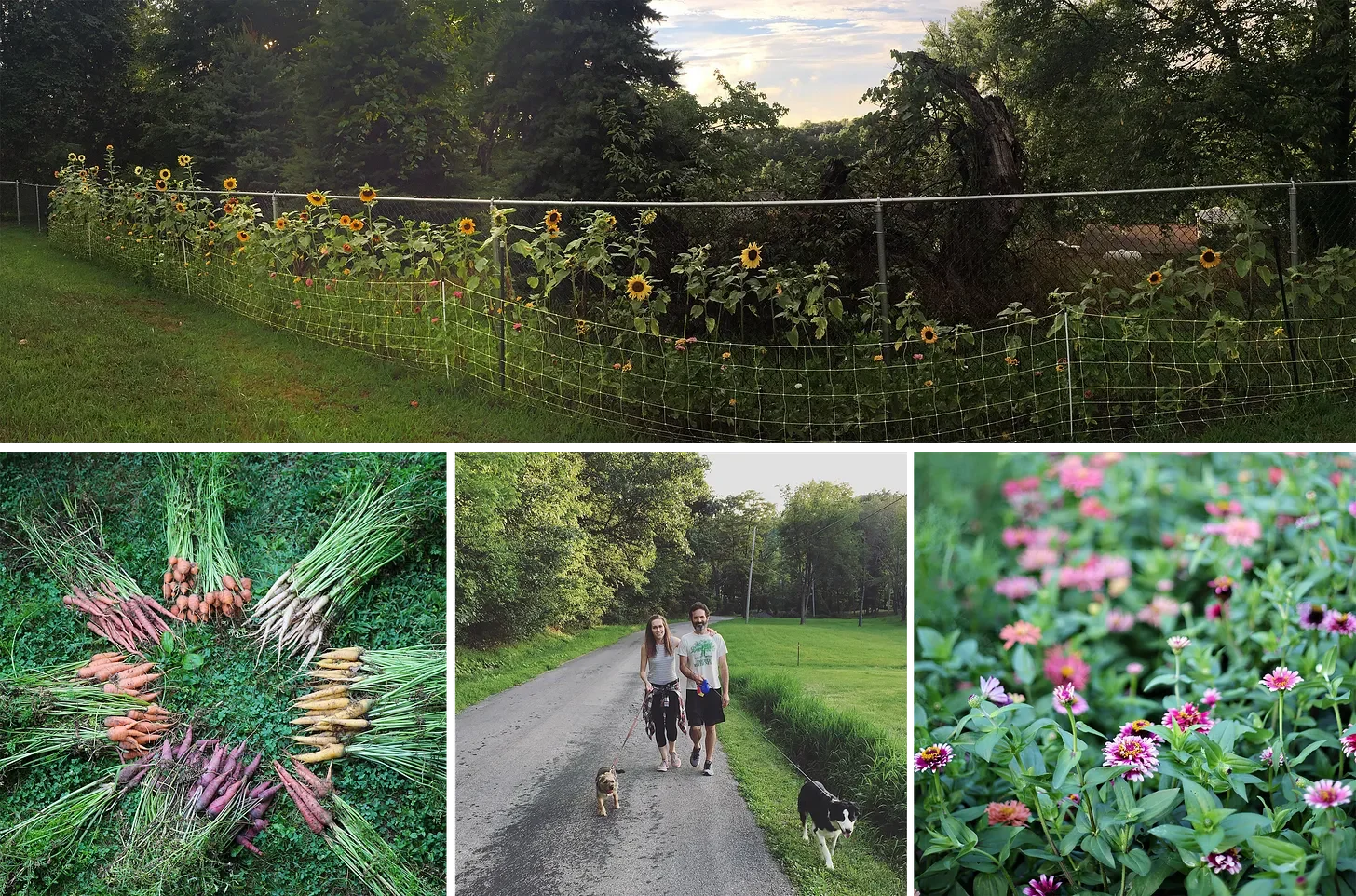
In August 2016 Foggy Blossom Farm was a mere figment of our most wishful imaginations. We were still at our last house then, which sat on about an acre and where we tended to an ever growing collection of gardens.
Six months earlier, in February, I had endured my last round of abdominal surgery/chemo, and was still in recovery throughout the summer. Growing a plethora of flowers and veggies made the season, and that time in our lives, much more beautiful.
🍅 2017
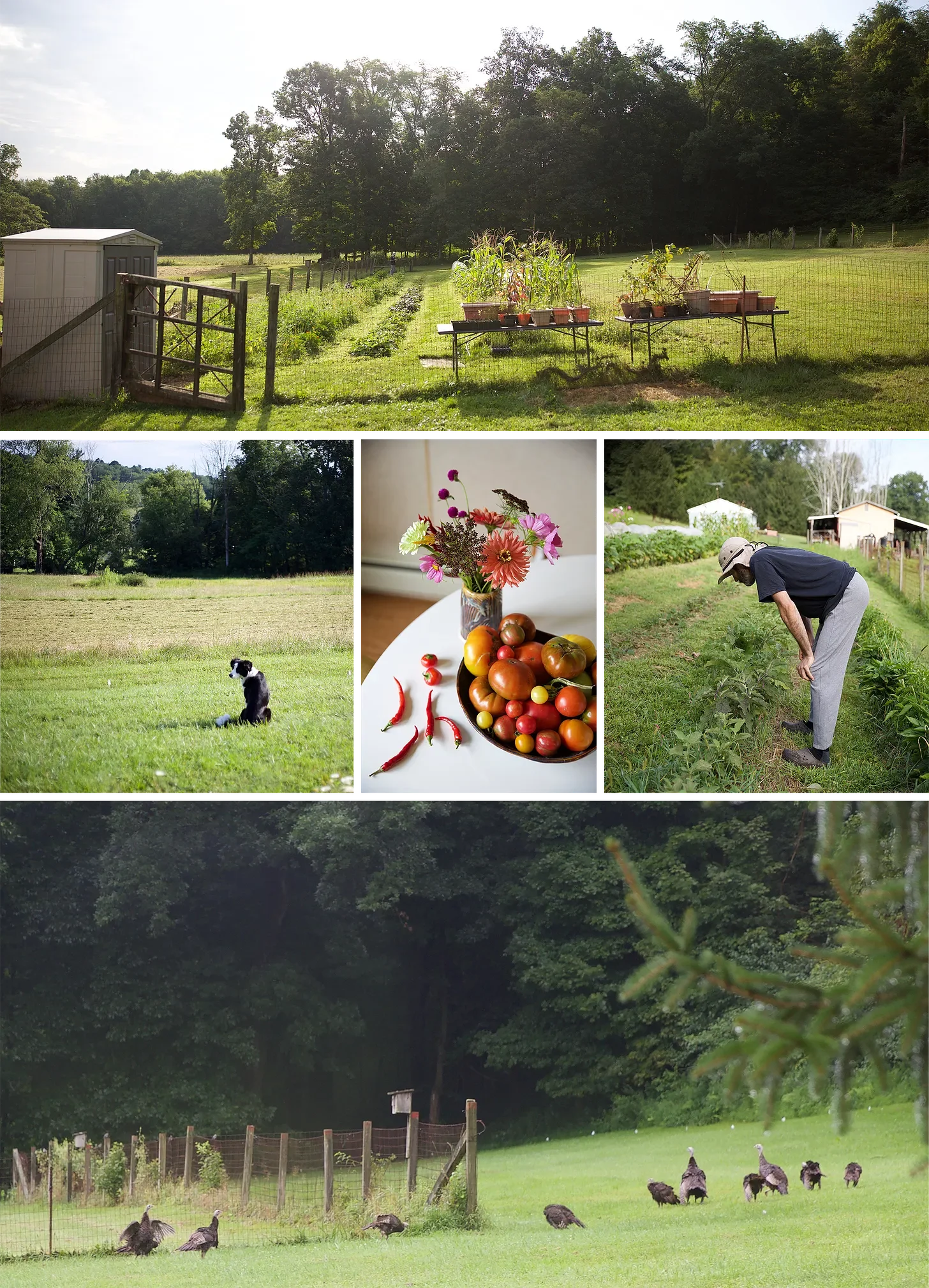
By August 2017 we had been on these 12 acres, and future home of Foggy Blossom Farm, for a little over a month. When we landed the acreage was a true blank canvas, dappled only with a large collection of potted plants and seedlings that we had transplanted from our previous home.
Even with the mid-summer move we managed to get a great yield of tomatoes and flowers that year, and enjoyed a near daily parade of turkeys.
💐 2018
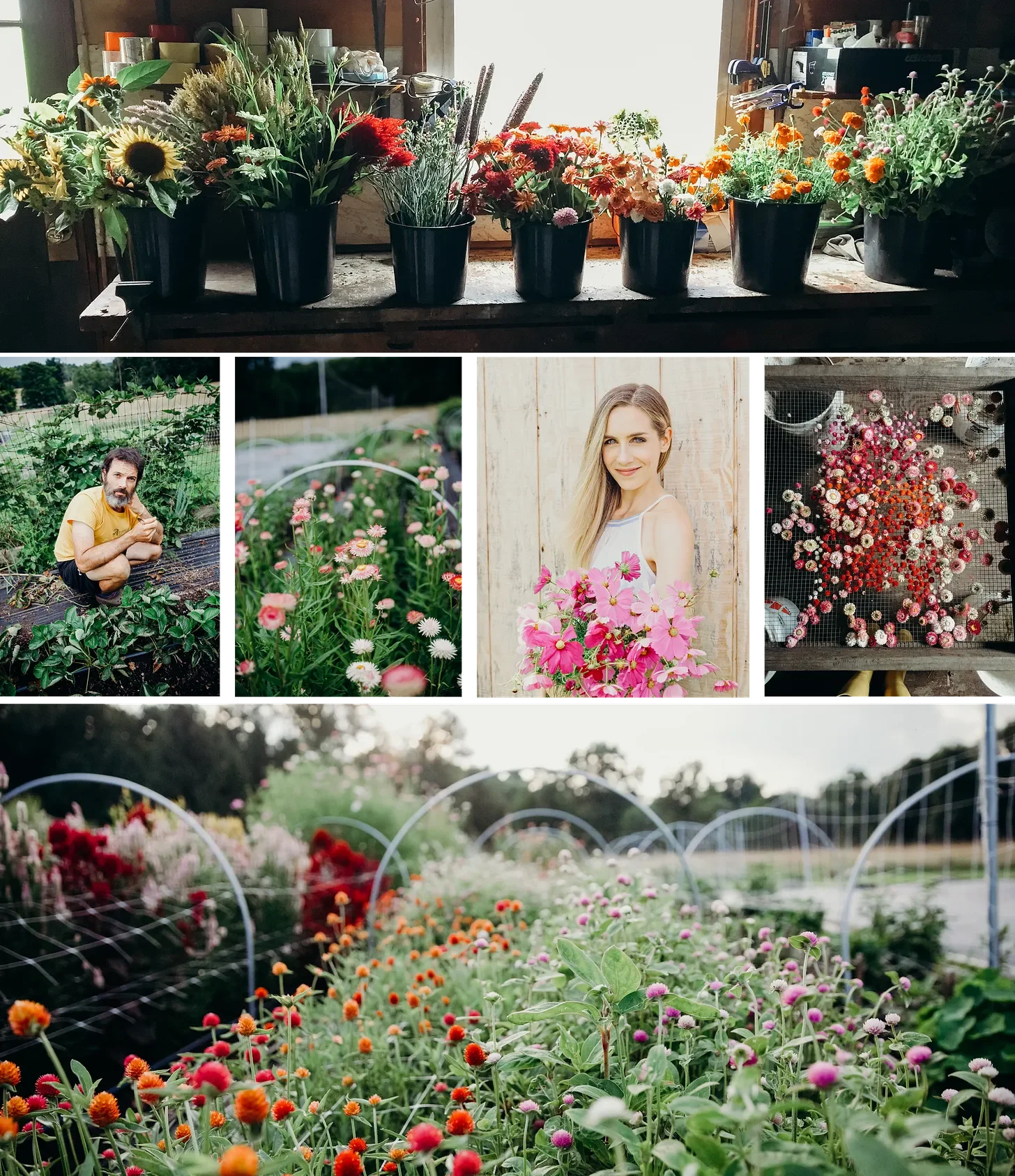
By August 2018 we were all in on our farm dreams, and had chosen the name Foggy Blossom. We had completed the Floret Online Workshop that past winter, and hit the ground running with cut flowers.
We also began a burgeoning market garden, inspired by education from the The Market Gardener. Both methods gave us clear tracks to follow, which was inspiring and exciting, but an incredible amount of work.
🌅 2019
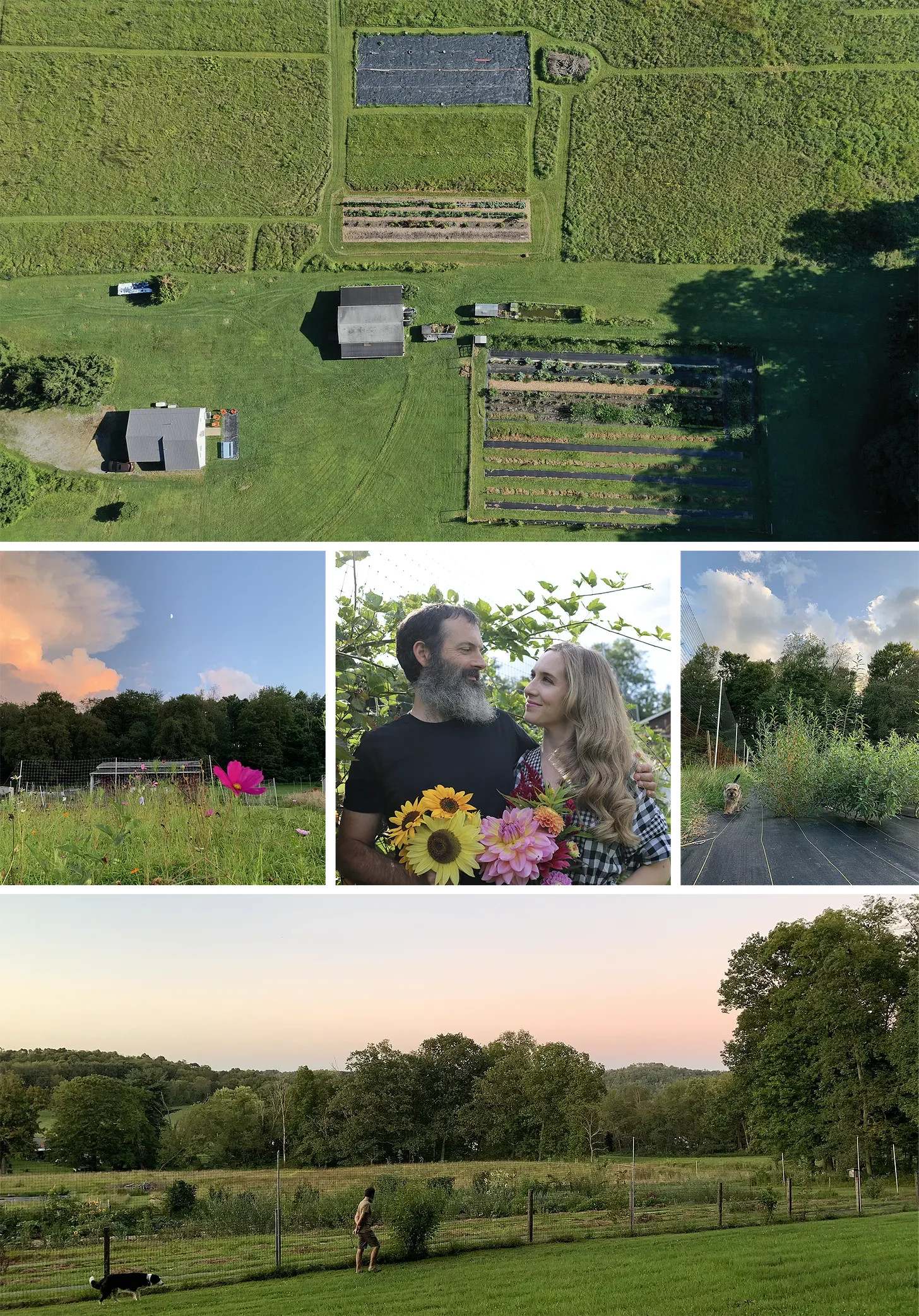
In 2019 we made the big pivot to perennials, which was ultimately due to health issues we’d both experienced that had us seeing annual farming endeavors as unsustainable in the long term.
That realization, coupled with Dan’s discovery of basketry, set us on a new path. Our cut flower collection continued throughout this summer, but the wheels were in motion to move willow into the spotlight.
🧺 2020
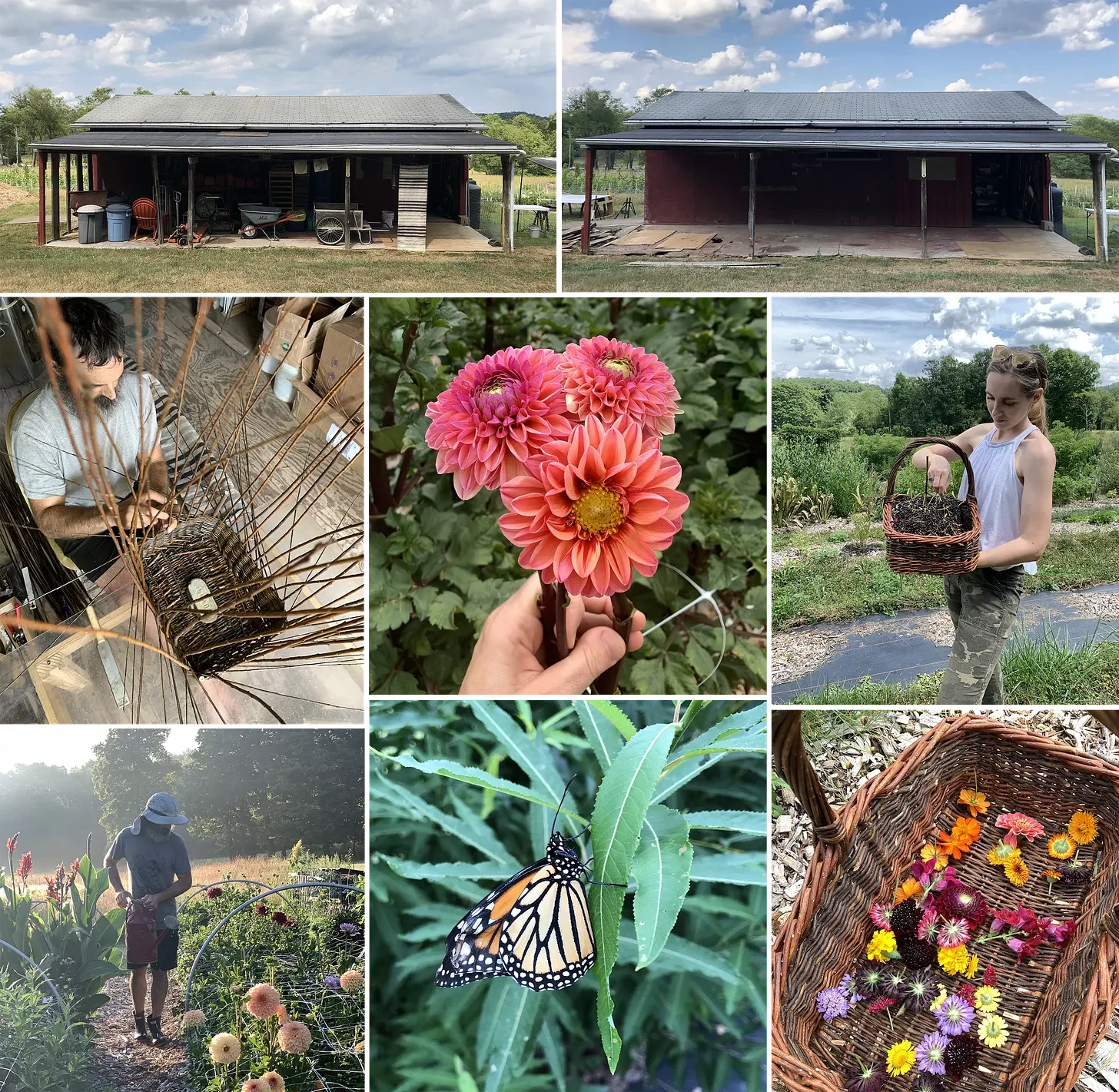
The summer of 2020 was one that needs no introduction, and for us it was another season of quietly figuring out just what we were doing here. For Dan that meant dedicating nearly all his time to learning the ins and outs of basketry, and growing willow, and ultimately remodeling the shed to craft a studio for himself.
Around the acreage we enjoyed the last lingerings of our cut flowers, and were beginning to enjoy more fruitful harvests of perennials, including elderberries.
🚲 2021
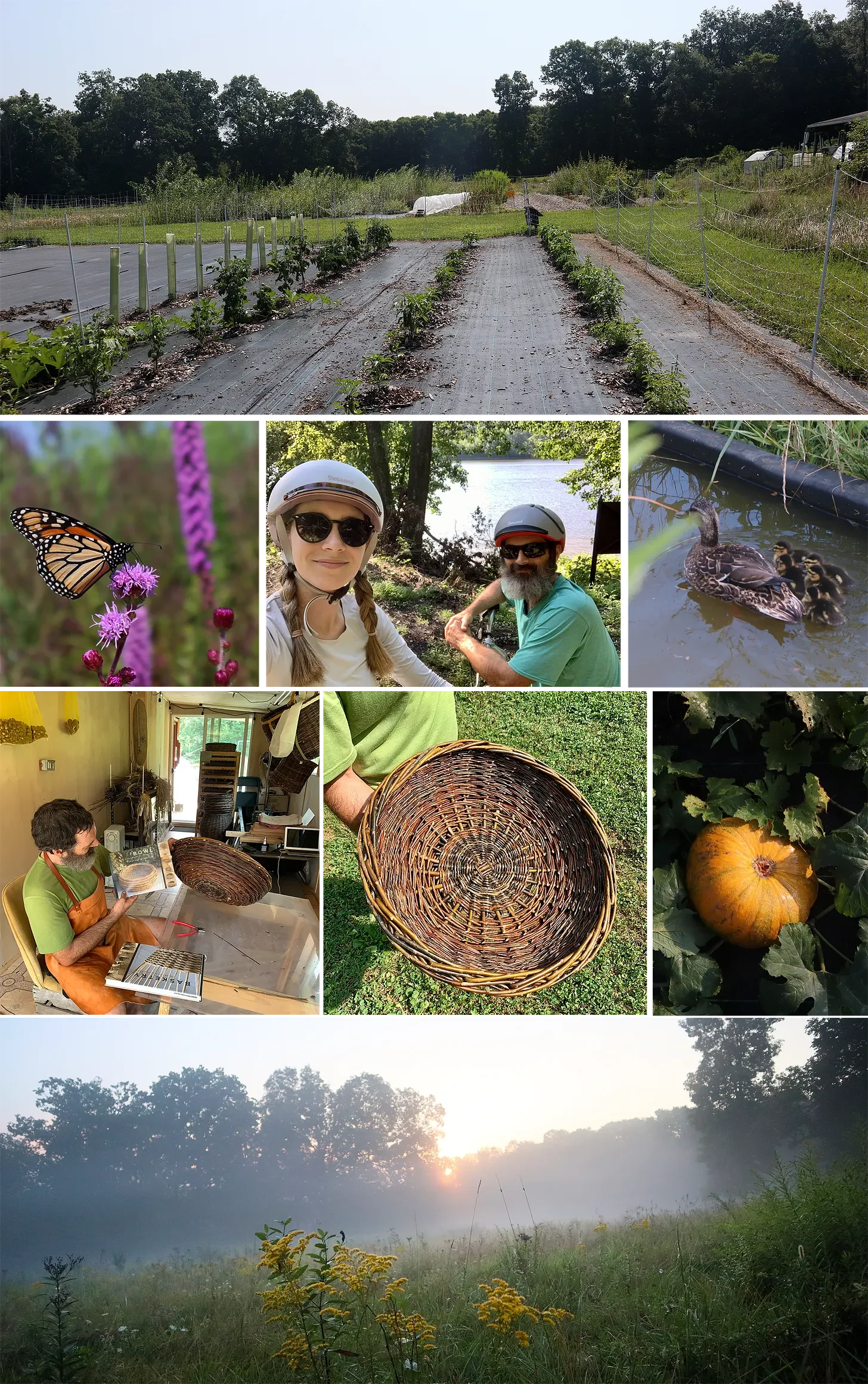
The difficulty of easily getting fresh food throughout 2020 had us missing homegrown harvests, so in 2021 we went back to our gardening roots and began an ambitious vegetable plot for ourselves. We also saw more and more wildlife appearing throughout the acreage, including the first flock of ducklings in our pond.
Dan’s basketry pursuits were also rapidly becoming more and more polished, and we finished nearly every August afternoon on our bikes down at the nearby river trail.
🍄🟫 2022
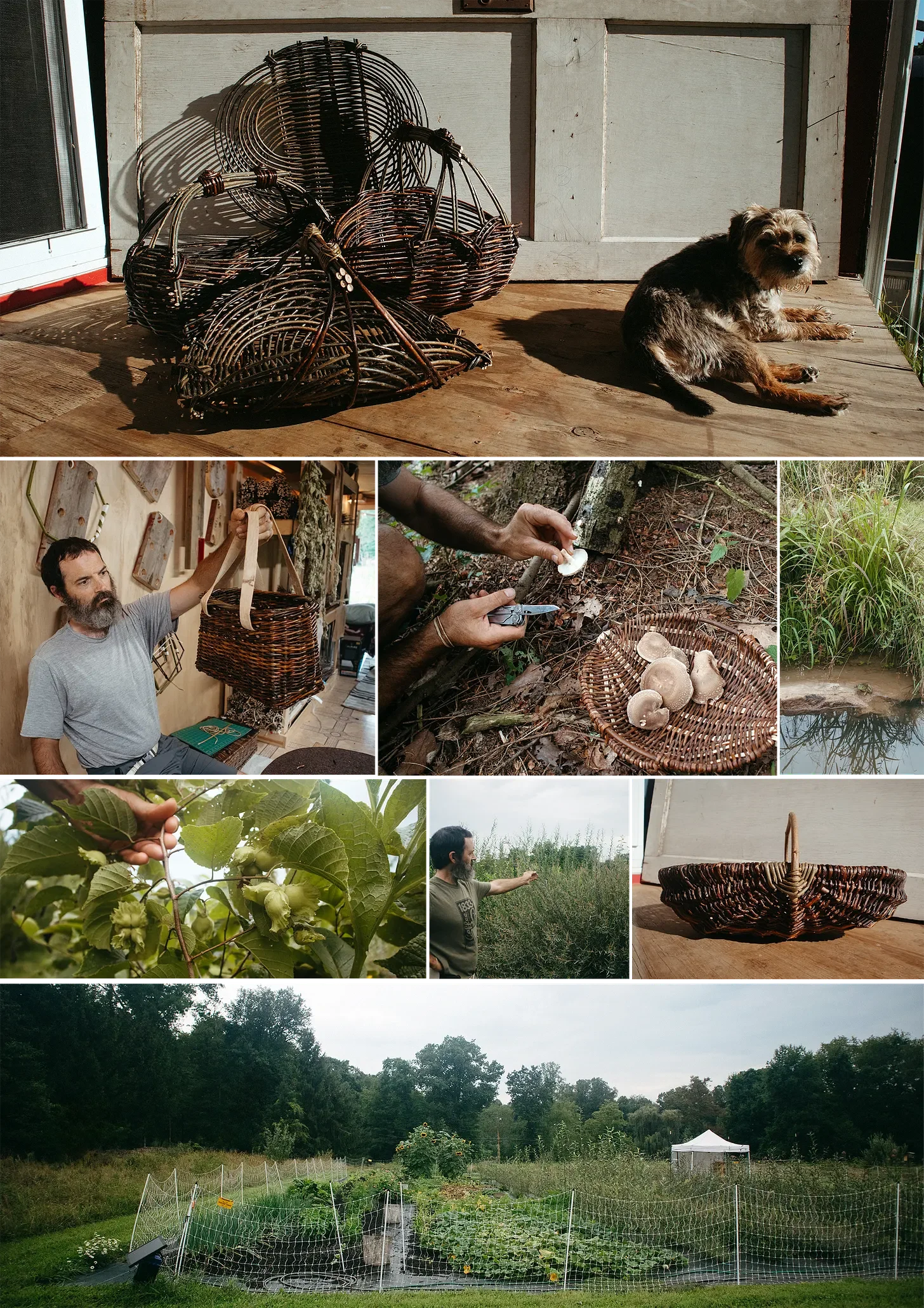
In 2022 basketry had definitely become the thing, but so had beekeeping, mushroom growing, willow/perennial expansion, and much more. This was the last summer that Foggy Blossom was relatively quiet, and looking back I feel nostalgic for the calm that we experienced before the proverbial storm.
🍯 2023

Last summer, in 2023, we taught our second class ever, and enjoyed the biggest yields of perennial fruits and nuts that we’d ever seen. We also shut down our absconded bee colony and harvested honey for the first time.
It felt like things were really picking up steam, but we were just getting started. Little did we know just how exciting the following August, this one, would be.
More on that in September!